James Brandon Lewis Interview
James Brandon Lewis
Interview
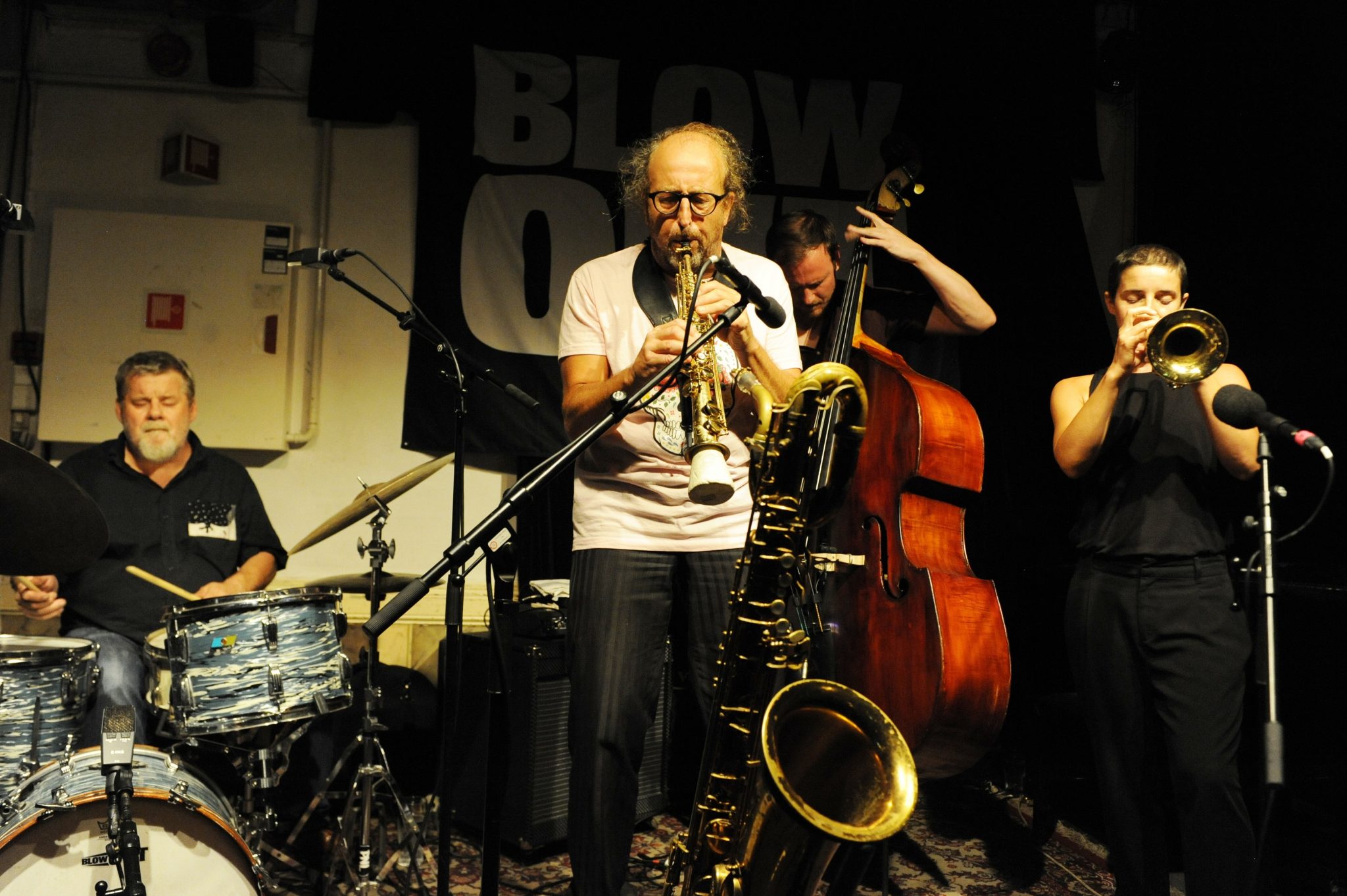
In the last three years James Brandon Lewis has topped the DownBeat Critics Poll as Artist and Tenor Saxophonist of the Year, and earlier this year he was awarded the Guggenheim Fellowship. Such accolades only confirm a trajectory that has been evident since his 2010 debut album Moments. Lewis has built an impressive body of work, both as bandleader and collaborator with William Parker, Dave Douglas, Marc Ribot, The Messthetics, and many others. Listening to Lewis’ discography is like witnessing an artist in a constant process of self-invention, moving freely across genres and traditions while continually reshaping his own musical language.
I spoke with Lewis on the occasion of the release of Omni, the sixth recording with his quartet with Aruán Ortiz, Brad Jones and Chad Taylor. Our conversation ranges, from institutional training and artistic liberation to the importance of deep musical knowledge, the pitfalls of genre thinking, and Lewis’ evolving Molecular Systematic Music.
Before we talk about the new album, I’d like to start with a broader question. Across the many different projects and collaborations, you’ve been involved in, what would you identify as the principles that guide your approach as an improviser and composer?
Well, I would say that the thing that keeps me open and curious is just like a sense of humility. Approaching any type of music with any kind of ego is dangerous, because I think you lose what the music is asking you for.
In any of the projects I’m involved in, I think my main purpose is to try and convey what the music is asking for. When I’m collaborating with The Messthetics, that’s a specific sound. And when I’m doing the Red Lily Quintet, that’s another specific sound. And with my quartet, it’s yet another one. And, also as a composer, every sound, every experience is different. So, it’s about allowing the music to take hold of what it needs from you. I don’t try to broadbrush, that’s not the way I approach music.
When I’m playing with The Messthetics, for example, it’s about understanding the background of Brendan [Canty] and Joe [Lally]. My collaboration with Anthony [Pirog] dates back to 2014, me and him have been friends for that long. It’s all about knowing the vibe of the music. If something is hard hitting and has a punk-rock aesthetic, I’m not going to try to play bebop material over it. I don’t even like these categories, to be honest. But the music speaks to me a certain vibe that I try my best to communicate.
It’s also a matter of intention, never to be on autopilot. When you’re trained at school, that training doesn’t always speak to a lived experience. My overall approach to music over the years, especially when school was over, was like painting through sound, painting the human palette. When you start playing for the general public, there are no grades. People are fresh off of their jobs, they don’t have time to listen to you trying to go through some sort of cerebral exercise. And I’m not critiquing anyone; I’m just approaching music from my own perspective. I ask myself: what am I trying to emote? What am I trying to convey? And that’s ultimately a certain sense of humanness.
Is there a point where technique can become an obstacle to self-expression?
I’m not trying to record music or play music so that people can understand how much technique I have. I don’t care about that. That doesn’t mean that technique is not important. But it’s what I’m studying in my practice room. It’s like the athlete who’s shooting jump shots over and over again. A thousand jump shots, and then they make that magical shot during the game. They’re not thinking about technique in the game, you know. The thing also is that you can hide behind technique. I can blaze runs and runs of 16th notes on and on and on. And you’ll never know how I feel. You just say: “Wow, he can really play the instrument.” But then to slow something down, to be kind of minimalistic, that’s a whole other thing.
You had extensive formal training, first at Howard University, then at the California Institute of the Arts, and ultimately obtaining a PhD at Rowan University in 2025. To what extent did your formal training help you find your own voice, and to what extent did you have to move beyond it?
I don’t want to get on a tangent about what the institution is or isn’t doing, but I went to school, so I’ve earned the right to critique it. I think there’s not enough mapping of oneself in school. Everything is outside of you. All the learning is outside of what you think. We’re basing skill level on execution, we’re treating jazz like classical excerpts, where you’re learning a Bach composition to be able to then audition for an orchestra.
I felt the real learning for me started to happen when school was over, because I started to slow everything down. I almost felt a sense of relief, when that was over with, like finally I could get to what I needed to work on. And don’t get me wrong, I enjoy learning, I enjoyed school. My mom was a school teacher, and she definitely gave me, together with my dad, the bug for learning. I went and got a PhD, you know. I wrote a dissertation that I maybe, hopefully, will get published.
But now I’m no longer interested in playing music where I’m still playing as if there’s a grade involved at the end. Those days are over with. I actually feel liberated. When I was at school, people expected me to communicate musically the way I was trained; I have been dismantling that purposefully to get to my most authentic self. Like the other day I was just sit and theorizing and practicing. It felt so liberating to just free myself from these notions of what people think a certain note combination is supposed to be. Just the whole idea of taking a certain group of notes and making that the base, and then turn whatever notes are not present in the base into the negative space that I can also use. I could just play and allow my melodic line to build and build and build.
To be honest, I’m at a great phase of my life because I’m liberated. I don’t believe there’s just one way and there’s many ways, you know. School has its limits. And within those limits, you do the task, you achieve the goal, and then you move on. And when school’s over with, then you get back to playing music. And that’s about life.
So you see that search for authenticity as a matter of bringing your own subjectivity into the music?
When I’m creating and composing music, I’m thinking first from a subjective standpoint, from a feeling standpoint. And then, depending on what I’m creating, objectivity of course comes in, for example if I’m creating different musical problems for myself to solve. But then intuition takes over, the trained intuition of the gravity of the note choices, like I say “Okay, this may make sense theoretically, but you know, I’m not leaning on that.” And I think that’s what people hear.
I think that’s why we love John Coltrane, we love Miles Davis, we love Ornette Coleman; we love these people because they have a beautiful way of balancing subjectivity and objectivity. We get both. And that’s what I’m trying to convey. And I think the through-line is humility, being open. I don’t mean humility in some kind of sacred kind of vibe. But the biggest hindrance towards progress is saying the words “I know”. I always do a self-regulatory thing, my default setting won’t allow me to be comfortable, won’t allow me to be thinking “I know” and “I have all this training”. No, I want to create something that is meaningful, I want people to get a sense that what I am trying to reveal to them is my most human, authentic, vulnerable self.
Do you think that’s what people hint at when they point at a “spiritual” dimension in your music?
When people say that they feel something in the music, I’m of course very appreciative. But I don’t necessarily know what the whole idea of spiritual jazz actually means. I think what people are trying to convey is that there’s something that they’re feeling from the music that’s beyond any understanding, that they are really touched by the music. But I’m just trying to be myself as best I can. I’m determined to be my most authentic self. Of course you can’t escape influence, but I definitely try to set up variables that make me think outside of nostalgia. Or at least contribute to the conversation.
It’s like breaking new ground while staying in a conversation with the tradition?
Well, I don’t know if I’m breaking new ground because that’s always dangerous to say. I don’t know everything that’s existed, so I can’t really say if I’m breaking new ground or not. I’ve only lived within this time period. But I will say about how I relate to tradition that I enjoy blurring the line, you know. Like people like Ornette, Sam Rivers, Dewey Redman, Bill Barron. I identify with people who don’t just think about inside or outside, but about conveying a message that is true to themselves.
It’s easy to move into a house already built; it’s harder to devise your own blueprint, your own language, by listening to recordings, listening to history. You know, a lot of times I’ll listen to the greats of the past and then kind of formulate what are my musical problems in a similar fashion that I might be dealing with, which is a different perspective than copying or transcribing. I was transcribing people when I was younger. And then you’re like a child, you’re learning words by mimicking, and then eventually, hopefully, you begin to get with your own intellect and really understand, how you’re putting your own vocabulary together eventually.
Do you think this conversation with the tradition is often overlooked by critics who primarily situate your music within the avant-garde or free-jazz?
I don’t have any issues with free jazz or avant-garde or the way people want to explain things, but I think that they’re often missing the through-line, the full continuum. I’ve never once identified myself as free jazz or avant-garde. That’s what everyone else is saying, but what they don’t realize is that somehow when people are using the words “free jazz” or “avant-garde”, they do so with a negative connotation that doesn’t fit my background. Somehow free jazz and avant-garde have gotten synonymous with “not knowing”. That in no way fits some of the people that I’ve had the fortune to play with, like William Parker, Jamaaladeen Tacuma, Marc Ribot, Andrew Cyrille, and so on. These are some of the most learned people I’ve ever met in my life. The notion that somehow their playing doesn’t fit within the margins of what some are dictating as the margin is ridiculous.
I see people write about free jazz, and I’m like, where are they getting their notion of freedom from? Sometimes it’s actually very ignorant. Some people seem to dismiss the work that musicians did on the instrument. Like, for instance, when we think about Albert Ayler, David S. Ware, Charles Gayle, Frank Lowe, …. the list goes on and on. These people were masters of the overtone series. Why don’t I ever read these players are acknowledged as the masters of the overtone series? If you don’t know about the overtone series, and then that’s your own ignorance. You’re not open to listening to how these musicians prepared and studied. They already played the normal range of the horn, and it’s all been documented, you know.
This whole notion that what these players were doing was without knowledge or merit… I think that in 2026, I am exhausted mentally from the lack of responsibility of people to acknowledge the entire continuum, the entire history. If you don’t know the history, free jazz just becomes mysterious. But you need to listen, not just to Albert Ayler, but to everyone else. It’s not my job to entertain that kind of ignorance, but if you can’t hear the connection between Charlie Parker and Jimmy Lyons and Ornette Coleman, I can’t help you. If you can’t hear how Oliver Lake is related to Eric Dolphy, I can’t help you.
Also, dogmatic principles of this notion of “free jazz” don’t really apply to the current generation, because we went to school. You can’t relate a 1959 mindset to 2026. I am from a generation that paid hundreds of thousands of dollars to go to school. That’s a lot of money to not know anything about jazz. I hope to God I know something about music. When I was at Howard, Donald Byrd and Grady Tate were on campus. We were playing Thad Jones, Mel Lewis, and so on. When I went on to CAL Arts, there were people like Wadada Leo Smith, Charlie Haden, and Joe LeBarbera, so there I was getting another education.
Can you give a concrete example of what you mean when you say people are missing part of the story? What are some of the influences or reference points in your music that critics and listeners tend to overlook?
Well, for example, people listened to the first album with the quartet [Molecular], which, if I step outside of myself for a moment, you could say sounds a kind of a Coltrane-ish homage. But when subsequently they also pawned off the next album, Abstraction Is Deliverance, as another Coltrane thing, then they hadn’t been listening attentively. We start off that album with a piece called “Ware”, right? Now, if you don’t even know the reference to David S. Ware, then of course you also won’t hear the musical reference. Actually, the end of my phrase on “Ware” quotes the beginning of a piece Ware played with Matthew Shipp and William Parker [“Theme of Ages”, on the 2000 album Surrendered]. And on the same record, the song “Mr. Crick” isn’t a jazz standard, but it sounds like one. So when people listen to that song and say “James has relationship with the language”, whatever they mean by that, they’re missing important other references. The audience used to be so much more curious, you know. More like, “Wow, did you hear this sound? It’s like everything has to be explained.
When I did These Are Soulful Days [JBL’s 2021 composition for string quartet and tenor sax], I had a few people asking: “Wow, how did you learn how to do that?” Well, I went to music school. You think we were only learning jazz in music school? You think we’re just playing jazz all day? That’s not how that works. We had to learn figured bass and counterpoint, and I took a writing for strings class. When I was at Howard University, I had to play classical music my first three years on the saxophone. In my lessons, no jazz was covered. So if anything, I think some people are missing the arc of the story, they’re missing the mystery, the investigation. They’re missing the trajectory because they never asked me the most important questions.
I’ve been studying music since I was nine years old. When I was in fifth and sixth grade, I sang with Dave Brubeck and Doc Severinsen in a Holiday Pops concert in Buffalo, New York. I shared a bandstand with Odean Pope as a 16-year-old. I mean, there’s so many other influences. Grover Washington, who I never met, but who’s also from Buffalo, was an early influence. Charles Gayle, obviously. But I literally listen to the whole music tradition, Wardell Gray, Teddy Edwards, … Today I started my day off listening to Tina Brooks, Stanley Turrentine, the Ahmad Jamal Trio. Or take Bill Barron’s Motivation, my unicorn album during Covid. I just love the saxophone, man.
So, you know, I’m not without training, I’m not without mentorship. But people are missing a lot of the influences. You know, there’s funk, there’s hip hop, there’s things that point to standards, to spirituals, to punk, to rock. I think sometimes it’s hard for people to accept that there are many ways to paint because it kind of upsets the order of things.
Putting your most authentic self out there also comes with a certain vulnerability. How do you balance that quest for authenticity with exposing yourself to criticism?
It actually fuels me when people critique me. It’s like a superpower, you know? I think art naturally ask us to do that. I don’t think we can escape vulnerability. I think that’s what we sign up for. We sign up for critique. If you don’t want to be vulnerable, then, hey, create art at your house and don’t come outside and play it for anybody. You have to be okay with being naked, really, because that’s what it is. You create something in the privacy of your practice room or your home, and then you present it and it’s all up for grabs. I commend any artist who has the courage to say “Hey, this is what I have to offer.” That takes guts. And there’s a lot of people who are not artists for that reason alone. They don’t want that judgment.
I’m at a place in my life where I feel I actually can’t hide who I am. It’s in the music. And so I think there isn’t any balancing. At this point in my life, it’s all or nothing. I’m going to put it out there, and some people are going to dig it, and other people are not. I’m 42 years old. I mean, think about it: Coltrane died when he was 40, Charlie Parker died when he was 35. I don’t have to sit and wait for permission to speak. I’ve done my due diligence. I’m still doing my due diligence. I listen to the tradition every day. I can’t spend my whole life trying to make people like “the language”. What does that even mean?
It’s like with people who may love or hate Albert Ayler. In my view that’s like dealing with an atheist. I don’t need to listen to the atheist critiquing Christianity, I need the atheist to stand on their own merit. To just critique is a cop-out. It’s a weak argument. So also in music, if you play standards, then stand on your own merit. You don’t need to defend yourself playing standards or playing tradition and use free play as a backdrop for your argument. That’s weak. Stand tall and articulate why it is you play what you play. You don’t have to dog someone else’s thing to validate your own. That’s the problem with the world right now. You don’t have to dog someone else’s religion or sex to validate your own thing. You need to stand tall without that, because it’s just weak.
So, you know, I don’t have time to think about what people feel or think about me. The work requires more of me than to think about that. I have to do the work, and the work is demanding. I also feel it’s the role of an artist to push the audience. I don’t feel like I need to play for an audience and they’ve got agree with what I’m playing. And I’m also not supposed to play what you think I’m supposed to play. That’s not what you signed up for. You signed up for a conversation. We’re in dialogue together, like in a dance. And that’s very unique.
At the other side of critique, there’s acknowledgment. This year you were not only awarded the Guggenheim Fellowship, but also polled as Tenor Saxophonist of the Year in Downbeat. Does such institutional recognition distract you at times?
No, it doesn’t distract me at all. When people weren’t paying attention, I was also working. If anything, it’s like, “okay, thank you”, and then I return to the work. Because the horn is always at zero. There’s no artificial memory in the horn, it doesn’t remember these accolades. I pick up the horn and I’m at zero all over again. Acknowledgment doesn’t validate me. I don’t need validation; I have internal validation. I don’t need the world to acknowledge me. I have family members and friends who validate my existence. I’ve had people around me who’ve made sure that I had a healthy series of checks and balances. I’ve always had a great sense of purpose because I’ve had people around me, my mom, my dad, family members said to check my ego, you know. My dad always would say: “Hey, this is a plateau, not a peak.” I’m always on a search; there is no there.
And props to Downbeat. You know, these polls are surveys. They aren’t right or wrong. It’s just people’s perspective. It’s not a “Downbeat Competition” but a “Downbeat Poll”. And the Guggenheim Fellowship for me was an acknowledgement, not necessarily a validation, of Molecular Systematic Music, with which I’ve been working within for a while now.
You’ve written and spoken at length about Molecular Systematic Music, so I won’t ask you to explain it in detail here. At first sight, the idea of a system seems difficult to reconcile with your emphasis on personal freedom and subjectivity. How do you see the relationship between the two?
We get freaked out by the concept of a system. But all the system really means, is that it is a way in which any of us organize information. All of the great thinkers that we love and admire have some kind of system, whether it’s Ornette’s harmolodics, or Henry Threadgill. And props to Wadada Leo Smith, to Roscoe Mitchell, to Anthony Braxton, to those who in their 70s started winning awards and then opened up the floodgates for various forms of expression. I thank them for attesting to the ability to have your own philosophical approach to music. Charles Ives created a whole symphony based on philosophers. I mean, bebop is also a system: it has certain building blocks and constructs and approaches to melody, harmony, and rhythm.
The problem is that the institution built a construct that doesn’t allow individualism. For a lot of people in 2026 it’s hard to believe that you can have a mind outside of the institution. Because everyone’s saying: “Well, you’re not speaking the language”. That implies that I don’t have anything with inside myself to offer, and that I can only go through this given language. It’s almost like saying that in order to breathe, I first need to get hooked up with all of the breathing machines, so that the breathing machine can show me how to breathe before I can naturally just take my own breath. I feel like I’ve earned the right as a human to breathe. Period. The end.
How did Molecular Systematic Music originate?
It actually came about from me listening to improvisations of my quartet in 2019. We played at this place called Public Records. I used to be in the habit —I still am but not as frequently— of listening to my improvisations. And for the first time in my life, I saw a double helix in my mind. I didn’t know what it was, but I felt this thing was circular. It felt a spiral in my mind’s eye, the way I was improvising. I went online, saw a double helix and then I allowed myself to be transformed by the metaphor. I started to research molecular biology. I found that all living things have four basic chemicals: Adenine, Thymine, Cytosine, and Guanine. And then I wondered how that correlated with music? Well, in music you have four basic triads that have existed for hundreds and thousands of years: Major, Minor, Augmented, and the Diminished. Based on these four harmonic environments I built a molecule for myself with musical nomenclature. I took those harmonic formulas and changed all the upper structures. Like if you take a giraffe and a human, you’ll have four basic chemicals, but the compositional makeup is different. I took that and then built all this material and all this music from that. Each harmonic environment has a series of its own sequences or scales. There are about 17 total scales of which I’ve only really touched the surface. On all the albums, I’ve only touched the surface of maybe one segment of this molecule. Because this is a life’s work and practicing it and assimilating this information is a day-to-day thing, you know.
So I started repurposing the language to make it my own, to make it personal to me. And that’s actually how I’ve grown as a musician. Once I started to think metaphorically, I started to improve drastically because then it became real to me. It became a lived experience.
You started developing this system in 2019 on your first album with the quartet, Molecular. How has the system evolved over this time period, and what stage does Omni represent in this evolution?
The first albums of the quartet involved 6 to 7 note scale patterns. By the time we got to the Transfiguration album [2024], I had included the negative space, which are the other 6 available notes. So on that album we were getting into 12-tone Music. If you listen to the piece “Transfiguration”, the melody is four bars and every bar has a different sequence of 12 notes, so it keeps flipflopping and then it repeats again.
Omni is in fact an extension of the Transfiguration album. People want to pawn off Omni as some kind of gospel thing. And yes, I am using my background with Baptist preaching to paint a story. If you listen to any Baptist preacher at a black church in America, that’s how I built my songs. And I used those titles because I’m trying to convey a service, right? “Line upon Line”, for example, is what I learned from my father is that every scripture is defined by scripture, so “line upon line”. Or the idea of “Testify”, or the “Call to Worship” that happens at the start of service, or the sermon “Spirit of the living God”, which is actually the song that my dad used to love to hear before he would preach.
But that’s not all. I then combined that concept of Baptist preaching with the idea of the 12-tone row. Take the track “Line upon Line”, where we use the 12 tone-row in the intro and then in the cadence. Those are all 6-note pairs, it’s basically a question and answer. And then the song ends with the 12-tone row going backwards. “Fire in My Bones” was another such 12-tone exercise. Listen to my lines, or Aruán’s; it’s almost like a New Music piece. And Brad is literally playing 12 tones in different intervallic sequences, that was his baseline. And then Chad, with these two hits, really kind of disguises what time signature we’re in. None of this is random. But if you don’t know all that, you just kind of pawn it off as a spiritual thing.
Omni means “all”, right? And it’s easy to mistake this for just another spiritual jazz album. But there’s always this double meaning: this “all” also relates to my new fascination with 12 notes. And I’m not being as dogmatic as Schoenberg with my way of playing 12-tone music, because it still has a tonal element there, but I kind of disguise it where you don’t really recognize that it’s so tonal.
I’m sorry to go on this tangent, but I’m starting to use interviews to really explain to people the depth of my thinking versus allowing the narrative to be that it’s all just spiritual jazz.
It’s interesting to note the importance of melody on Omni. The album is actually structured as a suite, in which the same melody is repeated in three tracks at the beginning, middle and end, with “omni” in the title: “Omnipotent”, “Omniscient”, and “Omnipresent”.
Yeah, that’s how I pull the audience into this dance. The album is a playful dance, you know. I’m going to go to the stratosphere, but I need to bring the listener into what I’m trying to do first. So then I created this melody.
All of the great tunes that we love and admire throughout history use fourth and fifth intervals as a way to invite you, to announce something. Think about Wagner’s “Bridal Chorus”, or the Star Wars theme. So I asked myself what would be my equivalent of that, to get people thinking about what I’m trying to communicate. And then I purposely wanted to reintroduce that theme throughout the album with the completion coming at the end, because I like this notion of the movie being over. If you listen to all my albums, at the end it always feels like a movie is over.
Has your approach to melody evolved over the years?
Over the years I’ve kind of doubled down on creating melodic material. That’s also why I like folk melodies, the idea of different melodies in different regions of the world, right? It’s like that’s the connective tissue that connects all of us together, no matter class, race, or whatever.
One day at home I was discussing things with my partner, and I said that I sometimes I feel that amongst my generation, what I’m doing feels a little passé sometimes. Meaning what I do with melody, you know. You’re not going to get the most complicated music from me, not because I can’t, but simply because I don’t hear that way. I think the music has progressed in a way where people are extremely technically proficient, but I just kind of lean on what I’m comfortable with, if that makes sense. I feel like I’m closer to my voice, I’m not even trying to be innovative or new. I’m just trying to be myself.
When I was writing “Abstraction Is Deliverance”, I started to hear very orchestral, almost classical music. I heard these melodic lines. The same happened when I was writing “Polaris”, the final track on that album. I don’t know why I started to hear like that, and at first I didn’t understand it, but I decided to embrace it. I only really realized I had such a strong melodic sense when I wrote the string quartet, These are Soulful Days, which came out on Record Store Day a couple of months ago When you write for strings and you get to write an hour piece, you learn a lot about yourself. And I learned I have a very strong melodic sense and that I just have a beautiful relationship with melody, you know.
You know, most times I compose on the piano. I’ve only written one tune on my horn, and that was “Helix” [on the album Molecular]. I feel like my music will be more melodic if I operate in a deficit, because I’m not a piano player. So it forces me to be more musical than technical. If I’m composing on my horn, the danger is that the music would lean on complexity versus melodicism, you know. So I choose to be more melodic by working from the piano.
When you say that melody is a way of hearing, do you mean that literally? Do you hear the melody in your head and then recreate it?
Oh yeah, for sure. When I’m playing, I’m definitely hearing my melodic line, like how to build it in real time. And so I’m chasing that in my mind. Sometimes it adds up, sometimes it doesn’t. But I’m hearing the line, the melodic development. I’m hearing like I have a foresight to know where I’m heading.
Your music is often discussed in terms of energy and intensity, but Omni also makes striking use of silence and space. I’m thinking, for example, of “Omniscient”, your duet with Brad Jones at the center of the album. How do those elements function in your compositional thinking?
Well, the use of space is something that I’m growing more accustomed to. The mechanism of the saxophone pushes you to play a lot of notes, and when I was younger, that was what I often did. But now I can play a beautiful melody and add some space and not add a whole lot of notes. I can say what I need to say and then leave the conversation alone. Nothing else needs to be said.
And Brad in that moment played those beautiful chords. And I said: “Wow, man, that’s what I want”. To just play the melody, no improvisation, and then he takes over the melody and we end the song. I think that track shows that melody in and of itself lends itself to a purposeful meditation, a purposeful calming down of whatever’s going on to invite the listener into the next phase of what we’re trying to present. That’s a thing I really love about being in the studio, to be honest. It allows me to craft the album in a different way that isn’t going to be the way a live concert would be. And I get to really paint a story.
I’ve been drawn to interludes and different structures listening to hip hop and R&B records. I remember when I made Days of FreeMan [2015], I was checking out Lauryn Hill’s Miseducation, and A Tribe Called Quest’s Midnight Marauders. You know, this idea in hip hop of breaking the flow. Such ideas also taught me how to build an album. It’s rare in jazz to use interludes, but part of what I like about making albums are the interludes, especially with music that is on the fringes. “Omniscient” is such an interlude that keeps the audience on their toes. They don’t know which direction we’re about to go. They might assume that the album is chill, and then we go to the stratosphere, and then we bring it back. It’s like a dance. I enjoy crafting an album like that.
Can you think of a concrete example when Molecular Systematic Music surprised you, when something took a different turn that you didn’t see coming?
Oh yeah. Sometimes the system requires me to break free from it. Because I sometimes need to get out the compositional game I’m setting up, before I get mentally fatigued from it. Listen to the track “Sermon”, for instance. The opening lines of that song are once again question and answer. When I was composing it and I needed the next line, I couldn’t figure out how to make those 6-note combinations work. And I just started to sing. That was not a part of the original plan, but I allowed myself to collapse the system and use my intuition and my relationship to singing and melody and harmony.
Every day I’m surprised by the system. And then sometimes, you know, I wake up and I just write a tune, man. Without a system. I wake up, and the Creator gave me a melody, you know. And I decide to honor it.
So you’re not allowing yourself to be locked into the system.
No, the system liberated me from what everybody else felt like I should be thinking about. I came up with this system for myself. I came to my own understanding, which is so very freeing. You can’t wear somebody else’s shoes. You can’t spend your whole life wearing somebody else’s shoes. One day you wake up and you decide: “Hey, man, I’m making my own shoes!” And I’m wearing these to the end. So, for me, even though the system has its own inherent rules and variables and different things, it almost seems contradictory to my philosophy. Also, not every piece that’s been written for the quartet is based on the system, but a lot of them are.
It’s freeing for me to build my own blueprint. Every blueprint that’s your own is going to have some rules. It’s going to have some basic foundational principles, you know. For some reason when you say “system”, some people start thinking about a kind of esoteric, really minimal or monotonous vibe. But just listen to Ornette’s harmolodics, that stuff still sounds like music. But Aaron Copland said that too. The mechanism of how to get there doesn’t matter as long as you get there. So as long as I get to the music, the system is a good talking point, you know?
How should we imagine you in the practice room? If you’re alone with your saxophone, without audience, without studio, not even composing, are you working on your breath, or on tone, or on technique? And has Molecular Systematic Music changed the way you practice?
Well, I’m definitely not in the practice room playing things that I already know how to play, and I certainly don’t transcribe anymore. Instead I go through my technique. I normally start off my session with long tones and then I’ll work on a piece of music, on a fragment or a cell of an idea. If I’m working on a cell, I am putting it in all keys, all root movements, meaning the circle of fifths, half steps, whole steps, minor thirds, major thirds, and so on. I go through a very rigorous approach, which is also why this notion of freedom is kind of funny to me.
If I’m working on repertoire, whether it’s my own or with like people like Dave Douglas or The Messthetics, I still practice in very standard ways. But most of the time I am working on Molecular Systematic Music, which has its own very rigorous principles. I’m pressing against the general mechanism or the naturalness of the instrument. I tend to go against the fingerboard, and I also draw out the fingerboard of the saxophone to see the different shapes. The saxophone is not like the keyboard or the guitar, where you can see the shapes, so you have to draw out the fingerboard to see it. And that can actually be very strenuous and tedious, and not necessarily fun. But I’m not worried about fun at this point. When I’m in the practice room, I’m there for a goal, to get certain things in my play. One of my roommates from college and was a huge Chick Corea fan, and he would say that, whatever you’re working on, you’re doing this for as long as it takes. It’s not some kind of quick fix thing.
Omni is the sixth album you record with your quartet with Aruán Ortiz, Brad Jones and Chad Taylor. Your friendship with Chad goes back to 2014 and you already released the duo album Radiant Imprints in 2018. Could you briefly sketch out Brad and Aruán became involved?
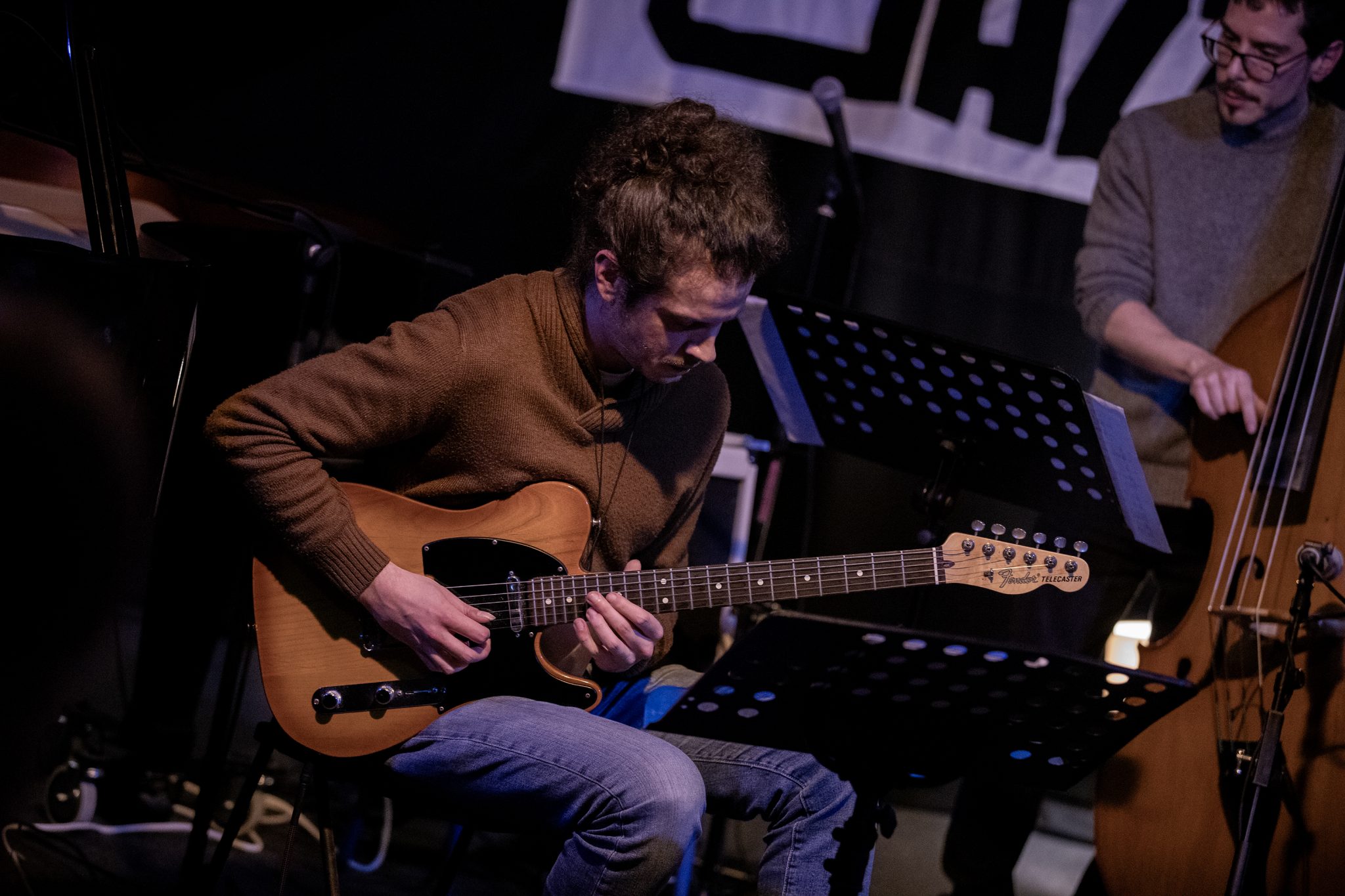
I’m pretty sure I first met Aruán at the Vision Festival when I moved to New York, and we just kind of hit it off. When I was putting the quartet together in 2019, I felt like I should reintroduce the piano into my life, as a harmonic instrument. I had played with the trumpet player Frank London at the old Stone, John Zorn’s venue in New York, and he had collaborated with Brad.
Aruán, Brad and Chad had also already worked together in different constellations. And their connection with all genres really made that the possibilities were endless, like we could go anywhere. I could hear the three of them individually in my mind and felt like this group was going to work, like it was a perfect fit. And I also needed to work with people older than me. Aruán and Chad are 10 years older than me, Brad is 20 years older than me. I made a conscious decision that I needed to develop this system but also develop my musicianship more. I needed to play with people who would be supporting the music, who had played with people extensively. Aruán played with Wallace Rony for years, Chad played with Pharoah Sanders and Fred Anderson. Brad has played with Ornette, with Muhal Richard Abrams, and so on.
So I wanted to get my ass kicked on my own music and I wanted to grow as a musician in the process. And I didn’t want to compete with anyone on stage. I needed people to be secure in what I was trying to present and they were going to support me and push me. I was not going to fight egos on stage. I don’t have time for that.
Over the years the quartet has developed into an incredibly tightly knit unit, with an almost telepathic interaction, as many reviews have noted. You talked a lot about listening earlier in this interview. Is that what is essentially happening between the four of you: a constant deep listening and responding to each other?
Yeah, our level of listening is at its highest right now. It’s really special. I hope we keep playing. We know each other so well as players that we have a sensitivity to each other now that is beyond understanding. I mean, we finish each other’s phrases in concert. We just played six nights at the Village Vanguard, and it was amazing. Six nights, two sets a night. And every set was different. You know, we didn’t just play. We played because all of our material was new for everyone. Unfortunately, it was not recorded. I wish maybe next time. We’re just at a very high level as a band. Individually, we each have our things we can do, but as a band, we’ve really been pushing the envelope.
Can you take us into the studio when you were recording Omni? How should we imagine the recording process for this album?
Most times when I record with my quartet, we’ve been on the road and already played so many shows. That’s been my normal mode of operation. It makes sense to record after we’ve already been in the flow of playing together. It’s not that we actually practice any material on the road, but about getting back in the flow with each other again after we haven’t seen each other in a while. It’s like, the more you cook in a cast iron skillet, the more it just keeps getting better and better. That’s why I like to record after, rather than before a tour.
So we go in the studio, I hand everybody the music. If we’re fortunate, we get the music the day before, but sometimes the music is written on the day of recording. That’s not ideal and I never was like that, but my life has been a bit chaotic —in a good way—, so at times it happens. By the way, with regard to Molecular Systematic Music, I always translate the music to Western notation, the musicians are never given symbols. All the music is played pretty accurately, you know. I also told everyone the vibe. And then we just rehearse and then we play. We might run it down once or twice, and then normally record each track two times, except for “Fire in My Bones”, which was recorded once.
So that was the process for this album. And then I thought of calling all the songs “Sermon”, but then I was like “Nah, I’m not gonna do that…”
After your stint at the Village Vanguard, you also did a short European tour. Does the music change or evolve during such a tour?
Oh yeah. By the time we finish our last gig, the music becomes more spontaneous, the elasticity increases because we’ve become familiar with it and really build on trust. We begin to trust each other even more to really stretch the construct of the music overall. We’re stretching and pulling it and starting and stopping in different places. And maybe one tune that’s always started with the piano, this time it starts with the bass and we’re just trusting each other and trusting the moment. It’s really built on trust and on just being a band. You can’t get to these higher levels of playing without being a real band. So I feel very fortunate, blessed, really.
I hope that there’ll be a live album coming from Omni. Because the music is definitely in a different place now. We’ve been playing “Sermon”, or all these other tunes, drastically different than how we recorded them. I mean, it makes the recording seem very stiff.
Talking about touring. You regularly play both in Europe and the US. Do you notice a difference between both scenes in terms of audiences or the critical reception of your music?
I don’t really notice a difference, but our audience is definitely built up more overseas than it is in America. But America is slowly catching on and things have been moving in the right direction. That’s just the way my path led, you know. I signed with Sony in 2014 and did Divine Travels with William Parker and Gerald Cleaver, and from there I just started coming overseas, so it just kind of worked out that way. Meanwhile, building a US audience has been a bit of a challenge. Not because there aren’t places to play, but it’s just been a combination of my priorities. I’ve been playing with William Parker since 2011, I’ve also been working with Dave Douglas the last few years. The Messthetics have really helped me increase people’s awareness of myself in the States, just because we’re playing punk rock venues. It’s been a great experience working with them. And our concerts at the Village Vanguard a few weeks ago were basically sold out almost every night. So that was a huge success, you know.
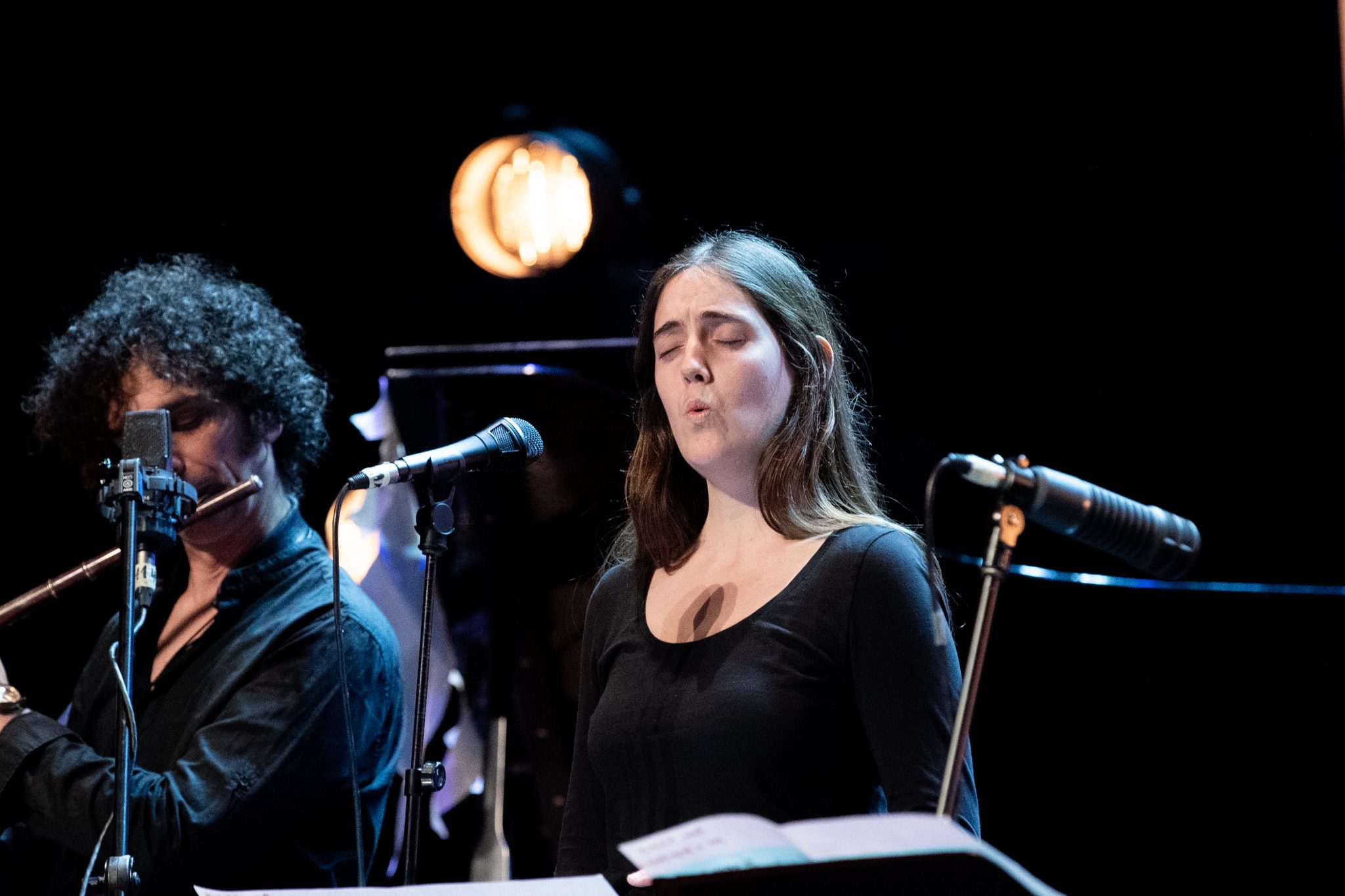
I believe things work out in their own time. People have been getting to the music as it’s been reaching them. And I feel like Omni has really been making its own way to people. It’s been a unique experience. I embrace my path. It’s been unique, you know, really unique.
And the path continues: the quartet was recently at the Rudy Van Gelder Studio?
Oh, yeah! We recorded there with the quartet. I don’t want to give out all the secrets, but basically a sum total of a lot of material on the albums in hopes of a vinyl. It was a beautiful experience recording there. And when that music comes out, I’ll be ready for people to receive it.
Very much looking forward to that! Thanks so much for taking the time to talk to us.