

Jazz Na Serra
San Antônio do Pinhal, Brasil
Festival


Jazz na Serra: between the classic, the modern, and the future
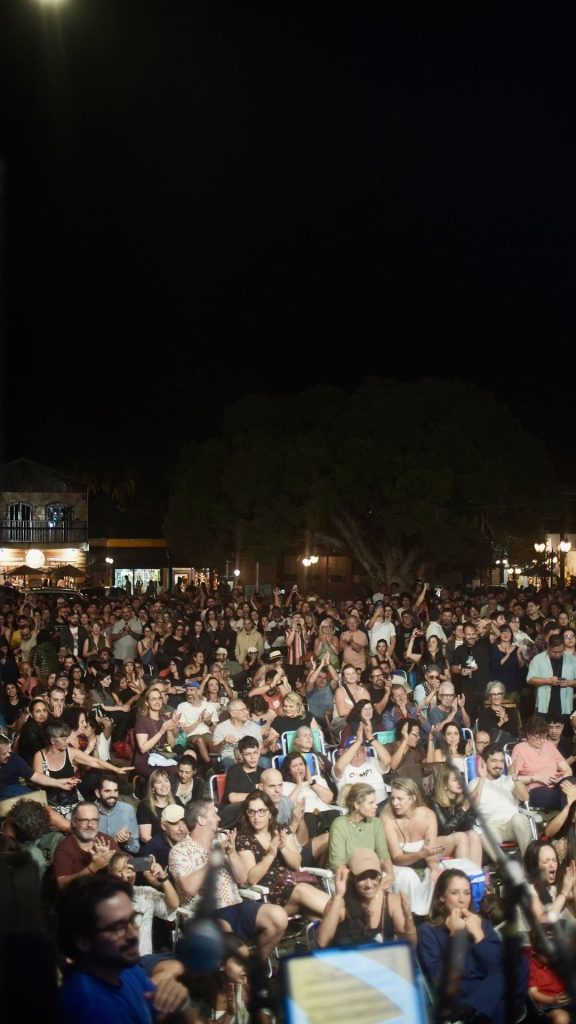
Accompanied by birdsong, jazz resonates through Santo Antônio do Pinhal. The night of Friday, August 28, welcomes the crowd with a full moon illuminating lovers of an art form that has transcended rhythmic boundaries. Gradually, the open spaces of the *Praça do Artesão* (Artisan’s Square) fill up. Chairs are set out; some people sit on the ground, while others stand toward the back. The expectation is that, once again, the number of people in the small town of almost 7,000 inhabitants will double. Visitors from various regions have sought refuge in the mountains to enjoy the mild weather, beautiful scenery, and fine music during the two-day, Jazz na Serra [Jazz in the Mountain] festival.
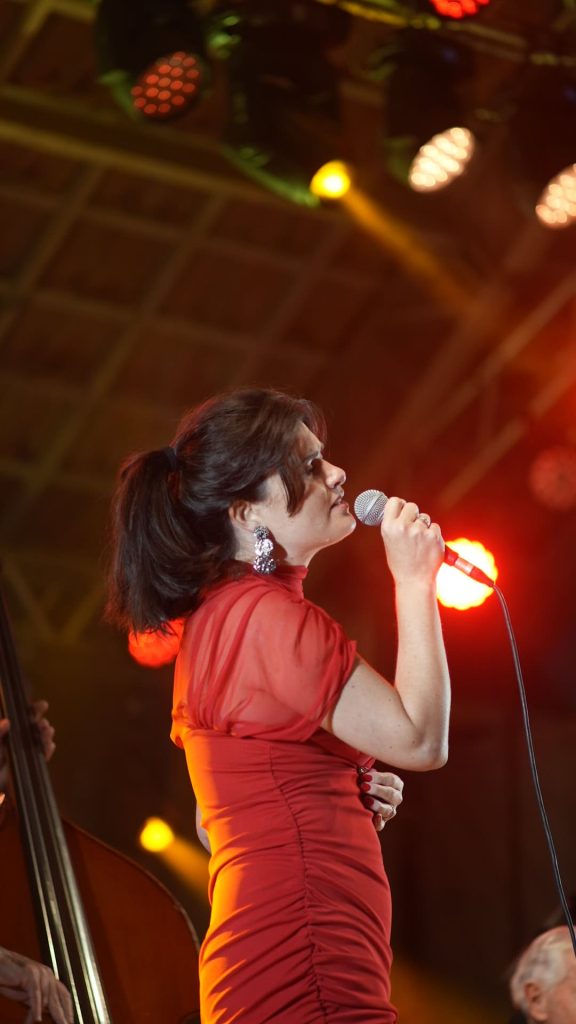
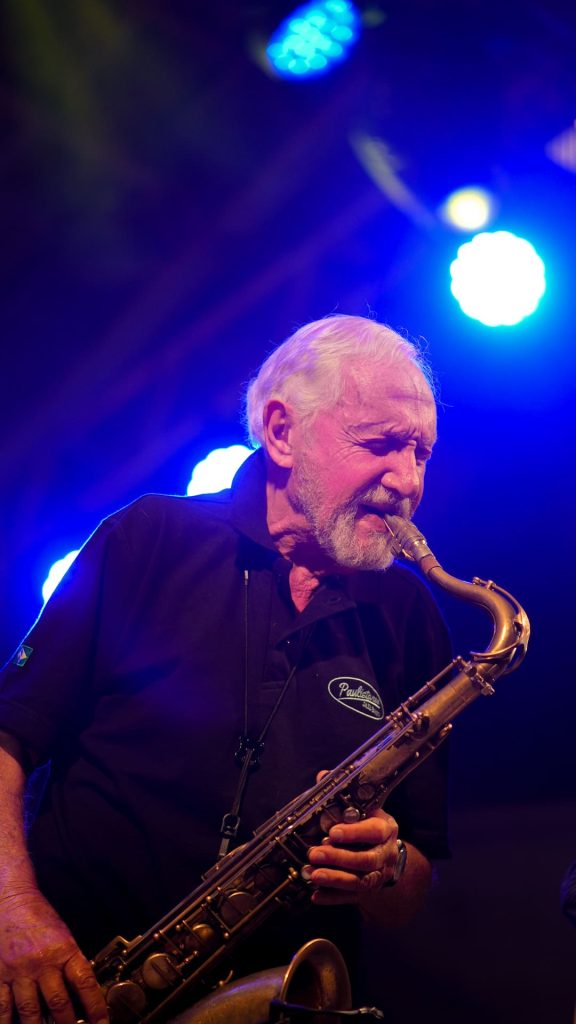
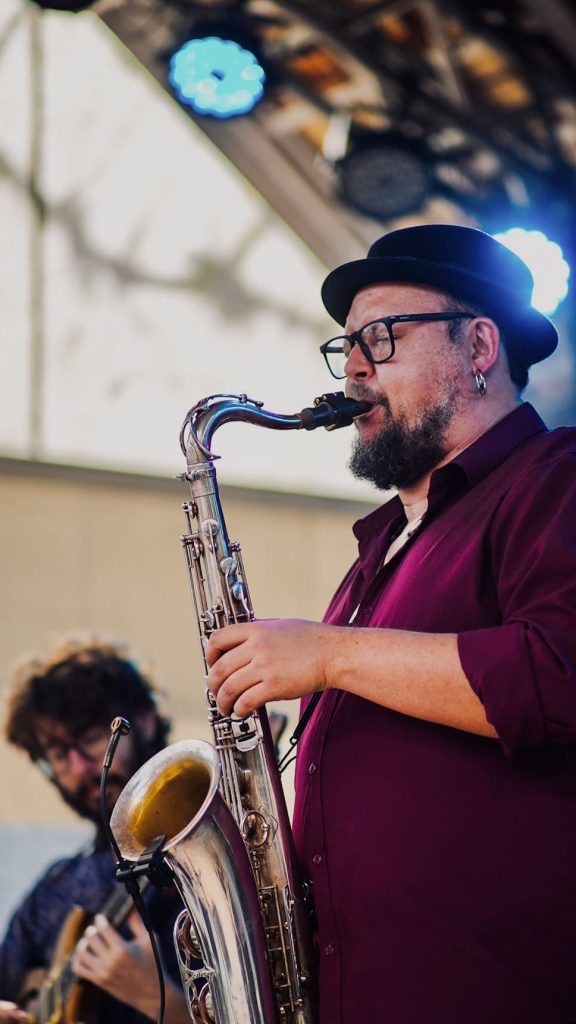
To warm up the cool evening air, Giu Nogueira performs songs spanning gypsy jazz, blues, bolero, and Brazilian popular classics. She is joined by guitarist Joseval Paes, bassist Danilo Vianna, and the legendary saxophonist Hector Costita. The Argentine musician—who chose to make Brazil his home—is a true icon of the genre, having played with the likes of Lalo Schifrin, Manfredo Fest, Sérgio Mendes, the Zimbo Trio, Hermeto Pascoal, and Elis Regina.
The meeting of generations, unconsciously, permeated a large part of the presentations. Back in the country after a stint in Europe and Thailand, Giu made a masterful return to the festival stage, three editions after her debut appearance. Through her renditions of classics, she moved the audience and got them dancing. A highlight was “Samba de uma Nota Só” (One Note Samba) by Antônio Carlos Jobim, sensitively guided by Danilo’s acoustic bass, which at times transformed into a percussive instrument. It was a striking start for an audience already anticipating a high level of technical and artistic excellence.
This standard was maintained by Michael Pipoquinha, a bassist, composer, and producer with a rapidly rising international profile. Blending instrumental music with vocals, he showcases his versatility. The show serves as a testing ground for the release of his album *Minha Pele*. At times, he plays music featuring harmonies and melodies influenced by the *baião* style of Luiz Gonzaga; at others, he shares his own original compositions. It is a journey of shifting intensities, full of energy, yet also containing dense, subdued passages that can cause attention to drift. The musical flow breaks whenever he sings. His primary instrument is the bass; he uses vocals mainly to revisit a practice from his days in the church. I wanted to talk about things and interpret them in a way that few people did, and I couldn’t do that just by playing music. “Here, Brazilian songs are very serious things, known throughout the world,” he says. “Today, it’s what I love doing most… writing songs with lyrics and putting them out there.” His repertoire includes a new take on Djavan’s “Lugar Comum” and collaborations with some of his musical idols.
“It’s incredible. I mean, I met these guys, played with them, and became friends, but I never really thought they’d agree to record with me. Still, I decided: I’m going to ask Victor Wooten, Richard Bona, and (John) Patitucci to record on my new album. I asked, and to my surprise, they all said yes. It brings me such joy, because these are people I never even dreamed I’d meet. It just sort of happened.
While he can’t quite pinpoint what sets him apart, Pipoquinha emphasizes that his approach is unique. “I can’t put it into words, but I know what people say about it,” he notes. “They talk a lot about my love for Brazilian music expressed through the bass.” Indeed, his style is distinctive, blending elements of Northeastern Brazilian culture with jazz virtuosity. At the water fountain where we talked, behind the square where one of the stages is located, the 1st ended with the blessing of Saint Anthony.


Brazilian Jazz Is the Future
The chill of Saturday morning, the 29th, gave way to the warmth of the sun as the hours passed. Parasols, hats, and sunscreen joined the list of festival essentials, alongside the chairs, water, and coolers stocked with ice-cold beer. Whole families, pets included, returned to the town center to enjoy a full day of music. Concerts alternated between Boulevard Araucária and Praça do Artesão. During the 30-minute breaks, one could leisurely stroll between the two venues, grabbing a coffee, having lunch, or even doing some quick shopping. However, those aiming for the best spot picked up the pace. This back-and-forth movement also served as good exercise; walking from one location to the other, I covered over 10 kilometers, burning around 400 calories in the process.
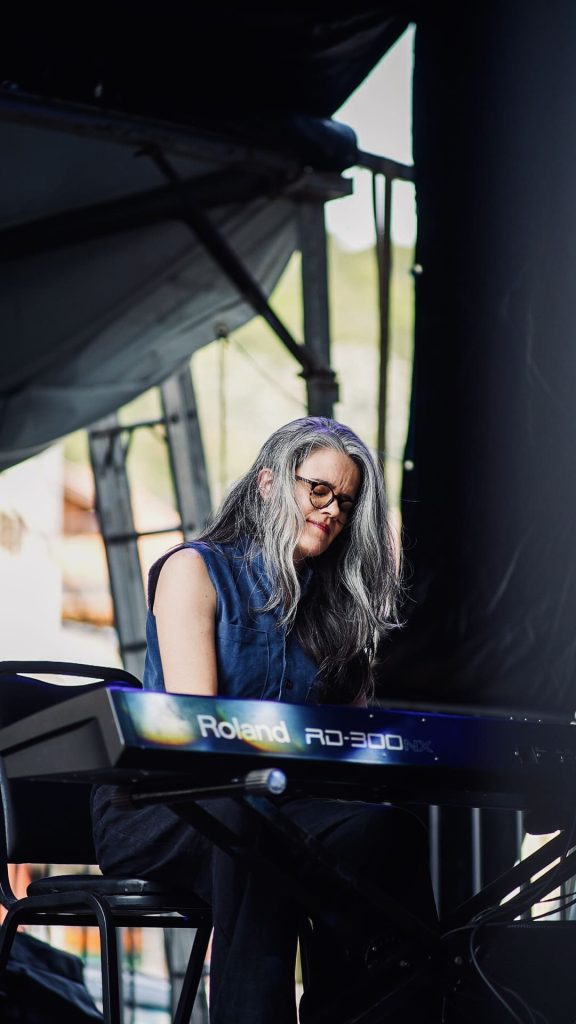
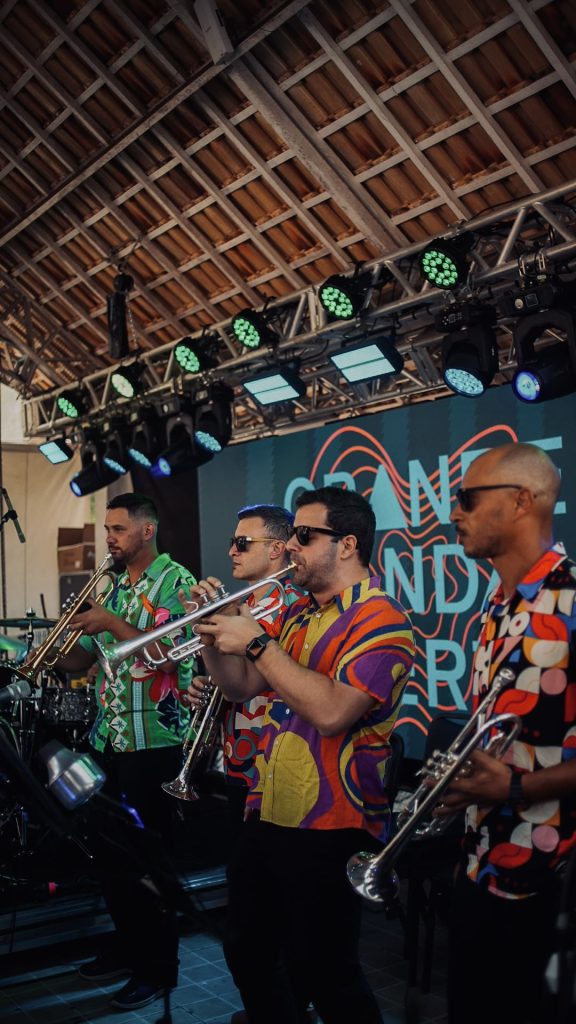
While some restaurants had lines at lunchtime, the *Grande Banda do Sertão* fed the crowd’s hunger for great music. With 16 musicians, the big band blends global influences with regional sounds, evoking memories of small-town Carnival celebrations—a Brazilian tradition every February. It was impossible to turn one’s ears toward any other sound in the vicinity. Their repertoire featured original compositions and reinterpretations, including works by composer Elpídio dos Santos. Improvisation played a key role alongside the set pieces. The music offered such a rich tapestry of textures that it was hard to pin down a single genre; it reflected the musical beauty of a country of continental proportions, defined by its diverse characteristics. This diversity was also evident in the renowned *Banda Mantiqueira*, which fuses swing jazz with samba and forró. The combination of these elements created the perfect atmosphere for movement. Although space on the Boulevard was limited, some tried to dance, while others simply admired the performance. There was a fervor and a rhythmic sway here that cannot be found anywhere else in the world. Respect for the music isn’t limited to the musicians themselves. You rarely see cell phones positioned above people’s heads. It happens. However, eyes and ears are alert. Conversations are few and far between. There is a reverence for the goddess of music, something rather rare these days when the seconds of a video are worth more than the complete experience. When Eloá Gonçalves sits at the electric piano, that attentiveness intensifies; there is a distinct delicacy and care in her playing. Rodrigo Marinônio (drums) and Felipe Brisola (acoustic bass) follow suit. Remarkably, this is the trio’s first time playing together; yet, they are so in sync, it feels as though they have been performing as a unit for ages. As they play, they enter another realm—an atmosphere shared by listeners who close their eyes and let the music wash over them. The technique Eloá honed at the University of Music and Performing Arts Graz (KUG) in Austria never overshadows the emotion evoked by the piano’s subtle touch in songs from the albums *CASA* and *SOBRE O QUE MOVE AS COISAS*. It is a true gift for anyone seeking a moment of calm.
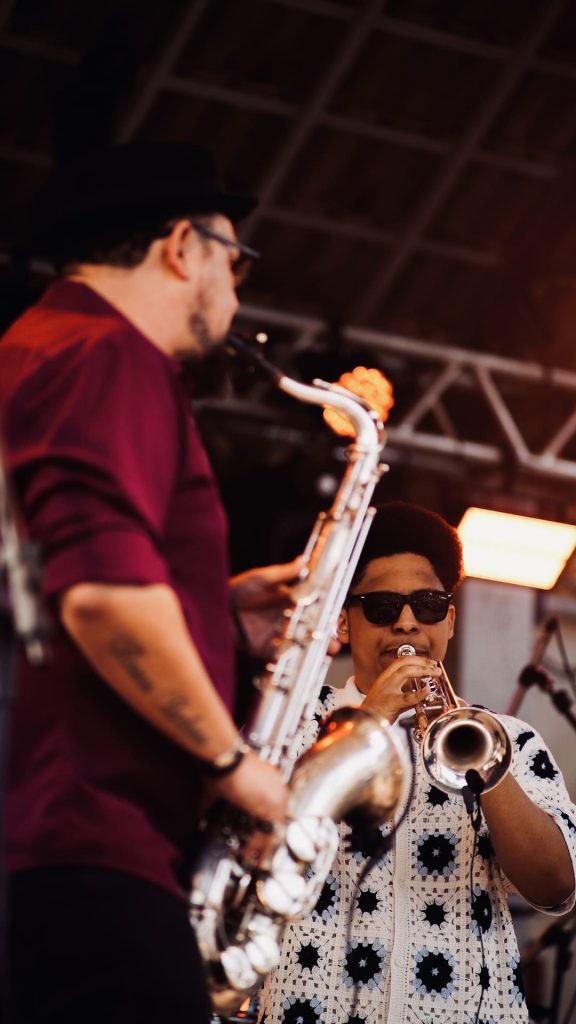
Back at Praça do Artesão, the Jota P Quintet dives deep into the essence of Brazilian instrumental music. They capture the fun, the colors, and the distinct flavors found across the country’s various regions. They also transcend boundaries by infusing their jazz with South American rhythms. At times, the saxophone takes the lead; at others, the flute. But it also opens up the possibility for his bandmates Luis Gustavo Rocha (drums), Luiz Gabriel (trumpet), Tom Cykman (guitar), and Biel (bass) to take center stage. Trumpeter Luiz Gabriel demonstrates his immense potential; Jota P gives everyone the freedom to shine. He cites Hermeto Pascoal as his main bandleader reference. And the more than 20 years he spent playing with him has provided him with invaluable experience. “I had already played with some national jazz artists, but with Hermeto it was crazy, because he was a bandleader, a commander, and anything could happen at the show,” he says. “I try to bring to my group what I learned from him, which, in short, is not being afraid to create, not being afraid to be yourself, never premeditating anything. That’s the hardest thing for me, not premeditating. Sometimes I feel like telling the drummer to stop. It’s something I already felt before playing with Hermeto, and he, in a way, encouraged me to be myself and do whatever comes to mind. I think Hermeto’s greatest lesson is having no limits to creativity.”
This essential element of jazz development forms the foundation of the Dejavu Session. Trombonist Joabe Reis leads the jam session, joined by some of the country’s most sought-after musicians. The setlist features Brazilian sounds. Even as a few raindrops threatened to fall, the audience didn’t budge, remaining captivated by Dejavu’s jazz-funk. To further enrich the session, Joabe invited veteran trumpeter Walmir Gil and guitarist Arismar do Espírito Santo. Named by Guitar Player magazine in 1998 as one of the ten best guitarists in Brazil, he further excited the audience with his charisma. He blends riffs and scat singing. He invites everyone to join in the fun and is delighted by the response. Stepping off stage, calm and smiling with his red instrument tucked under his arm, he celebrates the young musicians who are elevating the quality of modern jazz. “It’s a great joy to be with the young folks who play together like this. It’s a family,” he observes. “It’s a great joy to be with the guys who play together like this. It’s a family,” he observes. “Jazz in Brazil is going in this direction, this gold, this touch… the guys are talented. But it’s a family. You understand? It’s different from just talent.” He also emphasizes that the music of the future is Brazilian jazz. “Not here, they’re all talented.” He also emphasizes that the music of the future is Brazilian jazz. “It’s being born here with these fusions. You go to festivals abroad and you don’t find these things that we have here. There’s a guy who’s an incredible soloist and the crowd follows along. It’s an aesthetic. Not here, it’s an equal collective.” “There’s that love for music.”
Juliane Gamboa is one artist following this path. Early in the evening, she expands her territory beyond the purely instrumental. She sings with a Rio de Janeiro swing, traversing jazz without being limited by it; samba serves as the thread that allows her to venture down various musical paths.
Nominated for Best New Artist at the 2025 Latin Grammys, she notes that her live performances heavily influenced the recording of her second album (which does not yet have a scheduled release date). “Some songs from a C-side of Brazilian music, like ‘Banzo,’ which Leni Andrade recorded back in 1965, I mix that with Max Roach’s ‘All Africa.'” Without confining herself to just one specific genre, she agrees that both jazz and Brazilian music are very broad. And it is within this breadth that she tells her story.
“I think Brazilian music itself is very jazz-oriented, technically speaking, but I think we also invent a lot,” she reflects. “I believe that all the jazz artists we respect so much, for example, Miles Davis, were musicians who changed jazz their entire lives.” Until he died, he kept saying that jazz was more like rock and roll, or something that could be done with Indian instruments, or in a more spiritual vibe. Anyway, he started playing cool jazz, which is a different energy… I think jazz is invention, it’s a constant movement, that’s why language matters so much because it’s each person’s language imprinting itself on that sound. I like to think of it that way. Speaking of language, of Portuguese, I sing songs in English, I’ve recorded two songs in English already, but the Portuguese language prevails. “I also think it’s very important to defend the poetry of Brazilian composers.”
An event to celebrate the beauty of this sonic diversity, Jazz na Serra closed its fourth edition with Black Rio, one of the fundamental bands for the establishment of soul, funk, samba jazz, and fusion in Brazil. They started with “Maria Fumaça,” a single from their 1977 album of the same name, chosen by Rolling Stone Brazil magazine as the 38th greatest album in Brazilian music. With over 50 years of activity, the band is led by pianist and arranger William Magalhães, son of saxophonist Oberdan Magalhães. In just over an hour, they reinforced the reasons for their worldwide acclaim. They finished the night with a great and fun dance party playing Tim Maia hits. This is further proof that festivals of this caliber, with good curation, are increasingly necessary to unite the traditional with the modern, the young with the experienced. Both complement each other and are essential to maintaining the constant transformation of jazz.
