

Matthew Shipp
Interview

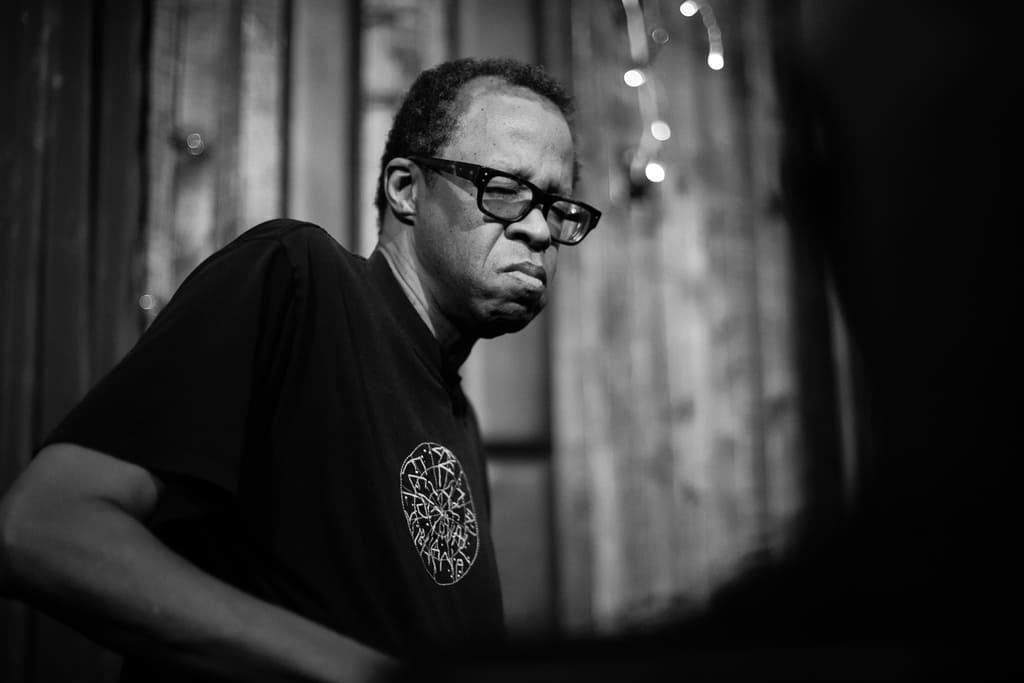
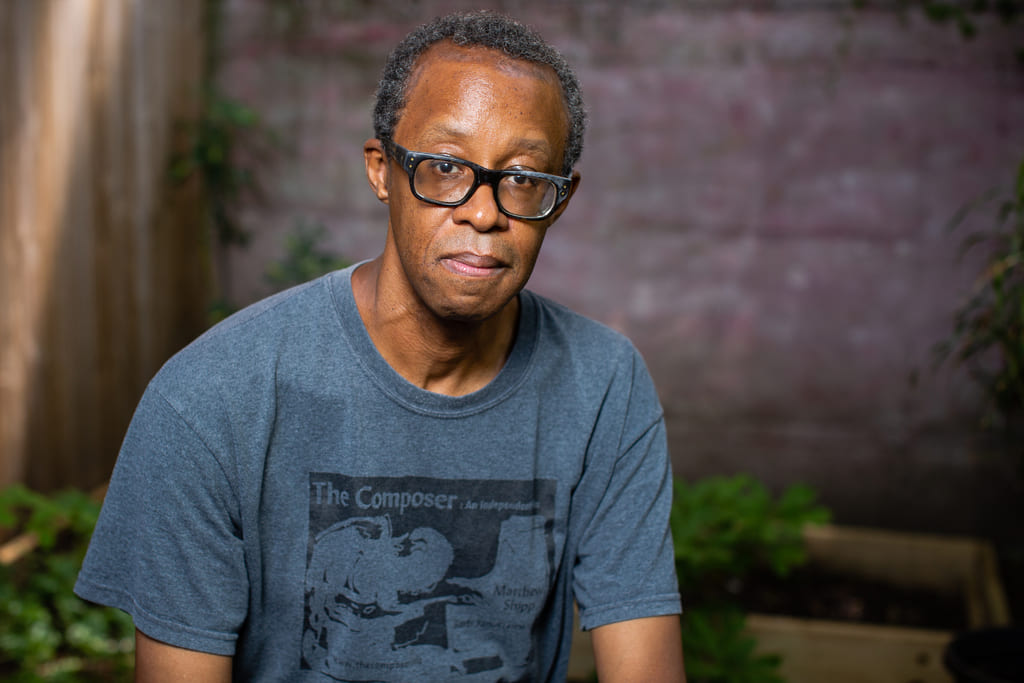
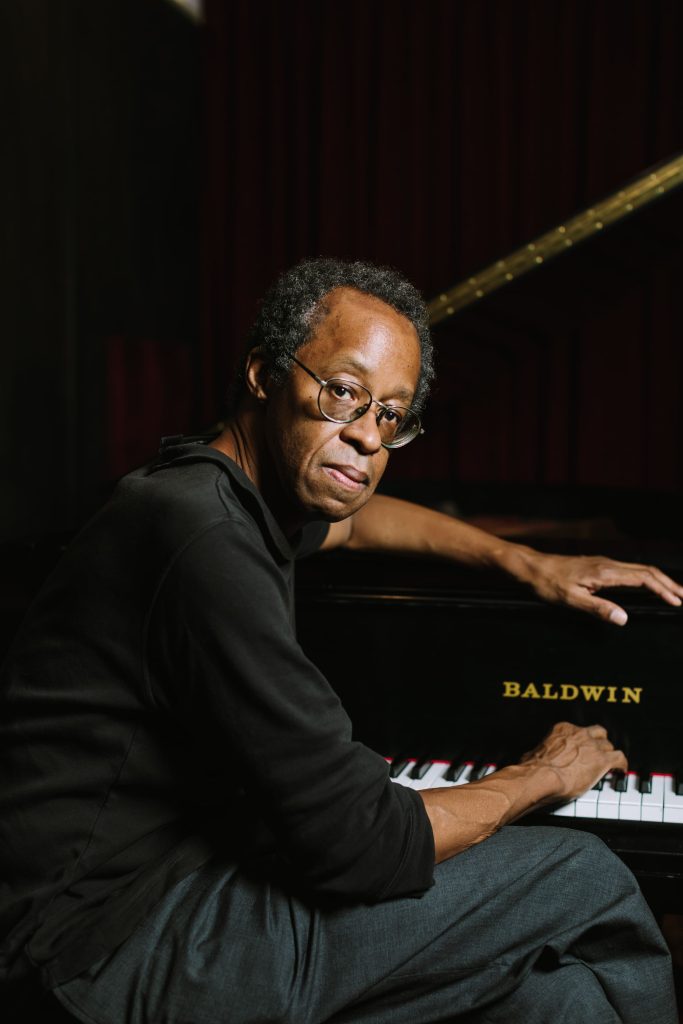
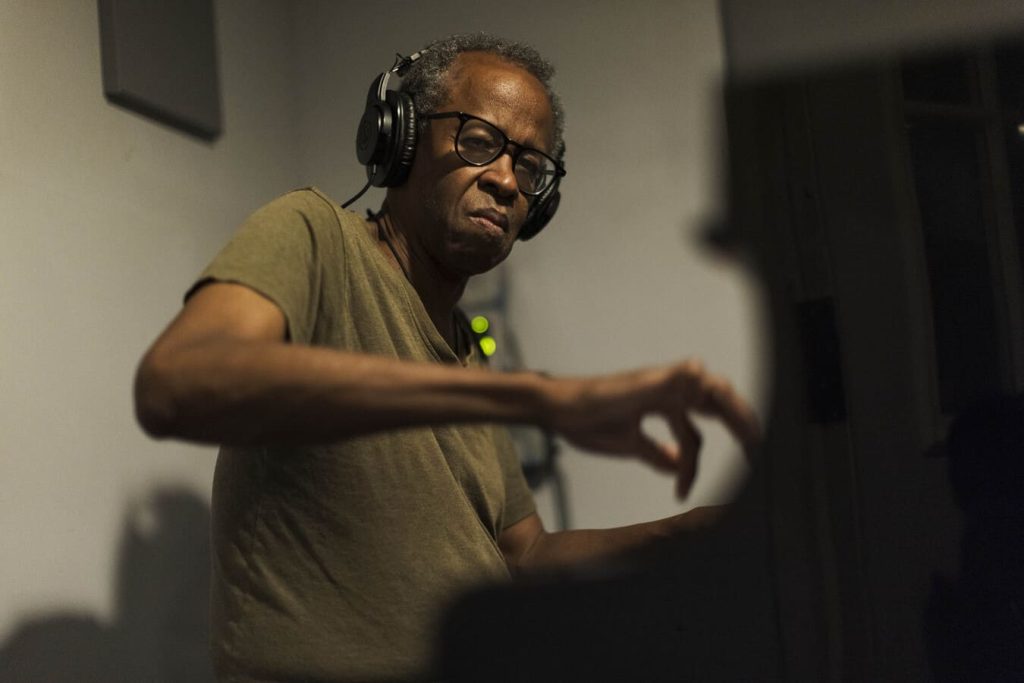
Since he emerged on the creative music scene in the 1980s, Matthew Shipp has built a vast body of work, both as a solo artist and in numerous collaborations with David S. Ware, Roscoe Mitchell, Roy Campbell, Wadada Leo Smith, Joe McPhee, and Evan Parker, to name but a few. In the past month, Shipp released two duo albums with his long-term collaborators, William Parker and Ivo Perelman. A Whole System Of (Tao Forms) marks the fourth duo album by Shipp and Parker, and appears alongside ESP-Disk’s reissue of Zo, their first duo recording from 1994. With Perelman, Shipp released Distillation (Squid Note), extending a partnership that began in 1996 and has in the meantime produced more than 50 albums. Last year, Shipp also published his book The Black Mystery School Pianists and Other Writings (Autonomedia), which received the American Book Award in 2026. Across essays, diaries, poems, and lectures, Shipp reflects on an idiosyncratic and iconoclastic musical lineage originating with Monk, but also on the relation between jazz and boxing, on his past collaborators, and on the New York downtown scene of the 1980s. Along the way, Shipp invokes thinkers and writers as diverse as Ralph Waldo Emerson, Walt Whitman, Lao Tzu, Jack Kerouac, William S. Burroughs, and Jorge Luis Borges, articulating a cosmological framework that informs his views on the act of improvisation.
In the run-up to the double release of his albums with William Parker, Shipp took the time to talk extensively about the views he expresses in the book, the notion of an impersonal history of jazz, his development as an artist, his literary influences, and his latest collaborations with Parker and Perelman.
The essays, diaries, poems and lectures in The Black Mystery School date back to the early 1990s. How did the idea of bringing these texts together first emerge?
I’ve been writing for years for different websites and blogs, sometimes as a guest. And after doing it for such a long time, it occurred to me that I have a whole body of work and I should compile these writings. When I started looking through them, I noticed that there were many connecting themes and an actual worldview. So I decided that it would be cool to put a book together. Yuko Otomo, who is the wife of the late poet Steve Dalachinsky, helped me put it together and choose which pieces to put in. It’s kind of my manifesto. I mean, if you’re an improviser, I would hope your architecture comes from a worldview. And this is mine. There are many things that are a part of it, obviously jazz, but also aspects of literature, mysticism, religion, sports, and just living in life in general. I’ve written about a lot of topics over the years because there’s a lot of things that interest me.
That worldview is organized around the concept of the ‘Black Mystery School’. How did you arrive at that idea, and what does it mean to you?
The idea of a lineage from Monk onwards came from a person I used to talk to a lot when I was a teenager and who was a philosophical mentor. He always used to emphasize that, in his words, Thelonious Mark “did it right”. What he meant by that was that Monk had a very specific muse, a very specific vision, and he kept to it. And that got me to thinking about The Mystery School as an alternative code passed down among a certain subset of people.
Later I developed this idea further by making a correlation between boxing and jazz. In an essay called “Why Floyd Mayweather Is the Last of a Kind”, Charles Farrell writes about “Black Code fighters” who could not get the big fights and instead started fighting each other a lot and trained in black gyms. They were making a living fighting each other, and they developed an underground coded language of defensive boxing between each other. This idea of an underground code in the discipline of boxing as put forth in this essay verified my intuitions on the existence of an underground code in jazz, as in The Black Mystery School. Also in jazz, there’s a kind of an underground school of people who generated their own path parallel to the mainstream, their own language, their own way of being. So this essay convinced me that this idea I had been thinking about since I was a teenager was not such a crazy idea after all.
In the opening essay, you trace that lineage back to Monk and connect it to an idiosyncratic group of pianists. What is it that binds these very different musicians together?
Well, I see the tree that I call the Black Mystery School growing from a bifurcation between Monk and Oscar Peterson. Peterson claimed a lineage from Art Tatum, he gave the sense to me of having been given the mantle from Art Tatum. And there’s a whole way of seeing technique from that lineage that’s very different from what Monk did. It’s actually also different than what Ellington did, and there’s a lot of aspects of Monk that come out of Ellington piano-wise. I’m not saying that Art Tatum was tied to a European technical thing, but that I’m saying that the perception of Art Tatum is tied to that, not Tatum himself. I think Art Tatum was an iconoclast himself. People put a lot of things on Tatum, but I think he just did what he did. I see Oscar Peterson as the embodiment of this perception of what Art Tatum was, and as projecting that perception forward in jazz history. The Monk school is very different from that – I don’t want to say that it was a reaction against it, because I don’t think they were reacting against anything. I think they were just doing what they did and being who they were.
So that’s where I see the bifurcation. It was really brought home to me when as a kid I was watching Oscar Peterson on a TV special talking to André Previn, the classical conductor who was also a jazz enthusiast. And also by things Monk and Peterson said about each other in Downbeat – I realized that there was a real psychic block or different route that was going on.
Your notion of the ‘Black Mystery School’ also challenges the categories of jazz and free jazz, as when you write about yourself: “I have no idea if I play jazz, some offshoot of jazz, free jazz, or some new emerging genre that is improvisation based. Nor do I care. Classification and exact definitions are for morons of the highest order.” How does Monk’s example complicate these categories?
Well, I look at Monk in two ways. I look at him as one of the founders of bebop, and then I also look at him as not wanting to get caught within the clichés of bebop. When he writes his own code, that has nothing to do with anything other than his own inner being. I don’t know how he thought of his music, but at his most pristine focus, he was an American composer sitting at a piano doing music. I mean, do we consider Chopin classical in the same way that we do Haydn or Beethoven? No, Chopin is a freak, in the sense that he has this universe that he generates that is the Chopin universe. And I look at Monk the same way. Monk wrote his own code, he generated his own universe.
Does Monk’s music fit within the realm of what we call jazz? Of course. But at the same time, it’s something else. When I listen to Monk, I’m listening for his particular touch, his particular attack on the instrument. And when I listen to Chopin, it’s that particular Romantic, Polish, universal thing. I don’t think of him in the way same way that I think of Haydn or Mozart, it’s a very unique universe. I think of Monk the same way, as a very unique universe. I don’t think of him in the same way that I think of Red Garland or Wynton Kelly or anyone else – it’s an alternative touch, an alternative attack on the instrument, an alternative soundcloud as far as what he’s trying to get with the harmonies. And it’s subversive. Most pure jazz is subversive, but Monk is subversive in another way.
You are also particularly critical of the concept of free jazz. About David S. Ware, you write that he “loved and respected the free jazz tradition, but was always conscious of making his music something else.” And about William Parker you write that “he truly believed in the revolutionary possibilities of the language we wrongly use the term free jazz to denote.” So is free jazz also a label that risks eclipsing that deep originality at the heart of the Black Mystery School?
Yes, free jazz a term that lumps a bunch of people together, whereas each one of those individuals, if they’re fully centered in what they’re doing and who they are, have written their own code. That’s number one.
Number two: a lot of aspects of free jazz that we love are actually an attempt to develop a universal music. I mean, Albert Ayler was attempting to speak in tongues, and speaking in tongues, by its very nature, is universal. In the Bible, when the apostles came out after Pentecost and they spoke to the crowds, everybody understood them within their own language. And before the God of the Old Testament confused everybody’s tongues when they were trying to build the Tower of Babel, there would have been one universal language. So a lot of aesthetic elements of free jazz have to do with the attempt to tap into what somebody would think is a universal language. I get that attempt out of a lot of Coltrane, out of some Alice Coltrane also, and definitely out of Ayler. Sun Ra also traffics in that idea at times. And Don Cherry attempted to create a universal music from actual folk elements of different world musics. Ayler also emphasized folkish melodies of sorts. He didn’t do what Don Cherry did – you know, go around the world and play with people from different backgrounds – but it was also an attempt to tap into a universal pool of language. So free jazz, as the black American idiom that I come out of, is by its very nature trying to tap into something that’s universal. It’s always trying to escape itself as free jazz when you’re practicing it.
In the book you also indicate that many free jazz pianists do not make the list of the Black Mystery School, precisely because it is not about free jazz per se.
Right. Monk, who is kind of the father or the Black Mystery School, had a very problematic relationship with free jazz, he wasn’t really that into it. But the thing is that most free jazz pianists cite Monk as a model or an example, mainly because of his iconoclastic way of being. So I just wanted to make clear that when I talk about this school, I’m not talking about free jazz. Take Randy Weston or Hasaan Ibn Ali, there’s nothing about what they do that relates to what we think of free jazz. Maybe some of the devices they use, or sounds they get out of the instrument, or a few measures might have something to do with what a certain free jazz player might do, but they were pretty much formally still kind of in a post-bop world.
Since I was the one writing this book and people think of me as a free jazz musician, I just wanted to make clear that I am not talking about, you know, a post-Cecil Taylor type of school, although Cecil is very prominent in the school. One of the things that really fascinates me is that although Cecil Taylor, Randy Weston and Mal Waldron were not that far apart age-wise and took in a lot of Ellington and Monk, they still they have such different musical personalities. Their bodies of work are rooted in a lot of the same material, and yet are so different, as far as the tree that they come out of. I find that just extremely fascinating. It shows that Monk and Ellington can generate an infinity of responses. That is what is so deep about them: that the responses to their work by people that are inspired by them are so varied. The tree is so strong that it can generate many different types of plants.
That raises a broader question about lineage and originality. If the Black Mystery School is to some extent a historical tradition, how does that fit with your poem “I Have No Influences”?
What’s interesting about that poem because is that I make some bold claims there about having no influences, but then the Black Mystery School essay is an actual breakdown of a historical branch or school. So you could say the book exists on a contradiction between a historical view about influence and then having no influences. I think the tension between those two ideas gives the book its juice.
Now, the “I Have No Influences” poem is a metaphor. As a human being, I can’t say that I was just put here in a void. I mean, there’s a whole history to the DNA of what makes up humans, what makes up life on Earth that went into making me. No thing or no person just comes from a void into a situation. But at the same time, everyone is completely unique. There’s no two fingerprints alike, no two snowflakes alike. And the poem deals with the fact that it is all language. Who owns language? No one. And in the metaphysical way that I look at the world, I look at all existence as one cosmic brain.
So if this is all a big cosmic brain, as I say in that poem, I could do something that might hint at Monk or Ellington, but it could be that I partake of the same one cosmic brain that they do. So just because I exist after them in time, it’s not a matter of trying to play like them, but a matter of sharing that language that is out here. We all are part of the one cosmic brain and I have access to certain things that they did.
Now, again, that’s all a metaphor. Of course I listened to stuff and I learned things, and of course there’s always this quest to get to who or what you are. And even if I got to some pure aspect of what constitutes Matt Shipp, it would still be through the historical filter of when I was born, the stuff that was around me. Influences are like eating food: you eat salad, you eat steak, but you don’t look like salad or steak. You take it in, you digest it, and it becomes part of your central nervous system, you use the food to nourish yourself.
So, interestingly enough, the book exists and gets its juice on that contradiction that we all go through a historical lineage, we are all born in the middle of something. You are being pushed and pulled between the now, a supposed past that pushes against you, and a supposed future. Now, what constitutes that pure you? And how do you digest the parts of the cosmic brain that were before you on a human historical timeline? To a creature that lives in a different dimension and doesn’t see time and space the way we do, something I could be doing in the present could actually be influencing Jelly Roll Morton. Space and time are way too complex. There’s billions and billions of bits of information that hit us all constantly, from the present, from the past, and probably from the future. None of us really know what’s going on, we’re just kind of doing stuff.
Throughout the book, you often return to this idea of language. What does that concept mean to you beyond its usual use in jazz criticism?
From the moment you’re thrust out of you mother’s womb, you’re surrounded by language. DNA is language. Your body is language. The things people say to you is a language. Walking down the streets is a language, or the customs that you learn. You’re bombarded by language and you’re trying to make sense of it.
Once you decide to be a musician or a composer, you have a historical lineage that you supposedly come out of, and you have to make sense of all this. And at the same time, you’re trying to figure out what constitutes you. And you have to sift through a lot of language, sift through a lot of things and make decisions. You have to discard things. You have to let some things in. You have to figure out why certain things work with your DNA or your personality, however you want to denote that. And it’s all confusing, unless you’re insane or just utterly possessed. But even then there’s a lot of information to sift through. And there’s a constant tension between what is originality, what is language, what is influence, and what is yourself playing an instrument in a void, because the instrument has its history too. So there’s millions of variations of history pushing against any individual at any given time in point in space-time.
Your notion of language is central not only to individual musicians, but also to how you think about musical history itself. In the “Zero Lecture” you gave at John Zorn’s The Stone in 2017, which is the concluding essay in the book, you say that “At the second of inspiration, the flow of language is all there is, and those names in the jazz firmament –whether Coltrane, Parker, Armstrong, etc.— are incidental, for you are dealing with the impersonal aspects of the flow of language, not with personalities.” Is that how you look at the history of jazz (or of music in general), as an impersonal history of language flow?
You know, when I came to New York in the 1980s, Wynton [Marsalis] and the neoconservative paradigm was coming along too, and even if those type of jazz wars don’t really exist anymore, a lot of things I say and do are holdovers of my being traumatized by people constantly saying the name Louis Armstrong or Duke Ellington. The point I want to make is that all that matters is the flow of language, so you can give the middle finger and say fuck you to John Coltrane or to Louis Armstrong. All these names are meaningless when I’m playing for an audience, because if I am to communicate, the only thing that’s important is the flow of language into me and then out of me as me.
Ralph Waldo Emerson actually makes that point when he writes that all the names –whether it’s the prophets, Jesus, Buddha – are completely meaningless at the second of ecstatic rapture. When you’re actually raptured up, it’s just you and the universe. And all the names of fame and history become meaningless at that point. In fact, they’re more than meaningless, they get in the way, they’re worthless. Also at the point of ecstatic rapture while playing an instrument, the names of Coltrane or Ellington are worthless because they get in the way of you being you at that point. And, yes, that’s an impersonal thing, it’s language. So that gets to the point: is the language making you or are you making the language? When I play, I’m not even me. I am the field of language I’m playing made incarnate.
By the way, when I say someone like Louis Armstrong is worthless to me at the moment of playing, I say that with complete respect, not only for what he did musically, but also for how he and others kept their thing alive under completely horrible conditions. What I mean is: why would somebody my age be intoning his name as if that gives them validation? I don’t use history in that way.
In the book I play a lot with ideas that are close to Noam Chomsky, when he talks about kind of modules in the head that have the potential for all languages. People think of Chomsky as a political theorist, but he’s also a linguist. I assume there’s probably some academic controversy about his linguistic theories, but whether they’re true or not, they’re very poetic and beautiful. I’m not a linguist, I’m a poet of sorts. Not like Whitman or Wordsworth, but my whole worldview is a poetic worldview which is translated to music.
You also invoke many other thinkers and poets, from Lao Tzu, Whitman, and Borges to Burroughs and Kerouac. But perhaps the thinker who is most central to your thought is Ralph Waldo Emerson. How did you get acquainted with his work and how has it become so important to you?
I had a very close friend who was a Unitarian, he’s deceased now. He was a percussionist and a Thoreau scholar. He used to talk about Thoreau a lot, and I read Walden and really loved the sentence structure. But from Walden I went straight to Emerson, of whom Thoreau had been a disciple. I just went apeshit and became an Emerson fanatic.
I bring up Emerson because many things you write about acquire more meaning if you read them with Emerson in mind. One of the key ideas you get from Emerson is the idea of circularity and constant rebirth. You write: “What is great about improvisation is that you don’t really know yourself and that you’re discovering yourself in the process of doing something. You’re creating a body, you’re creating a being. […] Rebirth, regeneration, is a constant”. At the same time, you indicate that there are limits to this process of self-discovery in improvisation: “It has taken me years to really understand who I am. I don’t understand who I am now, but I’m much more comfortable with not understanding who I am.” Is this process of self-knowledge and its limits also an idea you got through Emerson?
Yes, Emerson read mystics like Jacob Boehme and Emanuel Swedenborg, who in my opinion discovered depth psychology way before Freud. I think of Emerson in terms of a Western literary figure more than an actual mystic, but essays like “The Over-Soul” have real mystical qualities to them. I think Emerson understood that language is a deep phenomenon and that when you’re writing, you’re actually writing yourself. To me, Emerson knows that through his essays he is writing a self, in a way that the language is a living organism. And while for Boehmer, symbols always have the same meaning, for Emerson the symbol was always in flux. Basically anything that the subconscious mind generates for Emerson is always going to be in flux. So the same idea or the same word in a different essay could take on a slightly different meaning. Emerson deals with a lot of these ideas in different ways, you know, and he meant a lot to me.
How do you reconcile this idea of self-discovery with surrendering to the flow of language? Is that another paradox, like the one between historical lineage and impersonal history?
Well, the self that you’re getting to know is the self that is being created while you improvise. That self, that body that you build of notes and vibration exists in the act of playing, the notes you play fuse into a unity. And the self-knowledge I am talking about is getting out of the way because you have to let the flow happen.
I don’t know if there’s a carryover of this self-knowledge into the real world, other than that there’s an afterglow of knowing that you participated in a divine event. And then hopefully this self-knowledge allows you to have contentment in your life and in your social relations. That’s actually not usually the case. A lot of times musicians are so overwhelmed with dealing with the divine light that they can’t cope with it. They burn themselves out and get involved with drugs and alcohol or whatever, and have problems with paying bills and the actual things you got to do to survive. The problem is that if you’re really dealing with divine emanations, that usually goes counter to society, because society doesn’t want ecstatic individuals that are inspired by the divine light. Such individuals are being shunned by social institutions and that generates another type of problems that a lot of times you can’t deal with. You know, people like Albert Ayler couldn’t deal with it. At the same time, other mystics live to their 90s and live a lifestyle of contentment. You might not be rich, but you’ve got the music, the language, and the prayer to God, which is what the music is. So hopefully the music can get so pure that you just disappear into it. But obviously all of this is tied to society, human relations, and the language of money. That’s all language too. Hopefully the afterglow gives you some type of contentment in the real world after the event of playing the music.
Is disappearing into the music a precondition for continuous rebirth in improvisation?
There’s a poem in the book that has a line saying that you dream different dreams every night. It’s the same with music, which is coming from a deep subconscious force that after playing goes underground again and is reborn when it resurfaces. And when it resurfaces, it’s a slightly different animal. It might have the same elements, the same grammar, but it’s somehow different. And that’s where rebirth happens, when the elements underground and resurface. All those subconscious things are completely and utterly out of your control.
Do you see that process of regeneration as something without limits, something that can go on infinitely?
As far as the conscious mind is concerned, I would assume that it probably dissolves at the point of death. But the subconscious mind is a field of energy, and energy is eternal. I don’t mean to sound like William Blake right now, but I guess I am. The music is infinite because it is always going on, it has a life of its own under the surface, also if we’re not manifesting it in space and time by the act of playing it. It doesn’t matter if I’m sitting at a piano or not.
You know how they say that every seven or eight years your body is completely different because all the cells have regenerated? It’s the same with the music. It regenerates itself. The cells regenerate and create a whole new body. That is why a Monk piece has the stamp of Monk, even if two pieces are ten years apart. The actual substance of it will be different because the cells have completely regenerated. A whole body has regenerated to some extent, even though the organizing principle beneath the surface is the same. Hence the pieces will have the same fingerprint.
And what about the individual artist? Can that process ever come to an end for a musician? The reason I ask is that, over the years, you’ve occasionally spoken about the possibility of stopping recording altogether.
If a language is deeply embedded in you, there is no end to the music regenerating. Me wanting to stop recording has more to do with the political aspects of the jazz industry than with the actual act of creation. Creativity is infinite. Now, the human instrument is finite, and it’s also conditioned by society. I mean, you have to be conditioned in society to exist, you have to learn the rules of your society to exist within it. But at the same time that stifles everything. But even if the finite human instrument might have a lot of problems getting out of the way, creativity in and of itself as pure potential, is infinite.
That also relates to another paradox that runs through your writing and that has to do with the tension between music and silence, as when you write that silence is “the highest form of music”. In your Zero Lecture you mention that on your piano you are trying to portray the moment of “complete stillness and utter kinetic energy in motion at the same time”, and that you are constantly exploring this “vacuum state and hunger.” Would you say that your music always carries within itself its own absence, silence?
Yeah, I think it’s an idea I got from T.S. Eliot. You know, everything exists from a still point, but yet there’s intense kinetic energy out here. At the base of the universe is utter stillness, nothingness, yet everything is a volcano out of that. So both are simultaneous. I believe everything exists by virtue of paradox.
I mean, does anybody really need Matt Ship to sit down at a piano and play something? If you enjoy it, that’s one thing. But at the end of the day, does the world really need me to sit at a piano and play something? No, it doesn’t. The world doesn’t need anybody to do that, you know. But it creates us to do things. And I’m giving acknowledgment to the void when I play because we all come out of the void, and the void is both pure kinetic energy and pure silence. The void is bottomless, it’s an abyss, something that’s beyond the conception of the human brain.
And that’s my problem with religion because it always tries to conceptualize God. Even though I don’t believe in the type of God that religion believes in, I am not an atheist at all. But I’m comfortable enough to say that we have a word (and in English it’s “God”) that connotes something that is so beyond our comprehension that it’s pointless to even talk about it. That is not the anthropomorphic God of the Bible, but this force that is beyond human comprehension. To me it’s enough to acknowledge the abyss as so beyond comprehension that no language can encompass what might be the generating force of it.
When I talk about the vacuum and the hunger, I mean to say that from this vacuum, from this abyss, a hunger is born. All language comes out of the vacuum, whether it’s syntax, words, or guttural expressions or music. And that is also to say that language is self-propelling. Like, let’s say as a child you want to grow up to be a jazz musician. Since jazz is usually defined by the act of improvisation, that means you want to learn how to improvise. So that means that you’re going to adopt a language that people assume is involved with the historical sweep of what it means to improvise. And then you have all the blue notes. Now, say, somebody was a slave and they started doing field hollers, why did they do this particular kind of phrase? Is that something that they would have inherited from Africa? And why did the first caveman pick up a bone and do a certain rhythm? Is there something in the brain that inherently generated that rhythm?
All of that is to say that the language is self-propelling. It comes at you, you don’t actually know the history of it. You are possessed or flooded with historical forces, historical assumptions, things that are in the air. But there’s a lot of things in the air, so why did you pick up on this and that? Or why did you assume that being the lineage you’re coming from, you’re supposed to pick up on this and that? None of us know why we adopt exactly the language we do or why it was thrust upon us. The process of learning how to play should be a cleaning system, so that your center is clean and becomes a magnet, and the parts of language that or meant for you can gravitate towards you.
Do you remember the moment when you realized that you had a language of your own?
Yes, there was a specific moment when my style fell together. I was 22 years old and was living in Boston. I went to the New England Conservatory for a year, but I stopped going to class within a couple days and just practiced all day. And one day I was playing a duet with a sax player, Gary Joynes, and I just was doing all this stuff. We had taped it and when we listened back, I was like: “What is this?” It just happened.
The book highlights another side of your creative life: your writing. There seems to be an affinity between your writing and your music in the sense that in both you’re creating a very personal language. Do you see your writing and your music connected in this way?
I think I can write about what inspires me and am able to observe myself. This has nothing to do with writing as a craft, but I think I have a really intense understanding of subconscious processes, for whatever reason. Even of myself: there’s a part of me that can step back and analyze and observe the whole thing. And I think that’s a natural gift. So I think I have the ability to write about myself and to extrapolate some things about other people based on that gift. Whether that makes me a writer in any other sense, I don’t know. If I was a journalist and I had to write a newspaper article about something that happened, I don’t think I could do it.
You also say in the book that you do not consider yourself a poet, although there are poems in the book and you are clearly inspired by poetry, next to philosophy and science. What role does poetry play in your thinking and writing about music?
I do think I have the ability to write abstract things about the forces that inspire me, so if you want to call that poetry, then yes. But as far as putting myself up with people whose craft I really admire in the literature world, I don’t know. Let’s just put it this way: I have too much respect for really great writers to think of myself as a poet in the traditional sense. My poetry comes in notes on the piano. But yeah, poetry is very important to me.
One poet that has been of specific significance to you, was your friend Steve Dalachinsky. You co-wrote a book, Logos and Language: A Post-jazz Metaphorical Dialogue (2008, Rogueart) and recorded a spoken word album, Phenomena of Interference (2005, Hopscotch). He also wrote the liner notes to many of your albums. What made your friendship so important?
My book is dedicated to three poets: Steve Dalachinsky, Lester Afflick and John Farris, who are all deceased, but who were really important people for me and three of my closest friends. And the introduction, which is tremendous, was written by Yuko Otomo, Steve Dalachinsky’s wife, who’s a marvelous writer and a painter also.
Steve and I just talked for hours and he understood my worldview extremely well. He’s a poet, not a mystic. City Lights will actually be publishing his collected poetry. He is looked at in some ways as a descendant of the Beats, but he’s not, really. I mean, Kerouac was a big figure for him, without a doubt, but he had his own sensibility and ways of using New York street vernacular. You can’t really call him a street poet, or a jazz poet, or a beat poet. But all those things are in there.
Steve had a real deep understanding of jazz, and he profoundly understood whatever it is that constitutes New York since the 60s and how intersects with modern jazz.
He also understood a lot about the modern cosmos in a way that was really peculiar to him, that was just very unique. He had a deep understanding of what made Albert Ayler, Cecil Taylor and Sun Ra tick, and how that related to younger figures like myself, Rob Brown and William Parker, who’s between all that generation wise. He also had a real understanding of New York figures like, say, Henry Miller, who was a big influence on me. I was a Henry Miller freak growing up. Steve understood the spiritual mechanics of what made Henry Miller a New York-based Brooklyn mystic who went to Paris. He had this profound understanding of the historical Paris-New York connection in the arts, also because there was a massive French element to Steve, whether it was Satie, or Monet, or any French writer. He also understood the intersection between the poetics of Rimbaud or Baudelaire and modern subversive culture, like the very subversive New York nightlife culture I was involved in and that was completely parallel to my life as a jazz musician. We just really had a very mutual, deep understanding.
Your reflections on Steve connect to another fascinating chapter of the book, in which you talk about your memories of New York’s downtown scene and its subversiveness nightlife culture. You were also closely connected to the post-punk scene. How important was that cultural environment to your artistic development?
In New York everything existed in a melting pot. There was the dance music culture, and early hip hop, and people were coming down from the Bronx to the Lower East Side. And at the same point, there was a punk aesthetic over all of that. Post-punk and No Wave were existing in CBGB, right next door to the Latino stuff that was happening at Nuyorican Poets Cafe, next to the dance music that was happening in dance clubs like Danceteria, the Pyramid Club or the Palladium. And as far as jazz was concerned: William Parker, Jemeel Moondoc, Billy Bang, Frank, you know, everybody was around the Lower East Side. It was as if it were all different branches of this big, beautiful tree, which was just modern life in New York at the time. Basquiat, the painter was piecing together strands of different things. You might have Miles Davis and a boxer and things from an anatomy book emerging in one of his paintings. That’s what life was like, it was all one melting pot, and that was what was so great about the late 70s and early 80s. I was around all that, and it was just a really exciting explosion of freedom in many different forms.
I have respect for all those mutual things and they’re in my subconscious somewhere. So even if I do what people perceive as a jazz language, there’s still a vibration of a freedom and openness that comes from being in a setting where there was no constipation of sorts, where language was an open and free thing.
I was in a situation where I was a jazz musician, but I hung out at dance clubs and danced to European synth pop, early hip hop, freestyle. And then I went to a punk club and heard that. And there were no value judgments. It was different people expressing themselves in different ways for different purposes. That was very different from what I said earlier about the neoconservative jazz movement. It was just really hard for me to conceptualize a kind of thinking that said that this thing was valid and the other thing was not. I just don’t think that way. I think things exist for different reasons and they have their own different modus operandi, and they can actually coalesce and exist in the same pot. That’s not saying you just mix everything together, because you have respect for each thing. But we can all be in a creative pot and stew and just learn from each other and socialize in a situation where all these different beautiful things are happening.
In the last month you released two duo albums, one with William Parker and one with Ivo Perelman. Your very first album (Sonic Explorations, 1988) was a duo with Rob Brown, and was followed by a series of duo recordings with Roscoe Mitchell, Joe Manieri, Evan Parker, Darius Jones, and many others. What continues to attract you to the duo format after all these years? And has your playing in a duo setting developed since the early beginnings?
Yeah, a duo is naked communication between two people. If you and another person have a real knack for communicating, then the duo is a really pure form to do that in. I don’t know if my playing has developed. I think I certainly changed. There’s a whole different kind of sensibility between A Whole System Of, which was recorded last year, and Zo, which was originally released in 1994 and is now being reissued by ESP. I think there is a whole different tone, color, way of interacting. So, yeah, I think it has changed a lot.
Earlier, you compared aspects of improvisation to boxing. Does that analogy also help explain what happens between two musicians in a duo setting?
Yes. I mean, obviously the outcome is different, in boxing the goal is to knock the other person out. But both the dance of boxing and duo improvisation involve a kind of a third mind that is a Gestalt of the two people that the communication creates. And I guess I could use sexual metaphors also. There’s an intercourse with two people that creates a baby, or a third entity, or a Gestalt that is a mixture of the two. I see it as two languages whose interaction with each other creates a third language. And this Gestalt, or language, this entity that is the two of you, asserts itself and actually changes your plan. You play differently if that entity is really happening. If two people are just playing and not really connecting, then that’s two people playing that are not connecting. But if there is a connection, it becomes something different. Like, when I play with Ivo Perelman, the way I’m playing is a lot different than when I play solo. And I’m not even trying to do that, it just happens on its own. And that’s the same with playing with William. Each of those guys has an energy field that makes me a different person.
Within that interaction, how much does the character of the instrument itself shape the conversation? How would you describe the difference between playing a duo with a double bass or a tenor sax?
The timbre and the possibilities of each instrument completely change my interaction with it. And also the person playing the instrument creates another dimension, so that you have the instrument, you have the person, and you have me interacting with them. So that creates three or four different dimensions of interactivity that are creating an event.
And the instruments have their own souls also. There’s energy fields and histories behind instruments too. Whenever you have any person interacting with an instrument, there’s the intercourse of that person with the history and language of the instrument. And then when you have two people playing with each other with different instruments, you’re combining the histories of those two people and the life forms of the instruments that they’re playing. So that’s like a four-way dynamic that is happening at that point.
What does that process look like in practice when you enter the studio? How much of a duo recording is planned beforehand? Do you have any written scores or schemes in front of you? Do you prepare or rehearse?
There have been groups I’ve had with Willian where there were scores and stuff, some bars written out or something. But no, with these duos, we just went in the studio. With Zo, obviously, we did ‘Summertime’, and even if we didn’t use the original chord progression and used our own harmonized version of it, that’s a parameter. On Zo, there was also a couple bars of written music on every section, but they were just like the beginning maps, just a couple bars that I had written out to give us a direction. But with A Whole System Of, we just went in and started playing. And with most of the stuff I do with Ivo, we just go into the studio, turn off the lights off, turn on the tape and start playing.
In the liner notes to Re-Union, your previous duo album with William Parker, released by Rogueart in 2021, you write that “at times what is here seems to me to transcend the idea of music and enter some realm of pure language and vibration.” Can you explain that idea of transcendence beyond music?
Yeah, I mean, Charles Gayle and William Parker actually don’t think of music as notes. I used to talk to Charles Gayle a lot and he used to always say “Man, I don’t know nothing about no music.” Which was a lie. He could sit down and play Beethoven on the piano. But inherent in saying that is that if you abstract the idea of music and think of it as language, then there is an aspect of it that bypasses music and is just pure vibration. And those guys are trying to tap into that and they both have expressed that idea to me in a different language. That idea is part and parcel of this music, because what is music? It’s a five letter word, you know, I’m not actually sure what it is. I’m sure if I looked in a dictionary there’s a definition and I could probably guess what that definition is. But at the end of the day, what is it? I don’t really know.
Looking back at your duo recordings with William Parker, Re-Union seems to sit between the early duo albums and A Whole System Of. How do you see the relationship between these recordings?
Right, yeah. Zo was our first duo album that came out in 1994, first on Rise Records, then on Henry Rollins’ label 2.13.61 and now it will be on ESP. DNA was released in 1999 on Thirsty Ear, Re-Union on Rogueart in 2021, and A Whole System Of is on Tao Forms. I see these albums as each being what needed to be done at its time. William and I came to each duo album as different people, both in regards to ourselves and in how we related to each other, being that we had done many different projects with many different people in between, which changes the symbiosis of how William and I relate to each other, you know.
And that symbiosis is what is so remarkable about these albums: as a listener, you stop hearing two separate instruments.
If we do that, then I feel really gratified because that’s the goal, to have it just intermeshed both conceptually and sonically to such a point that it’s just one vibration coming at you.
One of the most striking differences between A Whole System Of and Zo, I think, is that both albums have a very different rhythmic feel. Zo, has a more or less constant pulse that propels the music, whereas A Whole System Of has a more expensive and more fluid sense of time.
Right, exactly. Well, that’s just how I’ve evolved over the years. Pulse would have been more explicit, because, you know, I wanted to let people know I was there. Now the whole rhythmic flow is more nuanced. Zo also has its own kind of punk energy that’s really unique to it. It’s a different thing. But I think the albums also complement each other, precisely for those reasons.
Can you say a bit more about how your sense of rhythm and time has developed over the years?
I don’t know if I could put that into words… I think I’ve tapped into something very deep within me that really understands the relativity of time. I also have a real faith in the flow, so I can probably connect ideas a little more smoothly now than I could back in the day. The punk energy on ZO has kind of given way to a deeper sense of the connection of the musical events that happen under the surface. And therefore, I can probably relax into the flow in a different way, perhaps a more mature way.
Your album titles are usually loaded with meaning. What led you to the title A Whole System Of?
It’s about the whole system, but then I leave it blank. Systems are always plural and finite. So whatever the system is, I leave for the listener to fill in. It’s coming from infinity, so you can’t put the last word there.
And the cover artwork seems to echo many of the themes we’ve been discussing.
Yes. The butterfly signifies regeneration. And it also has the mandala circle, a spacecraft, a piano. It’s all that fused together. It’s a great cover, I think Bill Mazza did a tremendous job.
The other duo album that came out recently is Distillation, which you recorded with Ivo Perelman. It’s the most recent in a very long series of albums you recorded together. In such a longstanding collaboration, how do you prevent familiarity of stagnating into predictability?
Our strategy for preventing that is that we both really keep trying to grow. That’s what we talk about: How are you practicing? What are you listening to? How are you incorporating that into your playing? We make it a game where we both try to grow and then when we get back together and see where it takes us. And we joke around like: “Wow, we can’t believe we’ve gotten away with this… We do so many albums and people still don’t mind it.” But, you know, we’ll stop when we stagnate. And if we don’t know that we are stagnating, I’m sure journalists will let us know. But for now they seem to think we have something more to say.
And we have to be honest with ourselves. We both have big egos, but we are also both realists. Wait, I’ll speak for myself: I have a big ego, I can’t speak for Ivo. When there’s nowhere else to go, we will know when to stop. As long as we seem to keep growing, that’s what keeps us going. That’s what gets us out of bed in the morning, actually. We can’t believe that we’ve been given this path, and we can still find new ways to practice, new things to work on, and new ways to relate to each other when we get together. Thank goodness we still have areas to grow, it still seems to have a life of its own somehow.
You clearly get that sense from the album, which has an amazing 19 tracks on it. And your duo playing is still as inspired and adventurous as ever: at some moments the music flows freely, at other moments you feel like there’s a kind of an architecture building up. Are you conscious of all these things happening while you’re playing?
Yes and no. I’m conscious when something’s really being built, I when something’s happening. I try not to think at all when I play and not to let my left hemisphere get involved, but, you know, we’re all not only artists, but craftsmen too. We have worked on our materials infinitely, we work hard on what we do, and part of me feels that some architecture is being built, even if it is spontaneous. I’m also not making it happen, it’s not being generated from the conscious mind. It’s a really hard thing to describe because on one level, you have ultimate control as a craftsperson, while on another level, you don’t have any control over what’s happening. It’s really hard to articulate where the one starts and the other one ends, where that line of demarcation is. It all has to do with trust in yourself and in the process, and trust between the two players.
Like many of your titles, Distillation is a scientific term, referring to process of boiling down something into its essential elements. Does that idea of distillation resonate with where you are artistically today?
Well, Ivo titled the album, so I can’t speak for what he had in mind. But I could tell you what it means to me: as you put it, bringing things down to their essential elements. I’m a big fan of Bruce Lee and Jeet Kune Do, the martial arts he developed that had to do with the straight line, getting right to the essence of something. Discarding what is not necessary and getting right to the essence of what works, distilling things down to its essential essences is what we’re about at this period of our maturity. Because, you know, what else is there at this point?
Do you feel that the entire process of improvisation and of language flow has become less mysterious to you over the years?
No, I’m always like a baby opening their eyes for the first time. Always. You know, on one level, it’s a routine, you go there and you do it. On another level, once you start doing it, it’s always regenerated and always fresh. I still carry the same love of process. So I’m not jaded that way. I’m jaded about the business of jazz, but as far as the act of creativity is concerned, I still have the same childlike enthusiasm about it.
We talked about your misgivings about the jazz industry before. Can you expand on that?
It’s about the general way the jazz industry is structured. I mean, I have nothing to complain about, I’m doing what I want to do and I’ve made a living out of it. So at the end of the day, I’m where I want to be. And even if I want to be slightly somewhere else in different ways, I have nothing to complain about. Except, you know, when you do this for as long as I do, there’s just a lot of politics, like there’s a lot of politics in everything. I think probably every jazz musician feels this. I have felt that certain political aspects of how the jazz world is structured have gotten in my way, but that’s generic to everything in life, in every discipline.
In fact, the challenge is precisely to deal with those roadblocks and to do what you need to do despite those roadblocks. So, you know, any roadblock that I see that’s been put up for me, I should actually be on my knees thanking those roadblocks because they made me exactly what I am now. Whatever strength or vision people get out of my message is what the political roadblocks in the jazz world have helped me hone.
But when I say I’m jaded, I mean that there’s no infrastructure to this business, so you got to get up every morning and recreate the whole thing. And that just gets tiresome after years and years and years of doing it. What keeps you going, is the inspiration that many people before you did that, so you feel you’re in good company. And you feel that, if your path has been made a little harder, that might mean you might have something that’s really important to say and that needs to be out there. That gives you more strength and more inspiration just to keep going. Maybe your message is not digestible for the reason that it is special, and that is why impediments were put in your way, and that’s more reason to get stronger in the message.
When you refer to the people who came before you, are you also aware of yourself as kind of a mentor for younger generations of musicians?
Yeah, most definitely. I mean, because people have come to me as for inspiration both in the music and in how I do my business, I have come to see myself like that. That’s another reason I don’t want to keep recording, because I’ve had my time and I eventually want to get out the way for younger people to create their world. I don’t want to be 80 and still do albums trying to get my due. I would like to get my due now and get out, you know, so the younger generation can have it. But that’s the problem with jazz. You just never really get your due. You could be 80 or 85, and you’re still trying to get what you think you should have gotten 15 or 20 years ago. And by the time you’re getting your due, you might be doing subpar work, while somebody younger is in that same place where you were and they can’t quite get theirs. Because that’s how it works. You know, people retrospectively go back, and when you get in a wheelchair and you can hardly get on the stage, they’re praising you and saying stuff about your work that was true 20 or 30 years ago when you were actually weaker. I don’t want that to be the case with me.
Critically, I obviously got my due, but holistically, it’s about the jazz industry not treating me like a pariah. And then I’d just like to get out of the way, because there’s a lot of young people that have a whole different way of doing things and of seeing the world, and they have their statement that they’re ready to put out here.
One of those musicians is James Brandon Lewis, who referred to you as a mentor and a friend. You actually played a pivotal role in bringing him together with William Parker and Gerald Cleaver on his Divine Travels album of 2014.
I love James, and he claims I was a mentor, but his ideas are his own and he’s responsible for his own success. I feel honored that he looked up to my example, but James is a natural. The first time I heard James play, when I was teaching at the Atlantic Center for the Arts, I said to myself, this is a natural communicator. And what I heard in him was an ability to communicate that has nothing to do with the actual notes he was playing. I heard a presence and a spirit that was natural. I don’t know how to say it any other way, but it’s just like whatever he plays, there’s a personality behind it, and he’s going to get his message into the material somehow. His father was a minister, and it could come from the church and from really observing sermons and how a really talented minister can interact with the congregation and preach. I heard that in him. James is his own man, and he’s just a beautiful musician and a beautiful human being.
And he’s in a very interesting position because he’s not the type of free jazz player that wants to be like the new Charles Gayle or Albert Ayler, but then he’s also not really a straight-ahead player either. He’s in this middle world, where he has taken from everything and created his own personality in his own music, which is not genre, it’s music. James is about music. He has his own thing and his own vision of how he sees the music, or how he wants to project and operate in the music. He doesn’t really fit in any box, which can be a problem because people don’t know how to perceive you. In his sense, he’s taking the obstacle and making it the actual generating principle and strength of his music. He’s not trying to fit into any preconceptions of people. He’s kind of in a limbo, but he’s made the limbo into a heaven, into a place of being.
He has also done things with people in the punk world, with The Messthetics for example, and he’s been able to coalesce a fan base around that. And all of that is organic too, none of it is calculated. It’s very skillful how he’s done that. And I would love to think that he got some ideas from me about how to do it. But I want to emphasize James is his own person and is responsible for his own success.
Closing question: with these two albums out, can we look forward to seeing you play live in Europe anytime soon?
Well, I stopped kind of going overseas and everything after covid. I have been on the road 30 years straight, like just constantly on the road. And at when covid hit and you couldn’t tour, I liked being home so much that I just decided I just couldn’t tour anymore. I had enough things happening and I could like live without doing that. So I just stopped touring.
I mean, I’m doing one-offs now, but mainly in America and I have stuff starting to pile up for the next year, so I’m going to be back out. But I’m never going to tour in the way I used to where I was constantly on the road. At 65, I can’t do that any longer.
For now, we have the book and the two new releases to indulge in, and we’re very much looking forward to your future projects. Thank you so much for this insightful and thought-provoking conversation.

