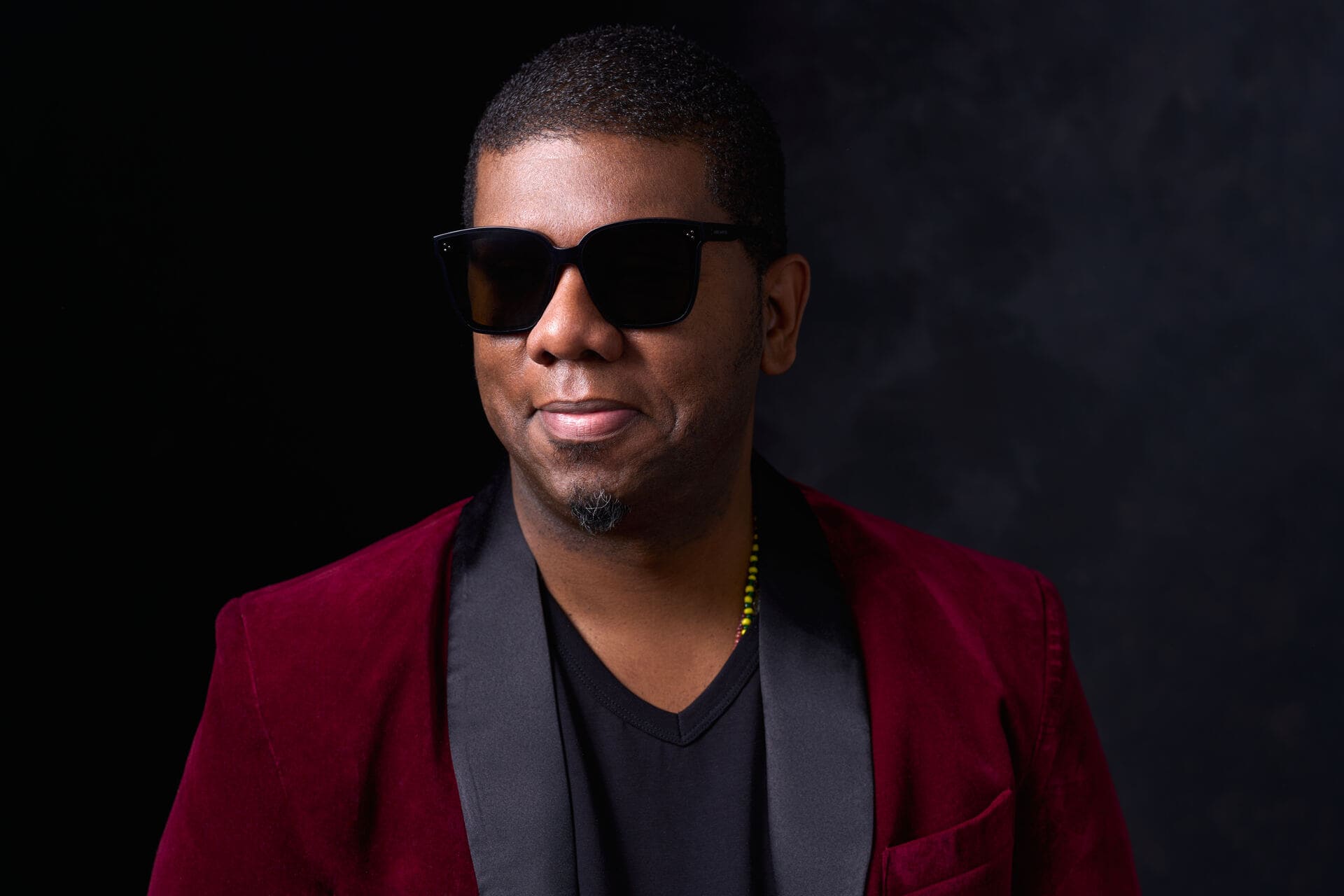
Rafael Zaldívar
Interview

Beyond structure, beyond the chord and beyond the piano, this is a philosophy of life
The career of Rafael Zaldívar has been marked by a constant search for new forms of expression. Born in Camagüey, Cuba, initially trained as a percussionist and classical pianist, and later based in Montreal, he has developed a language in which Cuban musical tradition, jazz, a strong academic background and an increasing interest in freer forms of improvisation converge. Pianist, composer, percussionist and educator, Zaldívar has worked with musicians such as Herbie Hancock, Kenny Barron, Steve Coleman and Terri Lyne Carrington, encounters that have helped broaden his conception of music, in which rhythm, listening and interaction occupy a central place. JazzTimes has highlighted the structural and rhythmic complexity of his compositions, balanced by a strong sense of harmony and emotional depth.
He now opens a new chapter with ZALDIVAR | MCBRIDE | MELA: Meeting in New York, Volume One, his debut in the 577 Records catalogue. Recorded in New York with Christian McBride and Francisco Mela, the album emerged from an unusual situation: there were barely any rehearsals, and the compositions arrived at the studio largely open to the possibilities of the encounter. The music was built through listening, intuition and trust between three musicians with very different backgrounds. The result places Zaldívar in territory closer to the avant-garde and free improvisation, while retaining the melodic sensibility that runs through much of his work.
In this conversation, Zaldívar talks about identity, rhythm understood as movement and spiritual experience, Thelonious Monk and Steve Coleman, silence and the need to find one’s own voice. The new album therefore becomes the starting point for a broader conversation about his approach to creativity and about that place where music begins to move beyond its most recognisable structures and, in his own words, becomes a philosophy of life.
Meeting in New York, Volume One released on September 18, 2026, through 577 Records, and conceived as the first of a possible series of musical encounters between Zaldívar, McBride and Mela.
I was listening to your new album and was really struck by how open it is. I had listened to Rumba, from 2022, and I find a significant difference between that album and this one. You return to the trio format, which I have always found particularly interesting because it leaves the music very exposed, but at the same time your compositions are open to each musician’s participation. There is a lot of room for improvisation and for each of you to contribute your own voice. There is also a composition by Francisco Mela. How did this encounter between Francisco, Christian McBride and yourself come about? At what point did you decide you wanted to make this album?
I had music in mind that I wanted to write. You know that we are always in a process of evolution, trying to find our voice and develop it as deeply, as profoundly and as boldly as possible toward who we are. In that process, I was trying to find myself and write new music that could express that feeling of evolution. I had been in contact with Francisco for years and, through our conversations, he began introducing me to more avant-garde music, something I had started exploring about two years earlier. Francisco told me that there weren’t many Cuban pianists developing this kind of language and encouraged me to work in that direction. We started listening to Cooper-Moore, Matthew Shipp, William Parker, all those people connected to 577 Records, the label I’m with now. We also listened to Paul Bley and Cecil Taylor. I had listened to Cecil Taylor before, but I started listening much more closely after those conversations with Francisco.
In that context, Francisco suggested making an album with Christian McBride on bass, in a trio format. I was hesitating because I had even been thinking about doing another project with Chucho Valdés’s son, but eventually we decided to do this project with Christian first. That’s how the idea came about. I contacted Christian through his manager and proposed the project. I thought he probably wouldn’t accept because he’s extremely busy and, besides, he doesn’t need a project like this for his career. If he did it, it had to be because he was interested in it from an artistic perspective. I sent him some music, including what Francisco and I had played at the last concert we did at the Métro. His manager passed it on to Christian, and he responded saying that he was interested and would like to do the session with me and Mela. As soon as he responded, we arranged the date quickly. In fact, finding a free spot in his schedule was like finding a needle in a haystack. Eventually we found a date, April 12, and went into the studio.
Did you rehearse beforehand, or did you go straight into the studio?
There were no rehearsals. I wrote the music, sent the scores and some demos so that each of them would have an idea of what the pieces sounded like. But there was really no rehearsal. Francisco and I did talk quite a bit. We discussed musical directions, ideas, language and even strategies for the studio over the phone. But Christian and I hadn’t spoken beforehand, and we had never played together. We arrived at the studio and got set up. When Christian was ready, I remember that he said, “Well, gentlemen, let’s break the ice. Let’s record.” And honestly, we pressed play and the first take worked. I did make sure of something very important. You know that when you’re recording a collective project in which the musicians haven’t necessarily played or rehearsed together, the challenge is to create a sound that feels like a band. For that, you need to create a state of trust in the studio. It’s important for everyone to be able to open up, communicate and have as much freedom as possible, so that there is a sense of security. Nobody can feel uncomfortable, unbalanced or nervous about what is happening. That’s how it all went. The only piece we recorded three times was Walking with Christian, precisely because I dedicated it to him. I liked the first two takes, but I felt they were missing some dynamics and development. The third one was the one. The rest of the album was recorded in a single take.
That’s especially interesting because these are fairly long compositions with a lot of development.
Yes, they have a lot of development. Walking with Christian, for example, has many facets, many dynamics and quite a broad temporal dimension. I really enjoyed making this album. I remember that when we started the first song, I played a piano introduction and presented the theme. At one point Christian came in and said, “Hmmm.” When we started recording, there was a certain tension—not exactly tension, but a kind of initial questioning because we didn’t know each other, especially Christian and me. But when I heard that “Hmmm,” I understood that Christian was connected, that he was feeling it and that he liked it. Christian is an incredible musician, one of the great bass players in the world. When I heard the way he came in, I thought, “That’s it.” From that point on, everything started. It was pure listening. We practically played the pieces by reading them. It was the first take, except for Walking with Christian, as I mentioned. The basic concept was to hear the theme at the beginning, develop it from a very free approach, and have everything else be improvisation around that theme.
And you can hear that on the album. Even though the recording was made without any prior rehearsals, there are moments when the three of you achieve a very strong blend. Each of you comes from a different background and has a different language, but there is a feeling that these three worlds find common ground.
Exactly. Each of us has a different career and a great deal of experience. The only thing that was missing was finding a small feeling that could connect those three worlds and make them walk along the same path. I think we achieved that on the album, and it’s something you can feel. Anyone who regularly listens to this kind of jazz will probably notice it.
You’ve explained that over the past two years you’ve begun exploring a more open, avant-garde and experimental form of jazz. How do you incorporate this new language into your way of understanding music?
I achieve it when I begin to focus my attention on the discourse, on the language and on what I want to say, rather than on the framework in which I want to develop my system. Normally, we think about a harmonic framework, a progression, chords, the scales involved, colour, the type of texture or certain technical devices, such as counterpoint. All those are technical tools that operate within a fairly closed context, within a particular framework. When I begin to think completely outside of that and focus my attention on my instinct, on how I would react in the present moment, on what feeling I want to convey beyond the structure, and on how I want to connect with that moment beyond a sequence of chords or a cadence, that’s where everything begins. It is complete freedom, but there is still a language, and that’s the most difficult part. To be honest with you, this is music that I’m currently trying to understand and develop, as masters such as William Parker, Matthew Shipp, Cooper-Moore, Masao Mikikuchi, Paul Bley, Paul Motian and Andrew Cyrille have done. Cecil Taylor, for example, embodied the avant-garde through his own personality. It was a way of life for him. It wasn’t something he simply practised; it was something he knew he was, something he believed in. From that perspective, I start asking myself whether I can be myself, whether I can find myself and develop without necessarily having to use the traditional resources of basic tonality. I can recreate textures, recreate a structure, even a poetic structure, rather than starting from something established from a musical, harmonic or melodic point of view. It’s complicated because it means seeing life in a completely free way, away from any kind of convention. You have to find that middle ground where there is a commitment to the structures of the language and, at the same time, complete freedom to express yourself.
And that’s precisely what is beautiful about it: it’s full of possibilities. You establish a structure, perhaps a melody, you lay down a foundation, but everything remains exposed to a series of circumstances that can completely transform the same piece.
Yes. Let me tell you something. A few days ago I had a phone conversation with Cooper-Moore and he asked me, “What do you want to learn from me? You’re already playing with Christian McBride and Francisco Mela. What do you want to learn?” I answered, “Maestro, above all I want to learn about your vision, how you develop your music.” And he told me that I would actually learn more by playing with the people with whom I am developing my own music than I would from him. That is sacred. It is a gift from God. That’s how he explained it to me. And that’s how it has been throughout the history of jazz. We have all learned in that way. You realise that it goes beyond structure, beyond the chord and beyond the piano. It is simply a philosophy of life. It is the sensitivity that develops through experience and practice.
And each musician affects your way of playing differently.
Exactly. Each one affects your way of playing differently, and you can also develop on your own in a completely different way. But you need to have enough creativity to embrace that space.
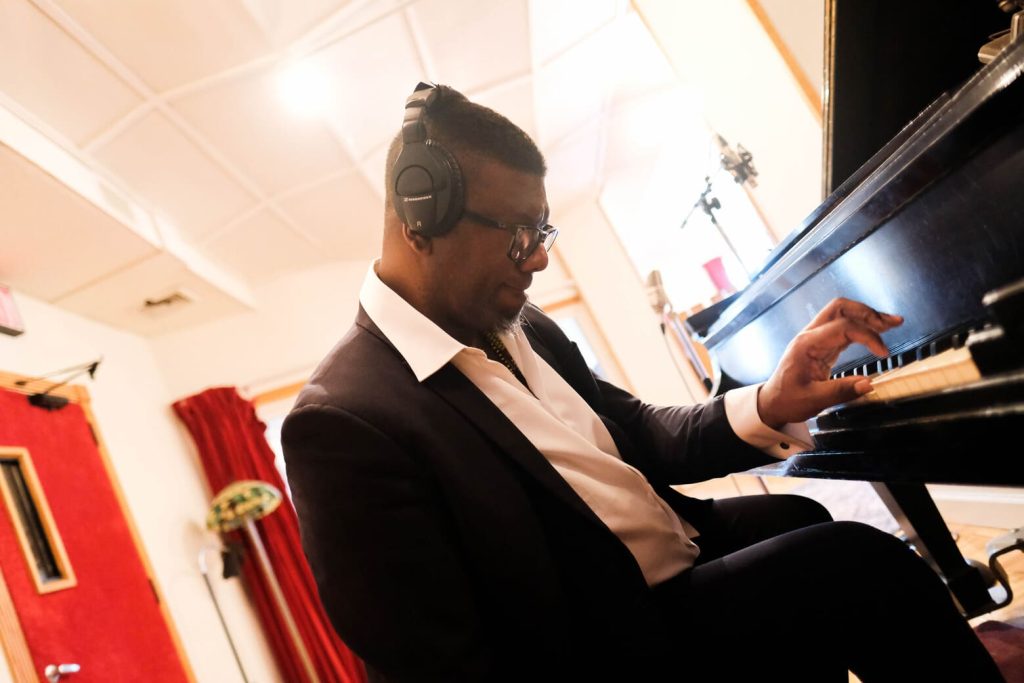
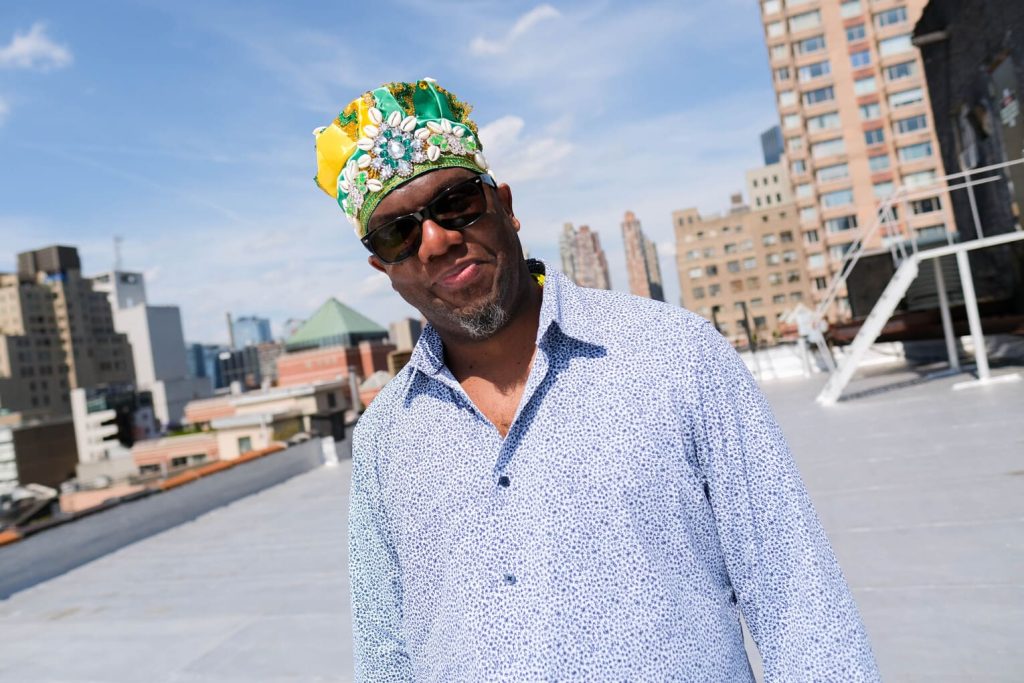
You’re also a percussionist. How does that rhythmic background influence your career as a pianist and, especially, the way you compose?
Rhythm, as I perceive it and as Steve Coleman also perceives it, is movement at its core. We frame it within time, with a metre and a consecutive sense of pulse, but essentially, time conveys a direction within a given space of existence and consciousness. That direction implies movement. There can be movement toward the first beat, toward the second, toward the offbeat. So what happens with Afro-Cuban percussion or with African percussion that arrives in Cuba? It arrives with African communities that have a very deep culture and religious tradition. Percussion becomes a vehicle for direct connection with the African deities that are part of the Afro-Cuban pantheon, with what we know in Cuba as Ifá and the Regla de Ocha. Beyond simply striking drums, creating accents, doubles or complicated movements, slower or faster, there is a sense of movement connected to a sense of spiritual connection. That is the meaning of Afro-Cuban rhythm. It is a feeling of connection through the vibration it produces, and that vibration connects directly with a spiritual dimension. That is why, for me, percussion is both a vehicle for spiritual connection and a way of developing cyclical movement in different directions. That’s how I use it in my music, to feel the pulse so that it isn’t a static pulse, but a pulse that is dancing, that is moving and, through that movement, interacts with the pulses of the other musicians. Then you create a rhythmic and circular elasticity that interacts beyond the notes, beyond the choice of notes.
In that sense, it seems that for you rhythm isn’t simply a question of metre, but a way of relating to space, to the musician in front of you and to the moment.
Exactly.
Let’s talk about the compositions. I Can’t Be Any Other Way opens the album and has a very personal dimension. What does that title mean to you, and what is the relationship between that idea and the music?
At a certain age, you establish some important parameters for defining who you are, where you come from, what you’re doing here and where you’re going. Those parameters are, in other words, your personality, your principles, your life values and the standards you establish. I spent a great deal of my life trying to be a model of perfection, both for society and for my family and friends. A model that didn’t really reflect my values, my abilities, my judgement or who I really am. Sometimes you lose yourself trying to be someone you’re not in order to please others, and that brings many consequences. Then there comes a point in life, when you’re around forty, when you start thinking, “It’s time to fully accept yourself. You don’t need to be someone else. You have to be who you are.” That’s where the idea of I Can’t Be Any Other Way comes from. It’s about accepting and recognising yourself, becoming a mirror of who you are.
Perhaps this move towards the avant-garde, improvisation and experimentation is also a form of rebellion. A way of breaking away from that tradition, from that routine in which you keep studying, doing and producing until a point comes when you need to break with everything in order to find new meanings in things that don’t have a defined structure.
It’s about being yourself and accepting yourself for who you are, rather than trying to please other people. In the end, I realised that it made no sense. As Shakespeare said, “to be or not to be.” You have to be.
On the third track, I Remember Monk, there is a direct relationship with the way you understand Thelonious Monk’s music. What is your connection with him?
For me, Monk is probably one of the clearest examples of the African element in North American jazz improvisation, particularly through the piano. I was actually working with Far East Suite by Duke Ellington, and I found things that Duke Ellington was doing that Monk had already integrated and understood within his own language. You realise that there is a generational interconnection between Duke Ellington and Monk that goes far beyond the two of them and reaches deep into the roots of African-American culture, especially African-American jazz. Monk is a modern reference for me of all time. He is perhaps one of the most important composers of the twentieth century. I always want to maintain that slightly “outside the box” quality that Monk conveys to me, although I am still trying to distance myself from him as much as possible. I have a very special connection with him. He also died in the same year I was born, in 1982. So, spiritually speaking, there is also a very deep connection.
The album also includes Caribbu, by Francisco Mela, and Axis, which appears as a bonus track. The latter is particularly interesting to me. Where does it come from?
Axis comes from my encounters with Steve Coleman. I remember that when I was very young, perhaps between the ages of seventeen and twenty-one, I met Steve Coleman for the first time in Havana. He was a close friend of Román Filiú, the Cuban saxophonist. I was part of Román Filiú’s quartet in Havana. I was the pianist in the group, along with Reinier Elizarde El Negrón and Michael Olivera, although there were different changes in personnel during that period. I met Steve at Filiú’s house. He had gone to Havana and gave a kind of informal talk among us. Filiú invited me and we were there listening to him. Steve started talking about pyramids, axis, spiral number one and spiral number two from a melodic point of view, contrary and symmetrical movements, chords and the relationship between major and minor. He explained that the third is the element that defines the category of a triad, while the root and the fifth can function as two axes, as two points of reference. But my English was very poor at the time and I really understood almost nothing. I understood two or three words that Filiú translated for me and other things only very vaguely. Afterwards we played a concert at the Amadeo Roldán Theatre. It was Filiú’s group and he invited Steve. We played together and I remember asking Steve if he had liked it. He practically said nothing. He looked at me as if to say, “What are you playing there, mijo? You don’t know anything about what you’re doing.” I understood that as a kind of hidden message telling me to realise something. At that time I had virtually no awareness of how to play jazz. In Cuba we played by instinct. We had information, but we didn’t really know why we were doing things or where they came from. I imagine that was the impression Steve took away from that moment. I was left with the feeling that one day I wanted to be able to exchange ideas with him properly, with greater clarity. Later, when I was in Canada and had more maturity and knowledge, I had the opportunity to interview him. We returned to those subjects and he explained some things to me. I still have that interview recorded. Then I wanted to develop my own way of conceiving the axis he had talked about. Also, through David Virelles, another Cuban pianist, I received some materials when Steve was in Toronto. David shared documents with me that I still review and that are part of my study sessions whenever I can work with them. Eventually I was able to talk to Steve again in a much clearer way, like you and I are doing now. Axis comes from that experience, from trying to interpret and develop the knowledge he had shared so many years earlier.
That’s almost a story for a book, haha. The album is called Meeting in New York, Volume One. That “Volume One” seems to suggest that there will be a continuation. Is a second volume planned?
God willing, we should make the next album, possibly next year or even later this year. The goal is to develop a deep relationship with this group. Sometimes it will be difficult to play together because of availability, circumstances and so on, but I want to develop both the work and the creativity, as well as the experience with these particular people. That’s why we left the window open. We hope to make a second album, which will be completely different, although it will continue to be influenced by avant-garde music. It will be an album in which we will already establish certain foundations as a group. Those foundations aren’t as present on this first album because, although there is a sense of connectivity, we still need to get to know each other better. I realised that this recording was an extremely important opportunity to develop the project as such. And that relationship can turn into new collaborations, whether in New York, Paris, Montreal or wherever we can meet again.
It also marks your arrival at 577 Records, a label with a very distinctive identity within avant-garde and experimental music. How did that connection come about?
Once I had made the recording with Francisco and Christian, Francisco suggested that I present the album to 577 Records, Federico, who is the president of the company, to his wife Polly and to the people who are part of the board. We presented it quickly. Francisco explained to me that if Federico liked the album, he would ask him what he thought. Francisco has a very special relationship with Federico and is a very important artist for him. The most important thing was for Federico to like the album because, besides being responsible for the label, he is also an excellent avant-garde drummer. He has a deep understanding of what is happening in music, understands these processes of development and knows how to identify both the spaces that remain to be explored and the most positive aspects of a project. When Federico listened to the album, I prayed and said, “My God, help me. Let him like it, and if he doesn’t like it, at least let him listen to it.” And he quickly told Francisco that he loved the album. Francisco replied that he did too and that was precisely why he had suggested me. From there, Federico thought about it and made me an offer. He and Polly made me a very special proposal, almost like the kind of proposal you make to a member of the family. We signed a contract and started working this summer. We began with the promotion and the whole process related to the release.