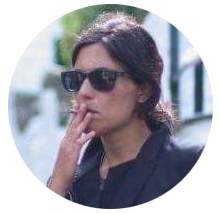
Aki Takase
Interview
Aki Takase (Osaka, 1948) is a fundamental figure in European improvised music of the past four decades and an artist who is difficult to confine to a single category. Her career cannot be understood as that of a classical pianist who later turned to jazz. From the very beginning, her artistic identity has been shaped by the tension between composition, jazz tradition, free improvisation, and contemporary language.
Her arrival in Europe was decisive. In 1981, she performed in Germany for the first time, at Jazzfest Berlin, and eventually settled in Berlin in the late 1980s. There, she became closely connected to some of the key figures in European improvisation and developed a career deeply rooted in that scene: Alexander von Schlippenbach, Han Bennink, Evan Parker, Paul Lovens, Fred Frith, Rudi Mahall, and many others. Aki Takase is one of the artists who have helped define the European improvisation movement.
Her music can move within seconds from an apparently conventional structure to a completely open improvisational situation and then return to a recognizable melody. Aki Takase understands improvisation not as a break with form, but as a way of setting form in motion.
I had the pleasure of meeting, having dinner with, and interviewing Aki Takase in Porto during the 2026 Serralves Festival. It was a privilege to spend time with her.
You have spent more than four decades moving between composition and improvisation. At this point in your life, do you still distinguish between the two when you are making music, or has that distinction disappeared for you?
Composition and improvisation are, in any case, different topics, but in my music, they are interrelated. Improvisation is also a form of composition that captures a single, condensed moment.
You have returned many times to composers and musicians such as Ellington, Monk, Fats Waller and Dolphy. What allows a historical musical language to become alive again rather than simply becoming a tribute?
The historical language more than a tribute and mean a lifelong inspiration for my own work
Monk appears again and again in your work. What is it about Monk that still gives you something to discover after all these years?
As I analyze and perform Monk’s music, I always make new discoveries—
the unique resonance and timing of his musical language.
Your piano can sound melodic, percussive, fragile, violent or almost abstract. When you play, do you think about the piano as an instrument, or do you sometimes forget the idea of the piano altogether and simply think in terms of sound?
All of these elements are intertwined and are essential to my style of playing the piano.
There is often as much tension in the silences in your music as in the sounds themselves. Has your understanding of silence changed over the course of your career?
The musical passage of time—a combination of silence, horizontal lines, and vertical lines—may be slowing down with age, but for a musician, this can be seen as proof that they are living in the present.
There is a very particular kind of humour in your music: sometimes playful, sometimes absurd, sometimes almost grotesque. Where does that humour come from, and what does it allow you to do musically?
If you sense humor in my music, it may stem from my fundamentally positive personality. It should manifest as a purely musical expression, not something deliberately contrived.
You have created very different musical relationships with musicians such as Han Bennink, Alexander von Schlippenbach, Louis Sclavis and David Murray. When you begin playing with someone new, how much of your own musical identity are you willing to let go of?
When a musical relationship is formed, it is based on empathy and interest in the other person. In any case, I will never let go of my musical identity at all.
You arrived in Europe at a crucial moment in the development of the European improvised-music scene and eventually made Berlin your home. What did Berlin give you as a musician that you could not have found elsewhere?
It’s a vibrant, ever-changing scene. It provided me with a great environment to work on my own projects and the opportunity to collaborate with interesting musicians.
Do you think your Japanese background is something you consciously bring into your music, or is it something that has become part of you without needing to be consciously expressed?
My Japanese background probably has nothing to do with my musicality, but where I was born and raised is at the root of my very being. Therefore, I think it naturally reflects in my sensitivity to sound and is connected to my individuality.
Your music can move from extremely precise structures to complete freedom without the transition ever feeling artificial. At what point does the written music stop being a limitation and become a space for improvisation?
It depends on the concept of the project.
My ideal is a performance where there is no boundary between composition and improvisation—even when performing a structured composition.
When you write a piece, do you compose the conditions for improvisation rather than the improvisation itself?
In that case, the form of the work creates the conditions for improvisation as part of itself.
With Japanic, you bring together musicians from different generations and different musical worlds. What are you looking for in a band today that you were not looking for twenty or thirty years ago?
I find it incredibly thrilling and enjoyable to see what musicians from different generations are seeking and how the group’s music evolves. I want to be a music director who brings together people from different musical backgrounds and generations.
After such a long career, what can still surprise you when you sit down at the piano?
Yes. Playing the piano involves your whole body, and everything depends on your mind (brain) and intuition.
Your music often has a strong sense of dramaturgy: abrupt changes, fragments, humour, tension and release. Do you consciously construct this dramatic trajectory when you compose?
No! But who knows?
Do you think there are things that can only happen through improvisation, things that could never be completely written down?
Time, and space.
After more than fifty years of making music, what question about music are you still trying to answer?
I want to know more about who I am and what I am, and can I create sounds I’ve never heard before?
Your music can be extremely serious without ever becoming solemn. Is that distinction important to you?
I can’t answer that question. I just want to play music honestly.