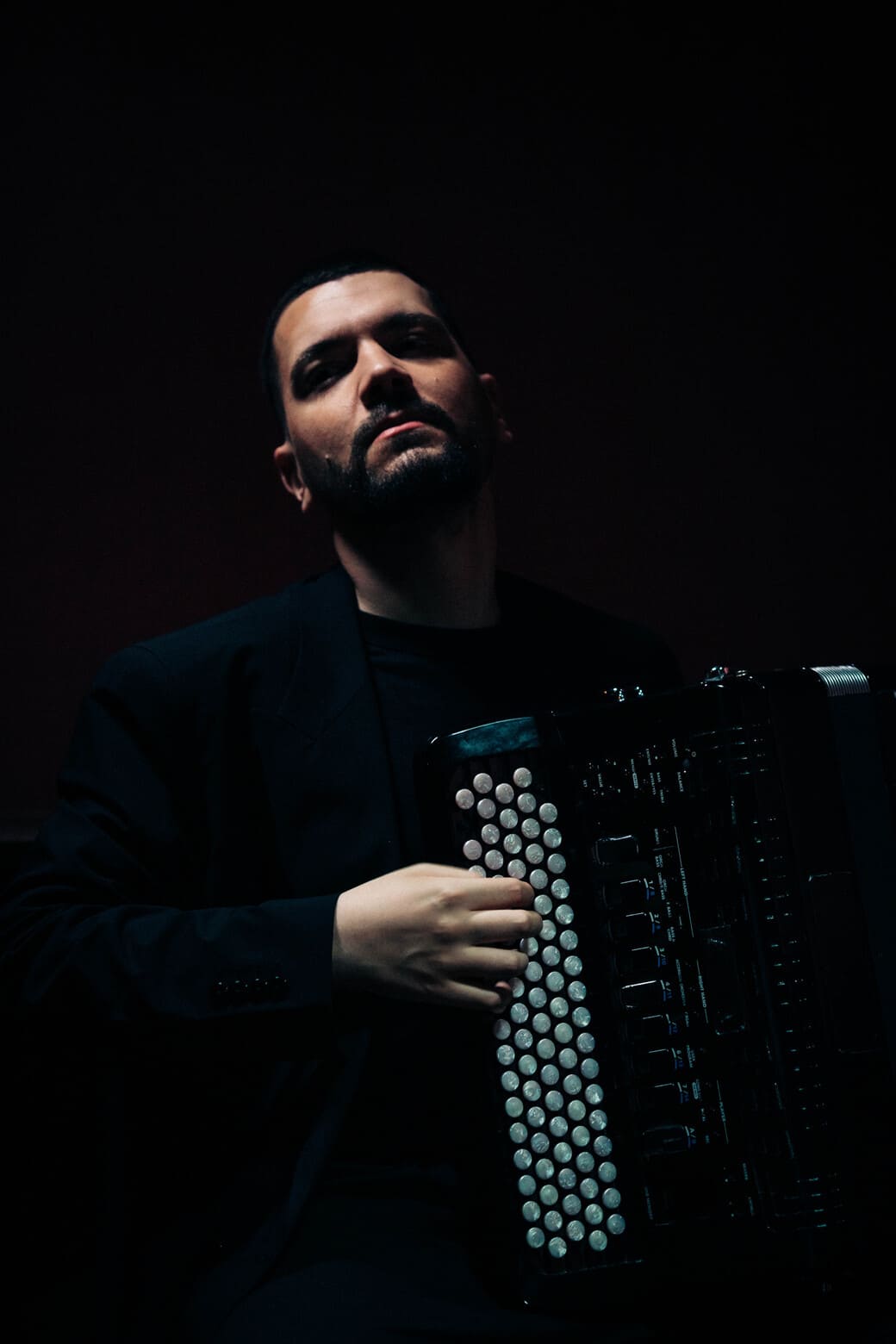
JOÃO BARRADAS
Aperture
Review
22
December, 2025
By: Khagan Aslanov
Photo: Alfredo Matos/Fábio Teixeira/Sebas Ferreia
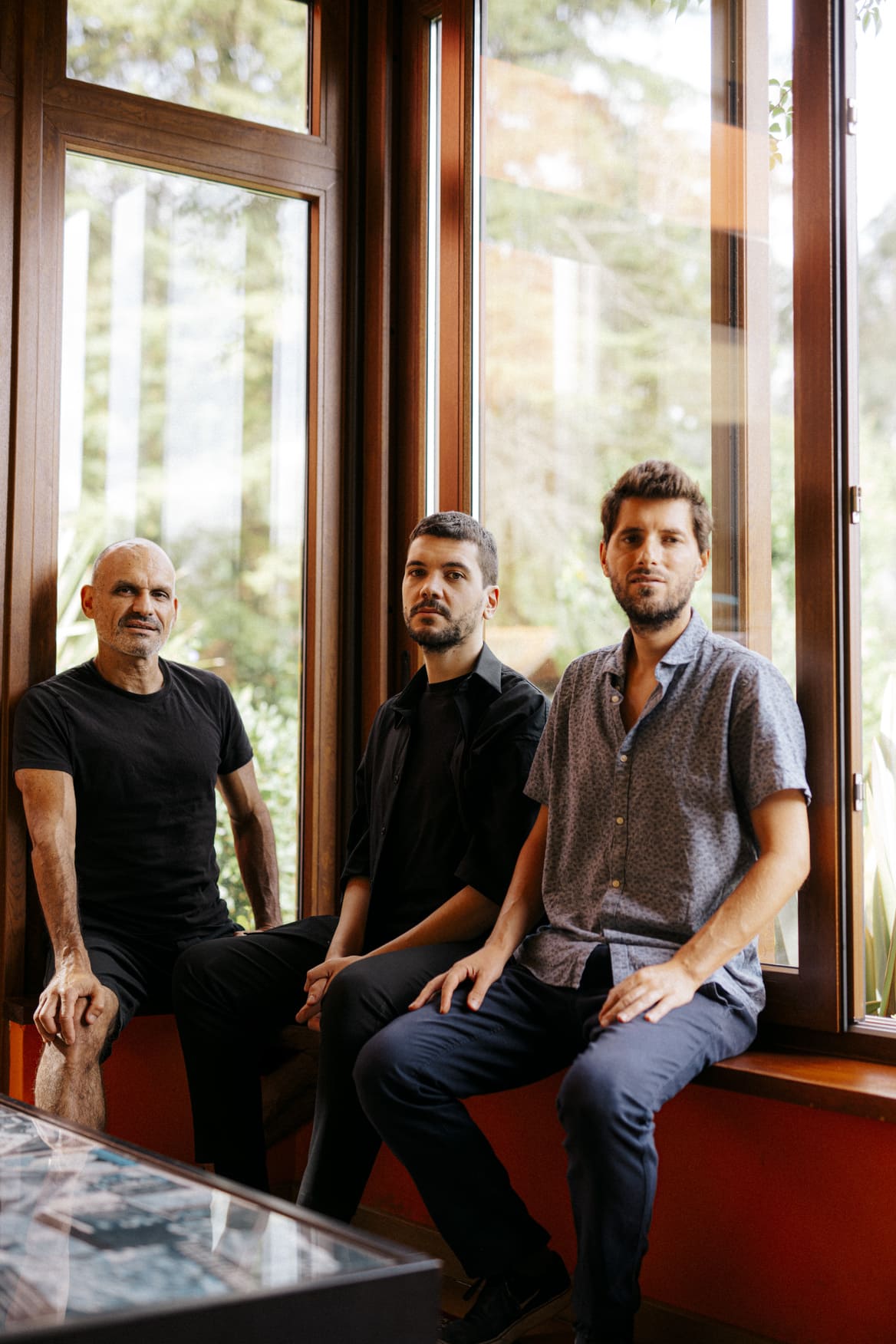
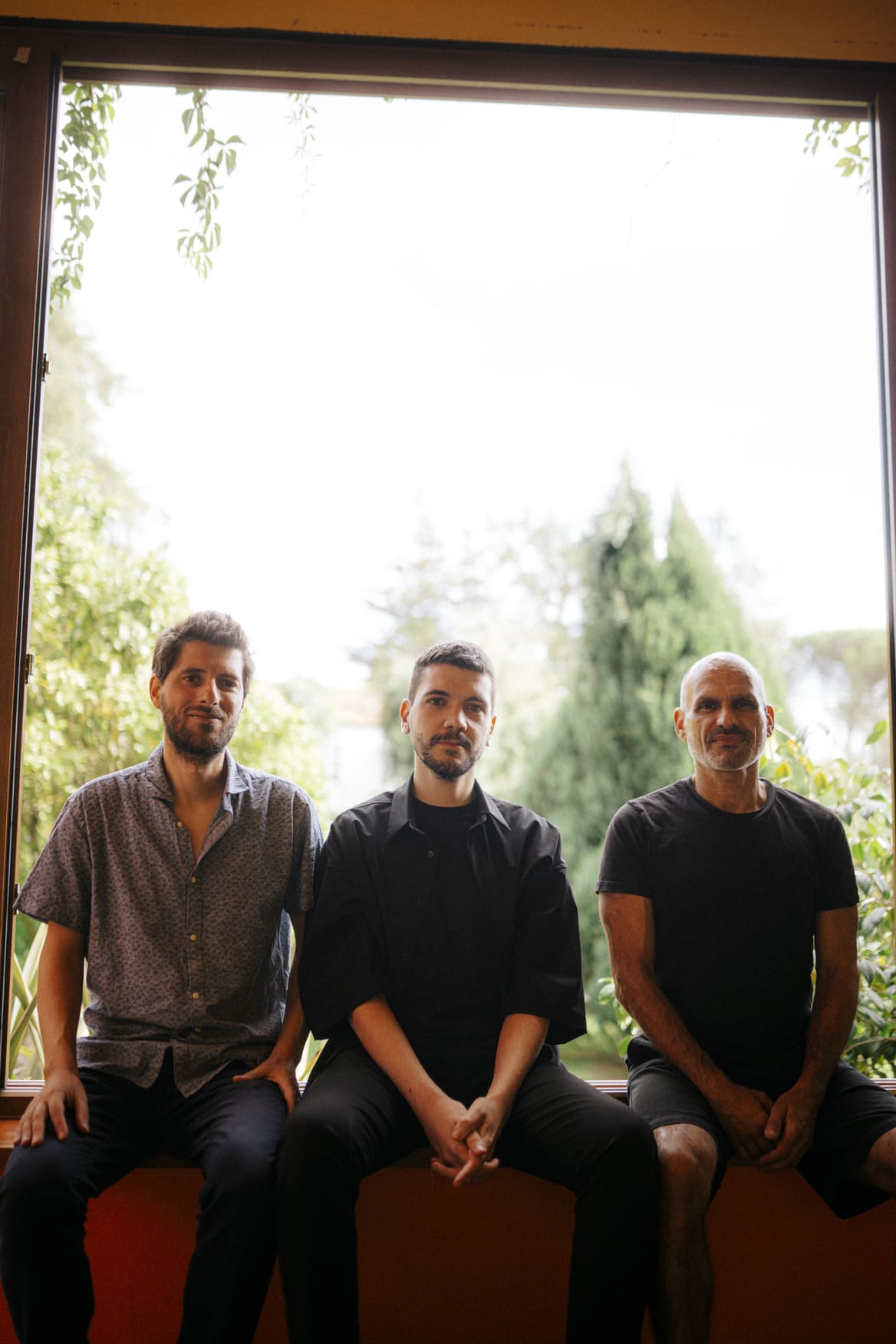
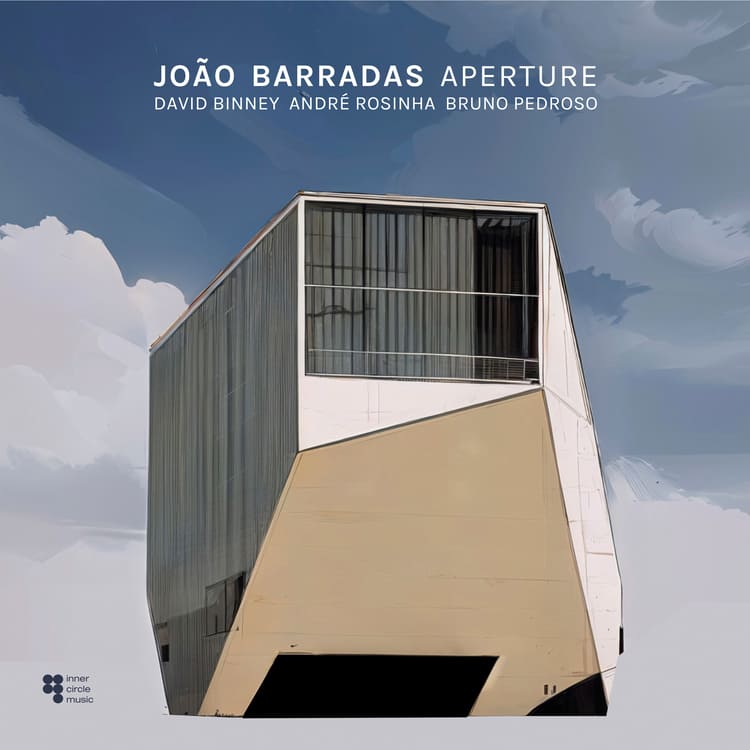
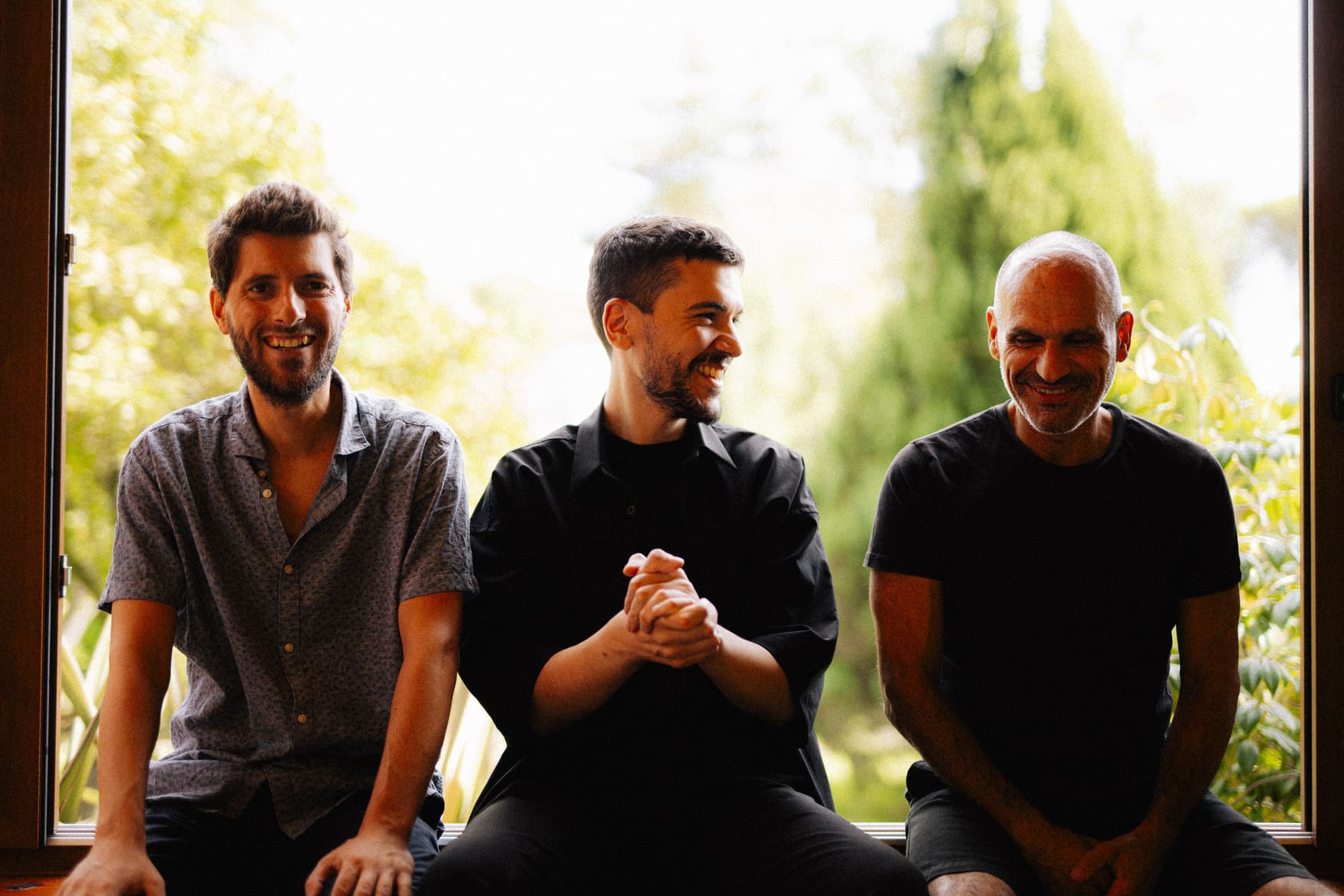
Review. Aperture Album (Inner Circle Music, 2025). João Barradas, accordion / David Binney, saxophonist / bassist André Rosinha, bassist / Bruno Pedroso, drummer
To whose who know and love the contemporary experimental music niche, the name of João Barradas should be a familiar one. The multi-directional accordion composer has been a prodigy of his instrument from a very early age, bridging the gap between modernism, classical and avant-jazz, to create a singular body of work in what has come to be known as the Third Stream.
Aperture, his first album in more than five years, was developed during his residence at Casa da Música in Porto, Portugal. At surface value, this may seem and sound like simply a record that ably integrates predetermined composition with collective improvisation. But what Barradas has in mind with Aperture is far more complex and ambitious. By tackling the structural concepts of the pieces’ titles head on, the quartet stages highly nuanced architectural templates, assembling intricate shapes and textures out of fractal parts.
André Rosinha walks out the opener “Airam” on double bass for a few bars, before the rest of the quartet jumps in. Barradas and saxophonist David Binney quickly fall into deep reciprocity, mirroring and overlapping each other’s melodic and rhythmic phrasing. It is to the credit of Barradas’ full control of his instrument that he is able to weave into such precise interplay with the saxophone. At one point, he uses just the slightest pressure on the bellows to generate a breathing pulse that sounds more like a vocalization. Then, when the ensemble coalesces into a dense textural procession, he uses the accordion’s reeds to induce a crystalline, almost organ-like frequency that slices through the curtain of sound. That contrast creates a rich and enthralling effect.
Immaculate aesthetic and technical moments like that permeate the entire album. On “Escher’s Song,” the quartet stages a wondrous sonic recreation of the namesake artist’s geometric paradoxes. They ply circular, recursive patterns and reach for a collective Shepard Tone – invoking the sensation that the internal subdivisions of the piece are fluctuating endlessly, while the master tempo remains unchanged. It’s a hypnotic moment, and the listener feels like the piece could go on for hours, building and collapsing on an unbroken loop.
On “Glass,” Barradas leans into higher frequencies, and the ensuing palette becomes as brittle and reflective as glass would be. The entire piece is a complex free-form exercise in restraint, and Bruno Pedroso’s percussive masterclass is the shining star here. He abandons time-keeping and devotes himself fully to reactive improvisation – using light snare work to create shimmering tones, then picking up pace on the rims to maintain momentum, all the while, leaving plenty of silent space for the saxophone and accordion to edge forward. “Glass” sounds sinister and tantric and unsettled, and could easily be considered the best piece on Aperture.
These literal recreations of mathematical and natural notions form the core of Aperture. Just listen to the piercing, sharp-angled intervals Binney’s kinetic playing conjures on “Cube,” building a unilateral design. Or how Barradas uses the vocoder to devise a short and doleful ambient surface on “Fragment.”
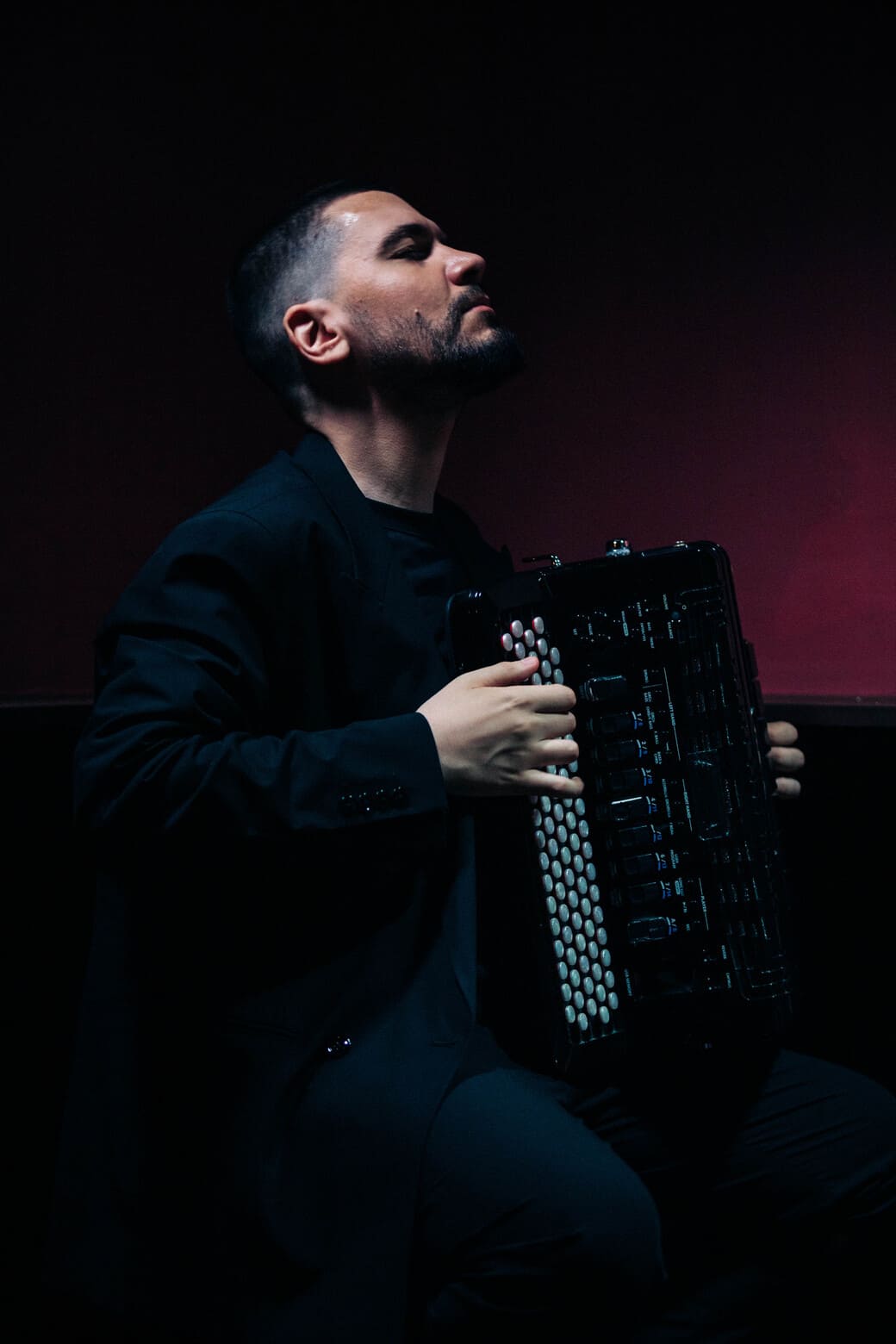
It is Barradas’ virtuoso handling of his instrument that remains at the epicentre throughout Aperture. In lesser hands, the accordion would hardly be able to keep up with the highly nimble and adaptable sax-bass-drums combo. But Barradas proves that he’s more than capable to meet the challenge. More often than not, to meet the compositions’ demands, he utilizes the free bass system – forgoing pre-set multi-note chords for a more chromatic approach, as thrillingly rewarding as it is intensely difficult.
The closer “Pneuma,” originally composed by classical avant-gardist Yannis Kyriakides, and re-arranged by him specifically for Barradas, is the most demanding piece on the record, both for the listener and for the players. In true Kyriakides style, it marries the rigid, highly controlled narratives of classical composition with improvisational nihilism. The accordion becomes a pair of lungs headed towards hyperventilation, at first steady in repetition, then slowly building in intensity, until its thunderous conclusion. The hissing valve textures, combined with supressed vocals coming through the playing is a fantastic stylistic touch, blurring the line between the breaths of the instrument and the human playing it. It’s a fitting and incredible conclusion to a record that tries and succeeds in making much more than music – a conceptual and technical masterpiece of how sound can metamorphose the listener’s vision.