
.
.
.
.
Sara Lilu
A New Voice in European Jazz
04
March, 2025
Text: Pedro Andrade
Photos: Alesander Peña
Curated by In&OutJazz Magazine
Director: Bega Villalobos
Sara Lilu: Voice, Intuition and the Future of European Jazz
In and Out Jazz Magazine/ #IWD2026 | WomenToTheForce | A new voice in European jazz
Voice, Intuition and the Future of European Jazz
At a historical moment in which jazz expands beyond the limits of its own semantics, Sara Lilu emerges as a voice that does not seek closed answers, but rather honest questions. Singer, composer, arranger, and vocal explorer, her work inhabits a fertile territory where intuition coexists with knowledge, and where song opens itself to improvisation as a form of living thought.
Her debut solo album, do we belong in confusion?, is not presented as a statement of certainties, but as a sensitive map of a life process: a collection of sounds, doubts, and discoveries born between late adolescence and early adulthood. Within it, the studio becomes an instrument, the voice a laboratory, and humor a philosophical tool for inhabiting uncertainty.
Far from labels, her music enters into dialogue with the legacy of jazz, contemporary song, and the hybrid aesthetics of the present, drawing nourishment from tradition as much as from an attentive listening to today’s world. For Sara Lilu, composing means observing how an idea takes shape on its own; improvising, a way of refining listening; and creating, a collective act sustained by trust and exchange.
In this interview, the artist reflects on confusion as a space of freedom, intuition as a form of knowledge, and the urgent need to protect the human in a time accelerated by technology. Her voice does not demand the spotlight, it offers itself as a meeting place. Perhaps that is where its strength lies.
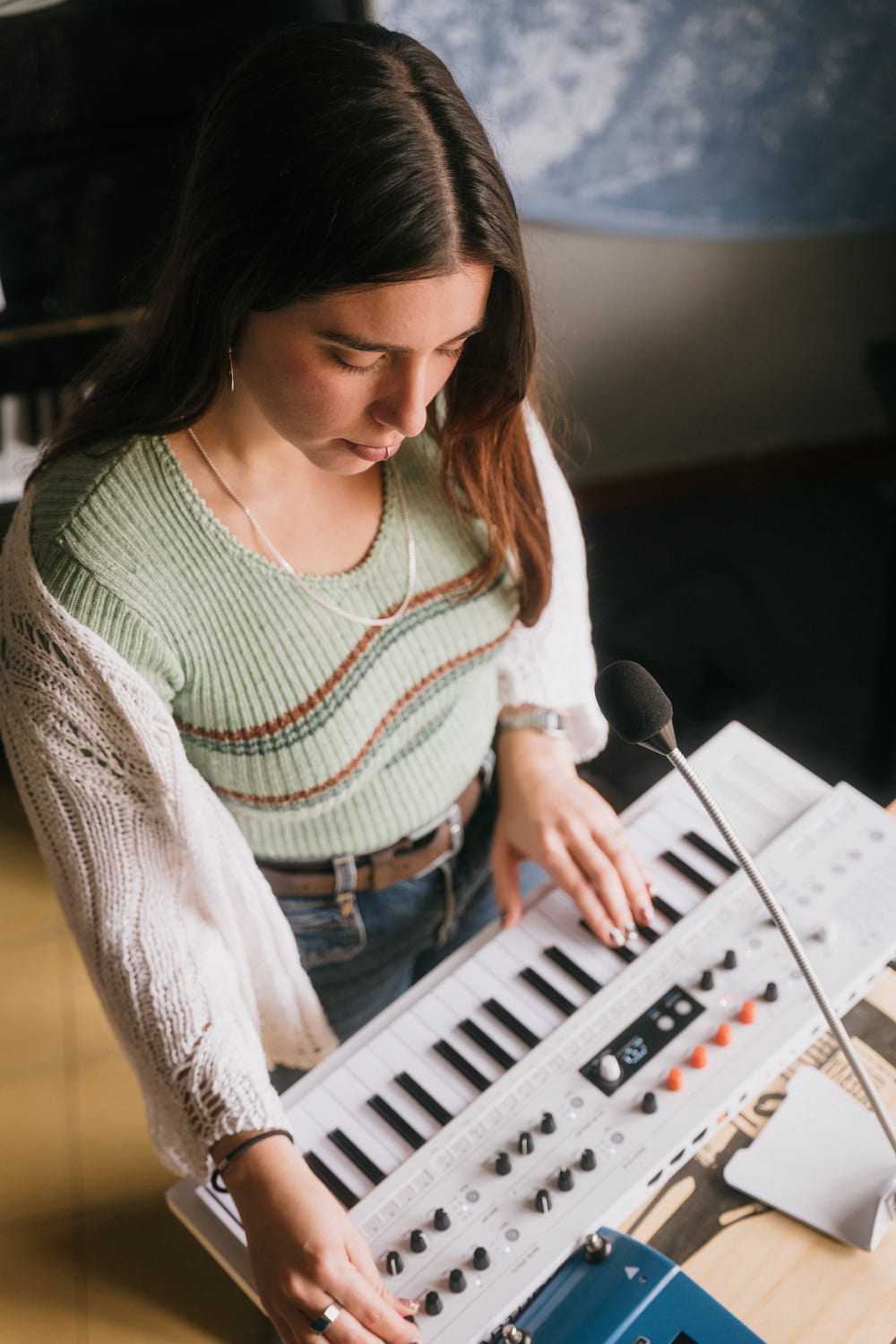
In&Out Jazz Magazine: You have just released do we belong in confusion?, your first solo album. What does this record represent in your personal and artistic journey?
Sara Lilu: It’s basically a picture of the sounds I had in me during a period of time, more specifically during my late teens and early twenties. I made a compilation of the songs I liked the most from my original repertoire, arranged them, gave them names and materialized them in this album. I think experimenting with sound is one of my main drives in life, so I took the studio for an instrument and learned a lot during the process. This album also gave me an idea of the amount of work there really is behind a music production, and it’s helped me to form an idea of what kind of artist that I want to be.
The title poses an open, almost existential question. Where does it come from, and why did you feel the need to express it musically?
All my life I’ve felt this need for answers. Not just rational responses to the world that surrounds me, but also more spiritual ones. I took this title from one of the songs in the album. I made that song, taking inspiration from “Human Behavior” by Björk. I think my way of experiencing life has a lot to do with humor, which helps me a lot not to get too caught up in my own stuff. Even though I know it’s a long title and it might come across as pretentious, for me it’s like a little joke. Everyone wants certainties, answers (me included) but I’ve found that accepting confusion and laughing about yourself is also liberating.
The repertoire is almost entirely original. How does your compositional process usually begin: does it start from the voice, the text, harmony, or an overall concept?
It depends. Some songs come all at once, harmony, melody and text like a big waterfall from my body into sound. But that’s not the common case. In general, I’ll start by improvising, whether from the voice or with an instrument (mostly piano or guitar), and all of a sudden I’m getting tangled in an idea. The inner feeling is that a song has a life of its own, and I’m just observing and helping it to grow however it wants to. Sometimes this process takes months. Maybe there’s different pathways and I’m not sure of which direction to turn to. But eventually, an idea comes and takes over. I think part of it comes from the unconscious; sometimes I don’t know where the lyrics come from until one day I’m like “ah, I was processing this or that emotion or thought”. Other times I have somebody in mind when I write. I also like to write lyrics to existing songs, like I did with McCoy Tyner’s “Search for Peace” (in Spanish, “Volverte a Ver”) or Sam Rivers’ “Beatrice” in my previous duo album with guitarist Alesander Peña (My Blue Heaven, 2024). I like taking pre-existing melodies that I love and trying to figure out the words that may be in them, like a sort of puzzle.
Jazz, improvised music, song form and contemporary textures coexist throughout the album. Are you trying to break down labels, or do you simply work outside of them?
The truth is, I haven’t tried very hard to label this music. Through the process of arranging and mixing, as it’s a more rational task for me than composing, I came to realize more about my references. While looking for the exact sounds I heard in my head, I started finding songs that already had those sounds in them. Not so much for the composition itself, but more for its dressing (instrumentation, mix/effects). That’s how I learned that for example, some of my main references for sound are Screaming Headless Torsos, Erykah Badu or Beck. I love how some of their albums sound. Then, I guess my answer to your question would be that I simply work outside of them.
What role do arrangement and collective writing play in your music? How is the dialogue with the musicians involved in the album built?
I absolutely admire the musicians I’ve worked with on this album. When trying out a new song with one of my bands, most of the time I leave plenty of space for individual interpretation of their parts. After all, they know their instruments better than I do. When it comes to the song itself (harmony, melody, structure) I usually have my ideas pretty clear, but for choosing specific sounds or ways to play a bassline, chords or drum patterns, I rely on my musicians. The music is fed by everyone’s creativity, so I always learn something new and this makes me feel very full. It’s also part of my love for jazz and improvised music, where interplay is basic.
Beyond being a singer, you are also an arranger, composer and vocal explorer. How do you understand the voice within your creative universe?
The voice is my main vehicle of expression. I’m in love with this instrument, as it never ceases to amaze and liberate me. Even when I’m in those moments of the learning/creative process where I’m uncomfortable with my own sound, I still feel lucky to have chosen it as my main field of investigation.
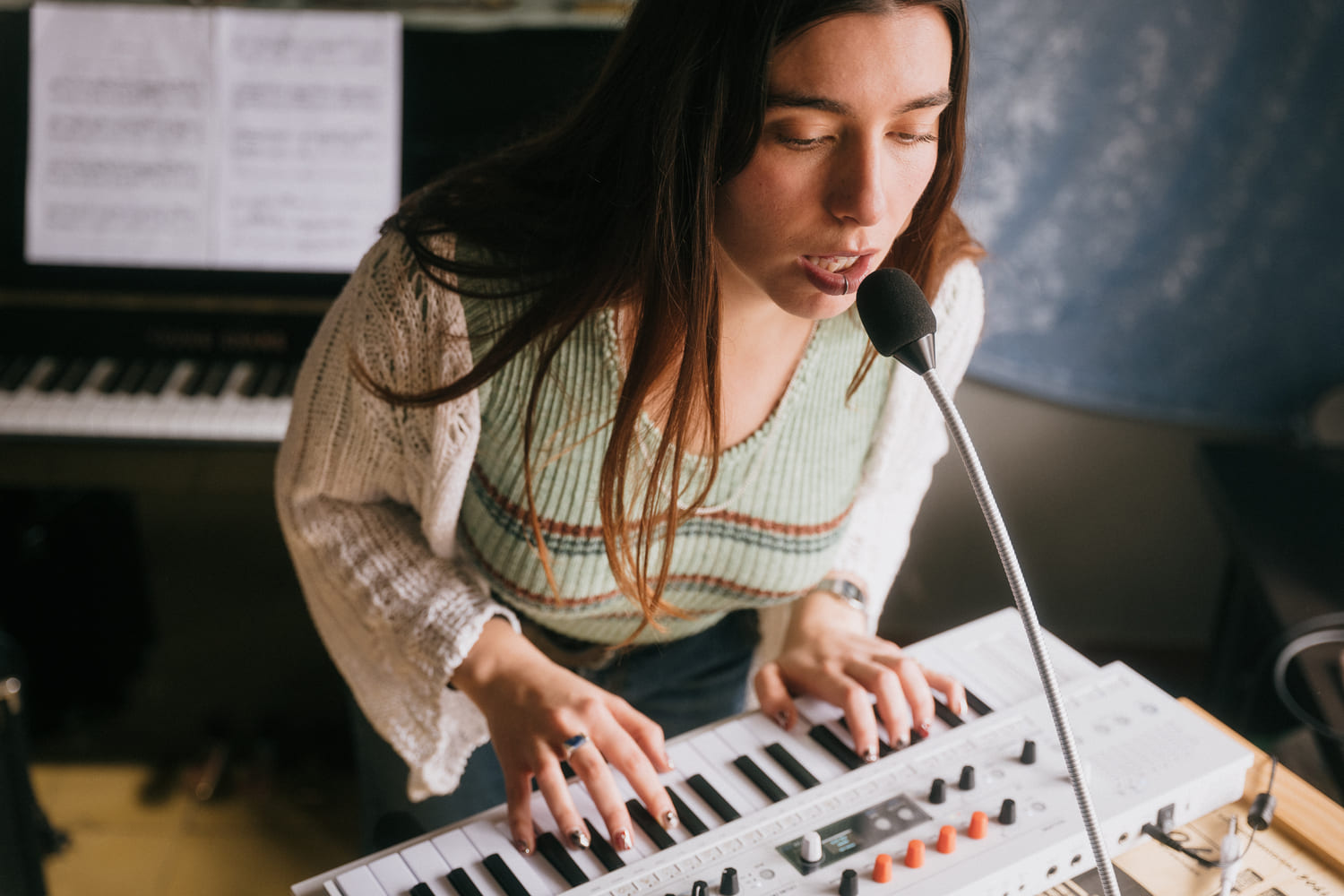
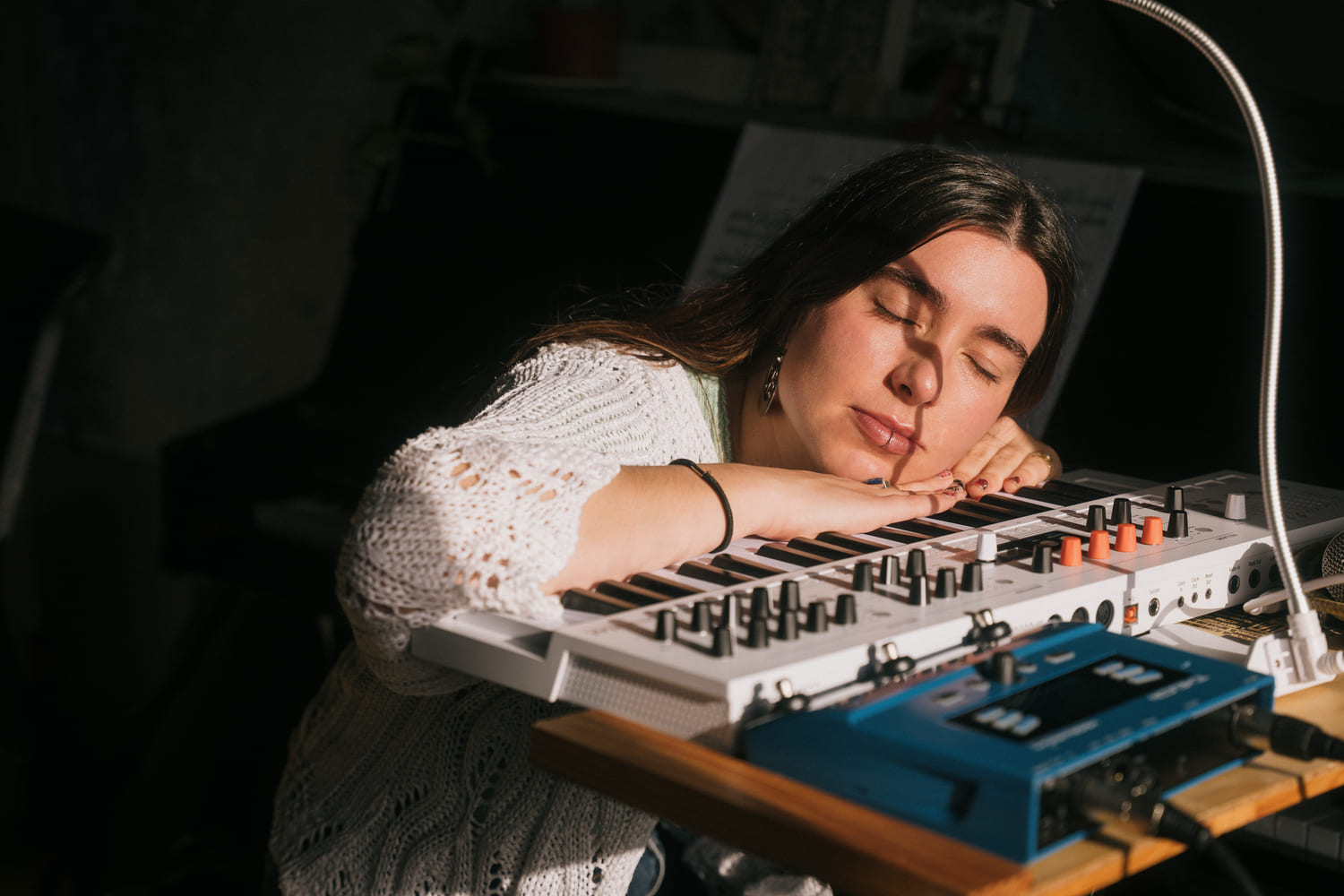
In a context strongly shaped by technique and academic training, what place does intuition occupy in your creative process?
David Lynch once said that intuition is a thinking feeling, and this completely resonates with me. It seems to me that intuition and curiosity walk hand in hand in the creative process. In my case, I’ve realized that naming the things that I’m doing naturally, gives me a certain power to understand where I’ve stepped before; just as learning the theory gives me the power to widen my ears and hear the new possibilities that may be offered to me. So, for me, intuition is most important, but also the understanding and the use of theoretical knowledge.
You have studied and worked in different European contexts and maintain an active dialogue with scenes such as the Portuguese one. What do you think defines today’s new generation of European jazz, and how does your music engage with it?
It’s a complex question, because I don’t think there’s a single European jazz scene anymore. There are many different scenes happening simultaneously across the continent, and they’re all very rich. In cities like Barcelona or Lisbon, for example, you can find some of the finest bebop players I’ve heard, as well as very diverse and beautiful free improvisation scenes. I’d need to travel more to really understand what’s happening in other countries, but from what I’ve heard, Northern Europe tends to lean more towards contemporary classical music merged with jazz language and sound, while in places like Germany and Belgium there seems to be a stronger interest in electronics and hybrid formats. Also I think the word “jazz” has expanded a lot, and I’m not sure what it means anymore. There’s also the term “BLAM” (Black American Music), which for me offers a broader perspective on the roots of this music. In that sense, I think my music engages with my generation through both respect for what was created in past decades and the need to fearlessly combine one’s own individual influences.
In March 2025 you received the Best Soloist Award at the European Young Artists’ Jazz Award Burghausen. What did this recognition mean to you at this stage of your career?
To be a singer and receive this kind of recognition has made me understand better how people see and hear me. I love singing songs, but I’m also an improviser and I’m glad this is welcomed by the audience.
Alongside your solo career, you are involved in projects of very different genres and sonic sensibilities, such as Veus Lliures, your duo with Alesander Peña, and the trio Kimera. What creative need does each of these projects fulfil?
Veus Lliures is a project led by Celeste Alías. There’s 13 women in the group, and we’ve been investigating the human voice related to pure sound, collective free improvisation and conducting with signs for the past five years. Being able to share music with these wonderful people has made me learn a lot about the voice, and it’s also widened my ears as listening is most important in an improvisational situation (especially with so many people). Sander and I formed this duo back in 2019, just before the pandemic. Playing with somebody so consistently through the years makes you feel really confident, because you get to know each other’s sound so well, that music becomes a conversation with your best friend. Sander’s playing matches my singing perfectly, as we follow each other’s ideas in a way that’s really rare to find. It’s been almost a year since I started playing with Dani Artetxe (guitarist) and Dani Pimen (drummer). Our trio is basically a mix of progressive rock, post-punk, free improvisation and (sometimes) jazz. We’re finishing a bunch of original songs now, and I’m very excited because I get to be my weirdest, funniest, most extravagant self with them.
How do you imagine the evolution of your music and projects in the coming years?
Honestly, I have no idea. I only know I’m doing well now, because I’m currently working on music that’s got me thrilled, and playing with people I admire profoundly. I trust life to bring me as much music, experiences and joy as I’m open to receive.
In a context dominated by speed, digital platforms and artificial intelligence, what do you think we need to protect as artists?
I think I’m still trying to understand the direction things are taking in this regard. The logical thing for me would be to get the AI to do the work nobody wants to do, not to steal what brings us humans purpose and drive in life. I think technological progress is fantastic, but I’m afraid the people who decide how that technology is used are not always aligned with human and artistic values and rights. It makes me sad to see the direction our world may be taking in the upcoming years, so the only thing I can think of as an artist is to get together more and keep feeding the independent artistic communities that already exist. Humans will always be hungry for the real stuff, and that’s only created by other humans.
For someone listening to do we belong in confusion? for the first time, what would you like them to feel or take away from the experience?
Just a girl making some noises and sharing her passion for sound with some badass musicians onboard.
If you had to define this moment in your life with a single word, what would it be?
Pre-blossom.
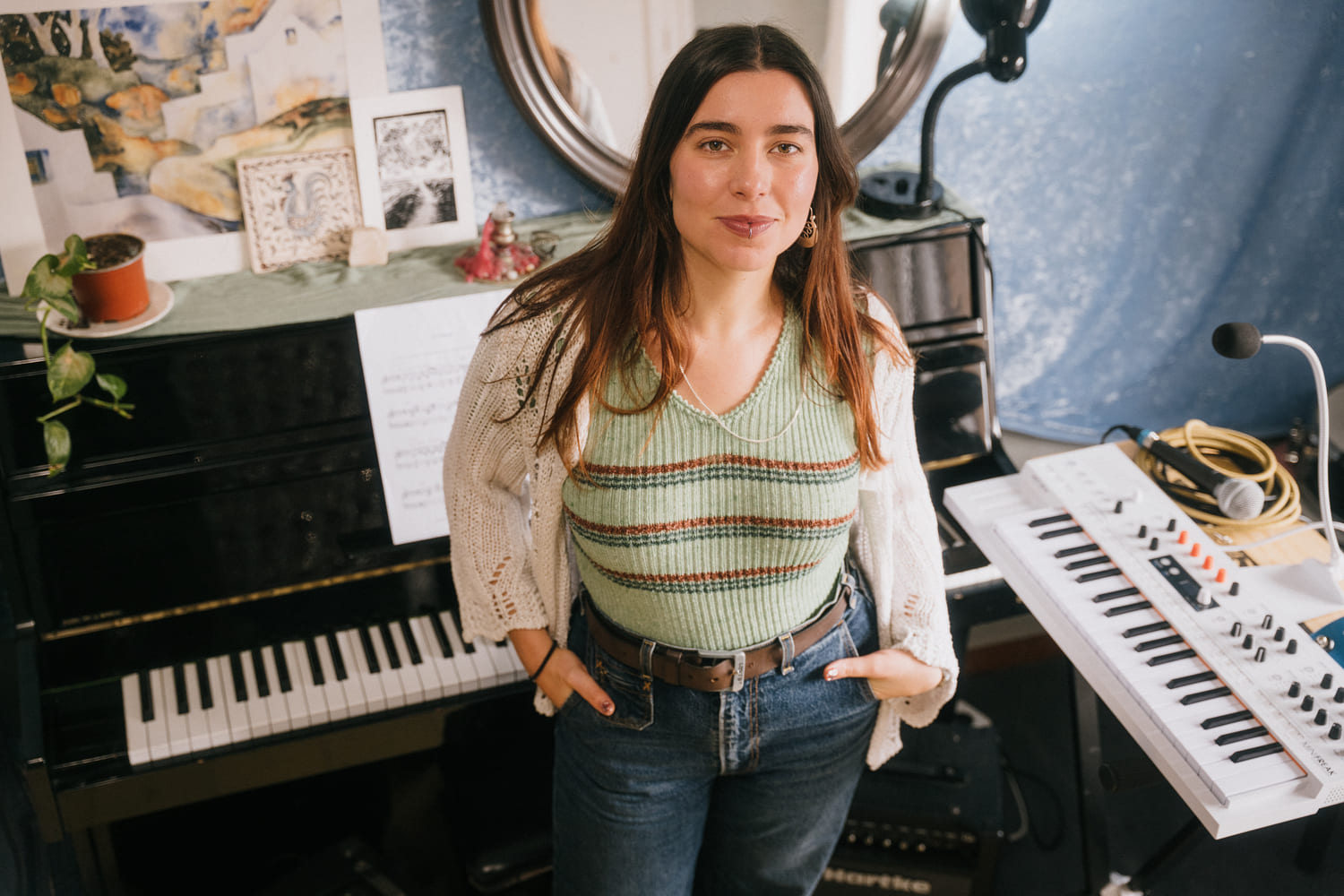
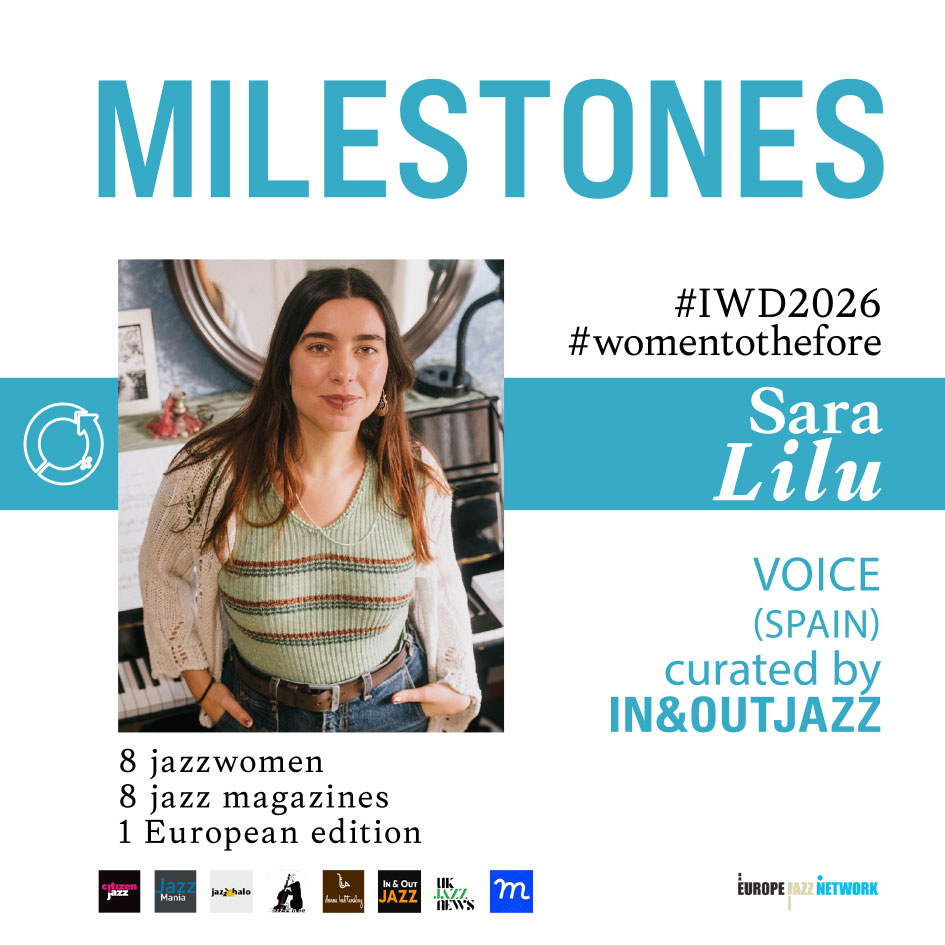
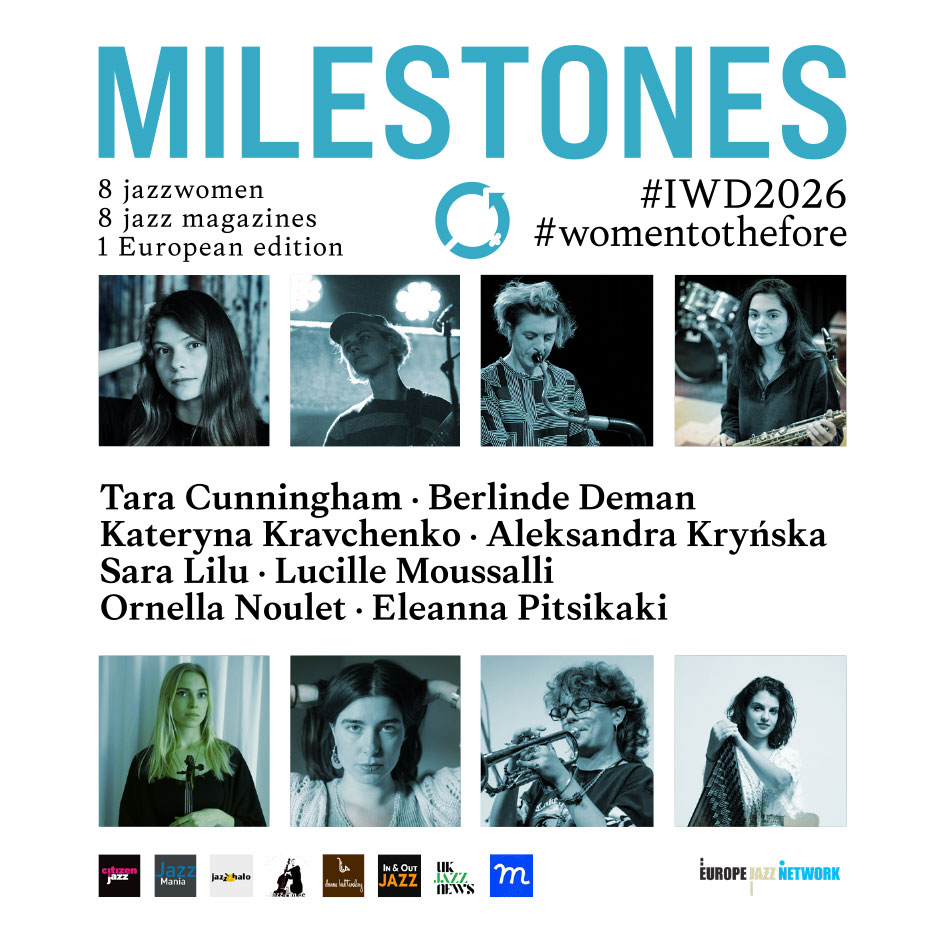
Este artículo se publica simultáneamente en las siguientes revistas europeas, en el marco de “Milestones”, una operación para destacar a las jóvenes músicas de jazz y blues : Citizen Jazz (FR), JazzMania (BE), Jazz’halo (BE), Meloport (UA), UK Jazz News (UK), Jazz-Fun (DE), In&Out Jazz (ES) y Donos Kulturalny (PL).
This article is co-published simultaneously in the following European magazines, as part of « Milestones » an operation to highlight young jazz and blues female musicians : Citizen Jazz (FR), JazzMania (BE), Jazz’halo (BE), Meloport (UA), UK Jazz News (UK), Jazz-Fun (DE), In&Out Jazz (ES) and Donos Kulturalny (PL).
#Womentothefore #IWD2026
