David Sancho Interview

David Sancho Interview

David Sancho Interview

10

ABRIL, 2023

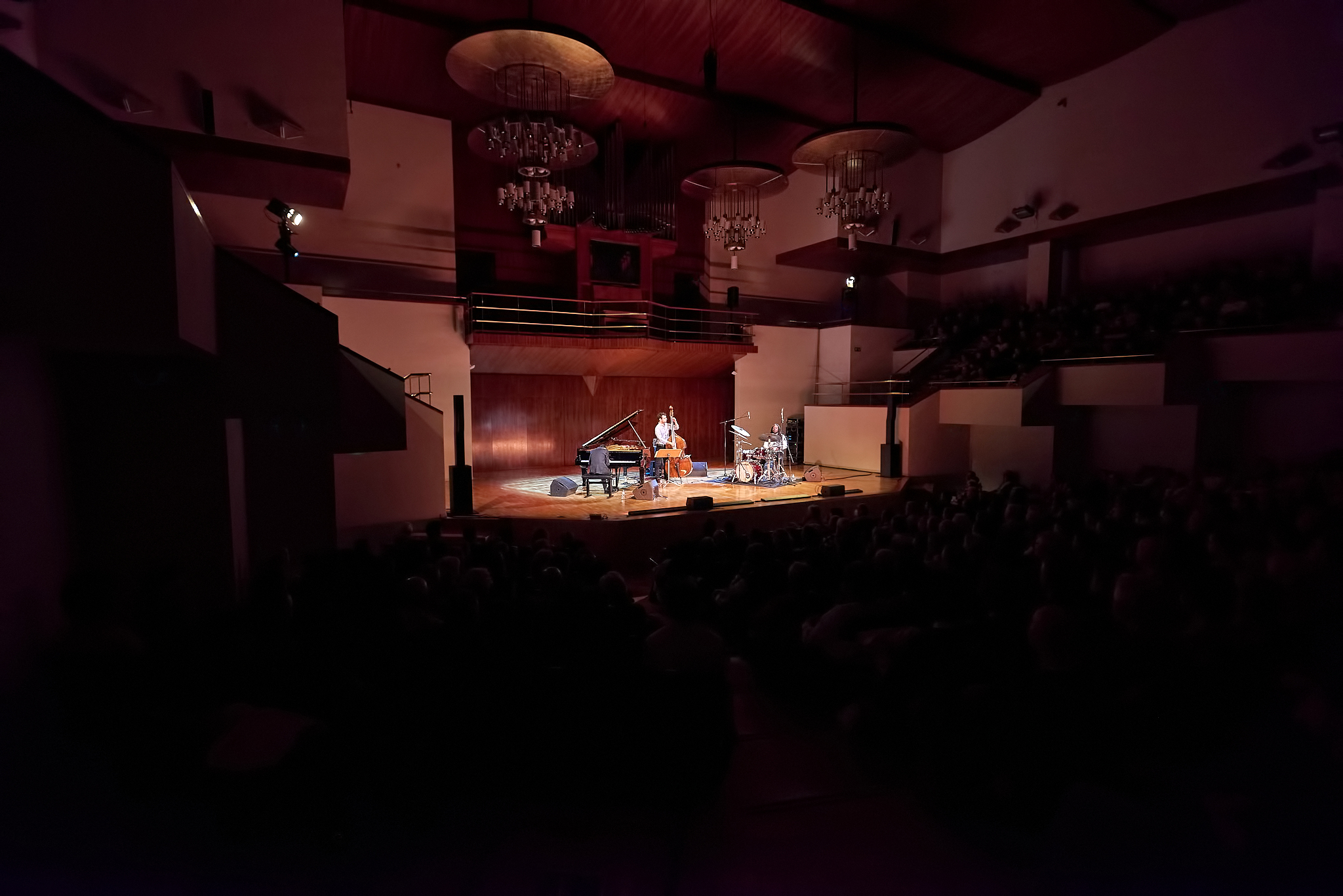
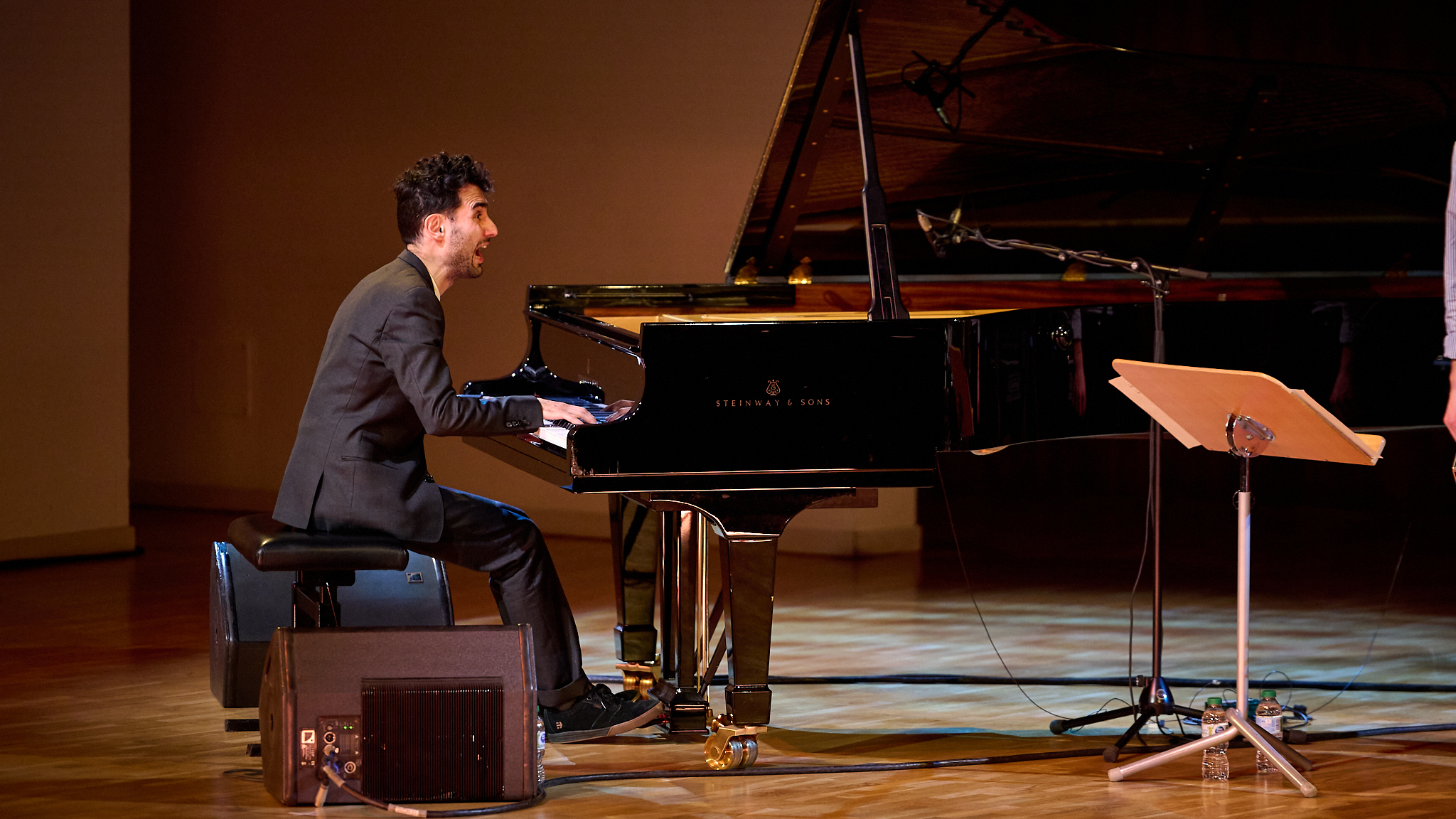
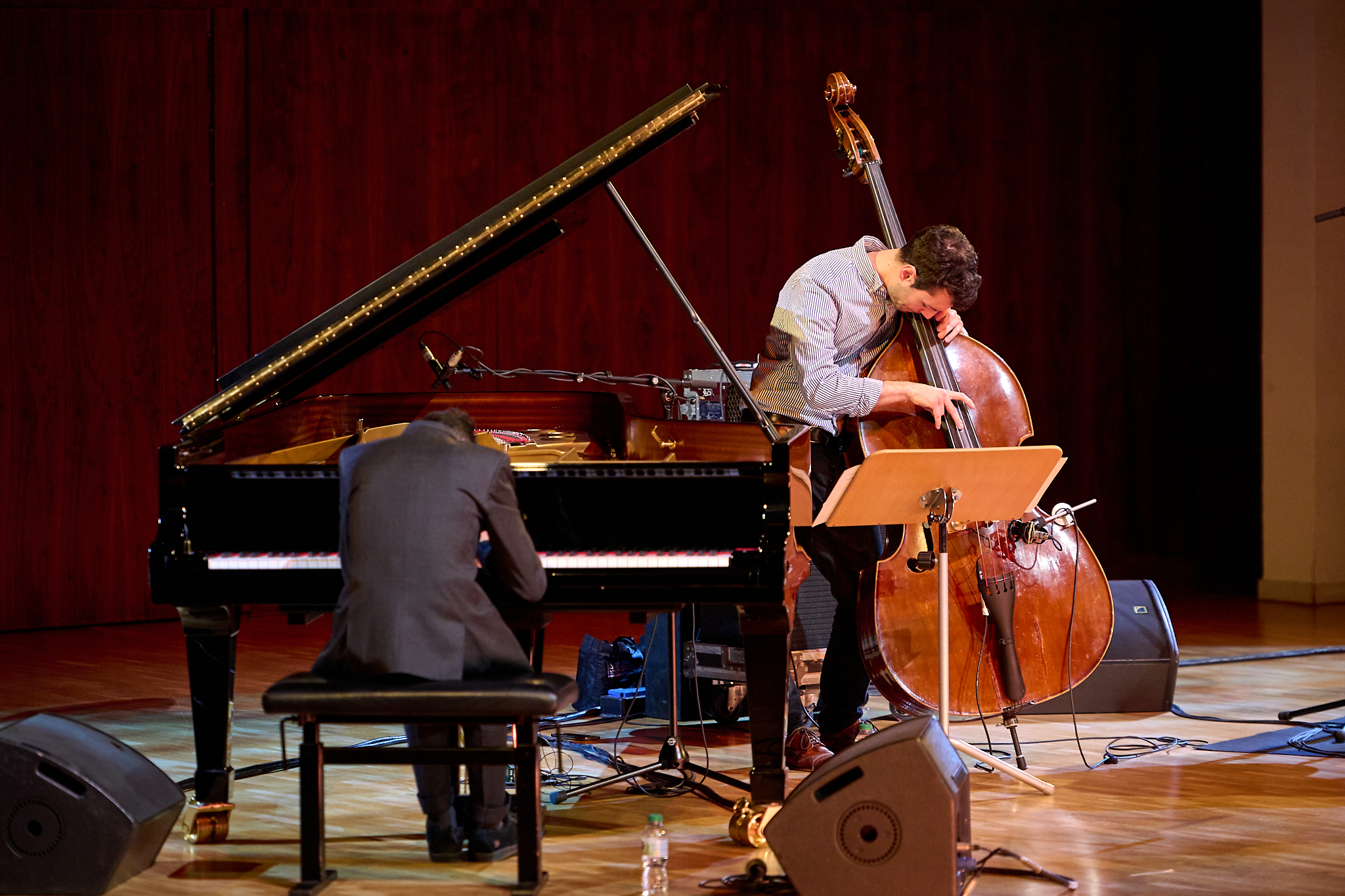
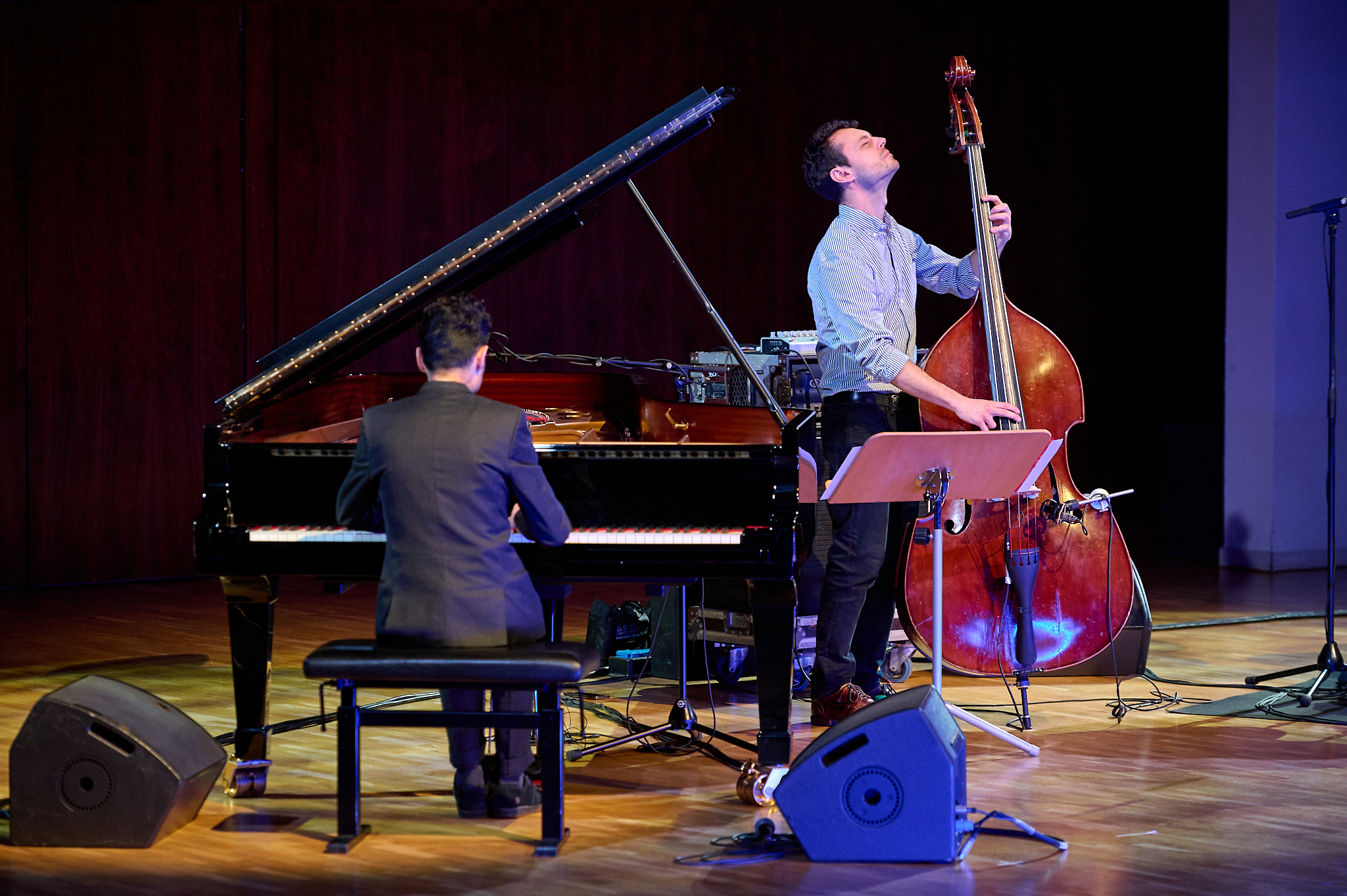
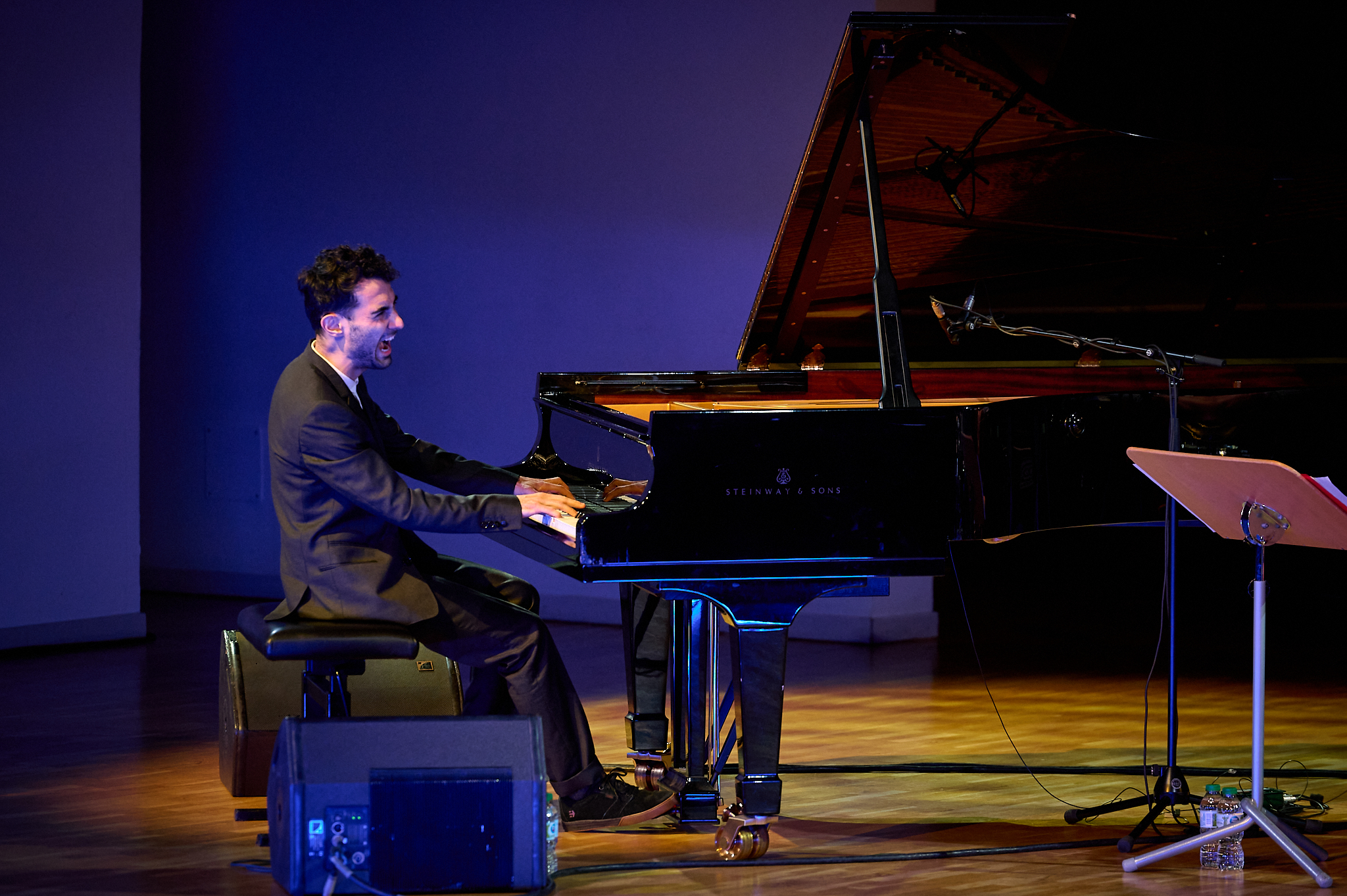
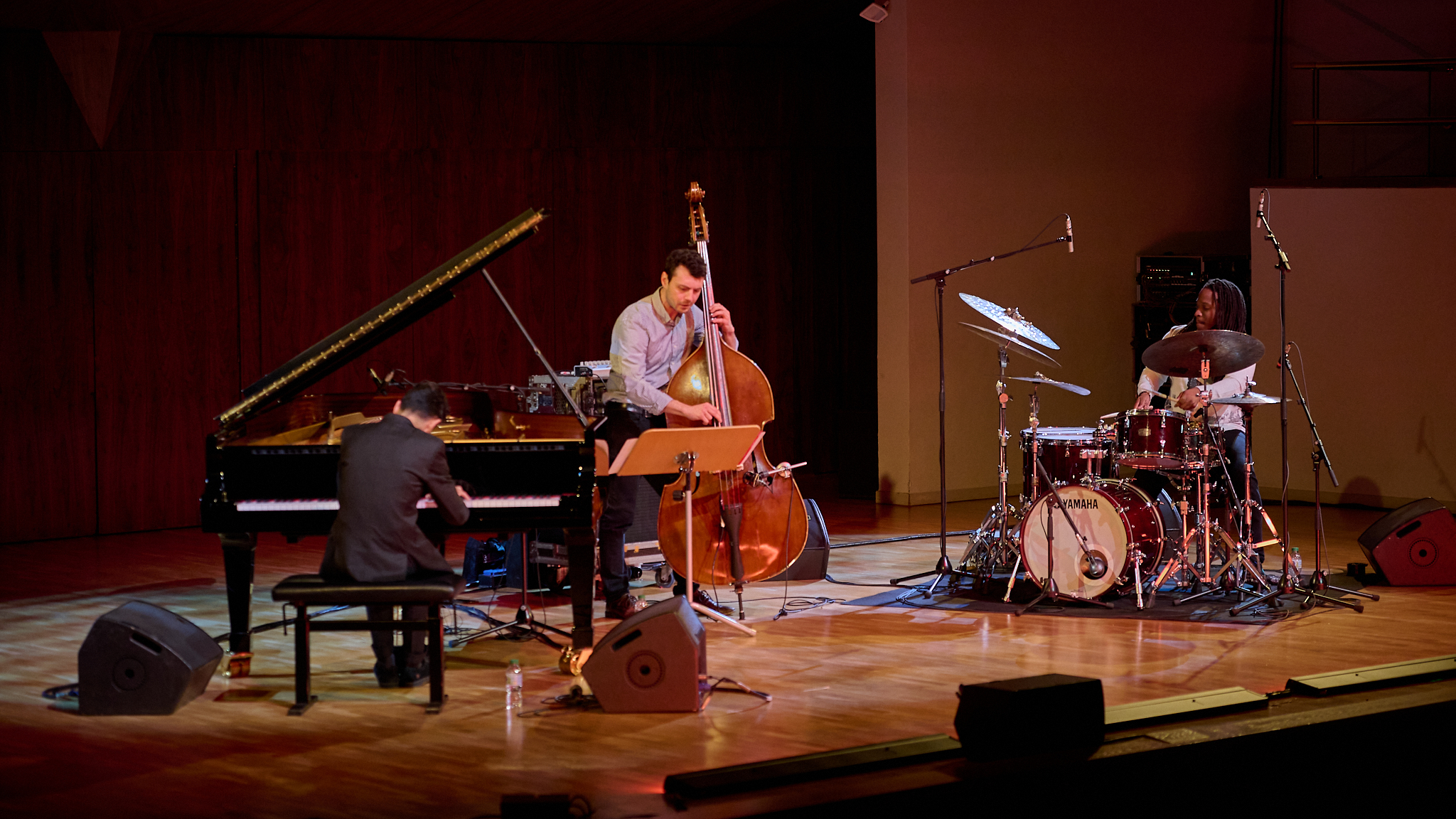
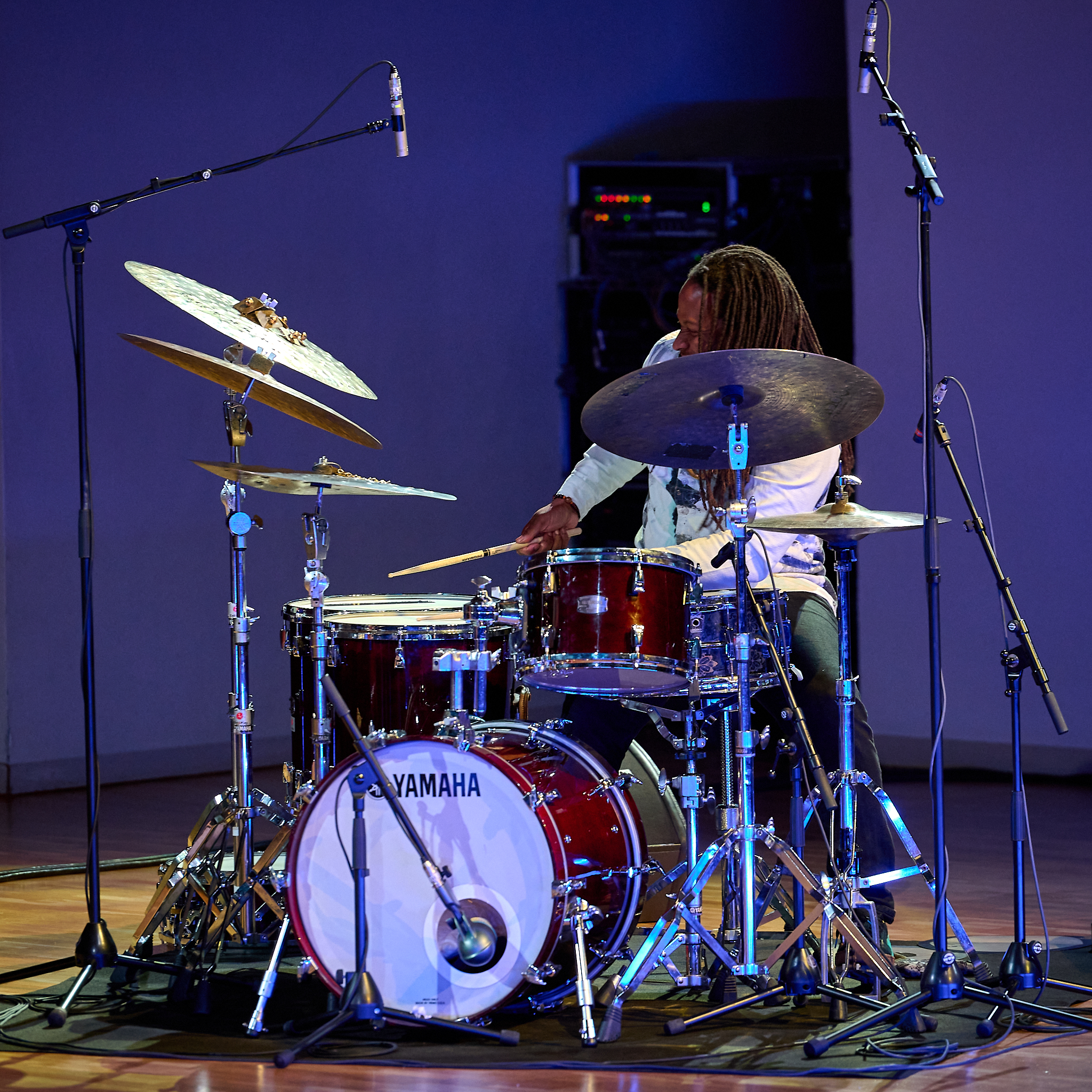
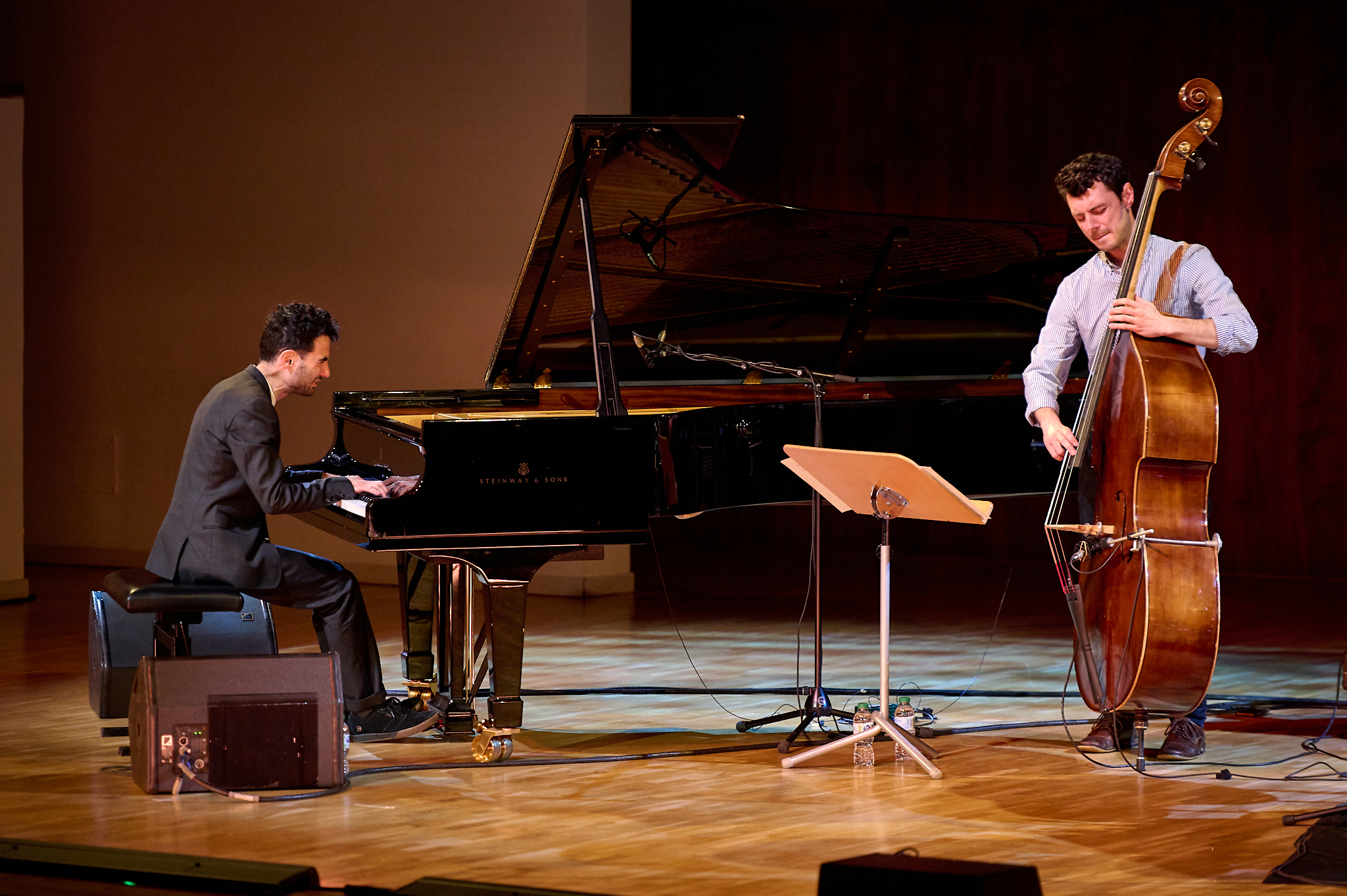
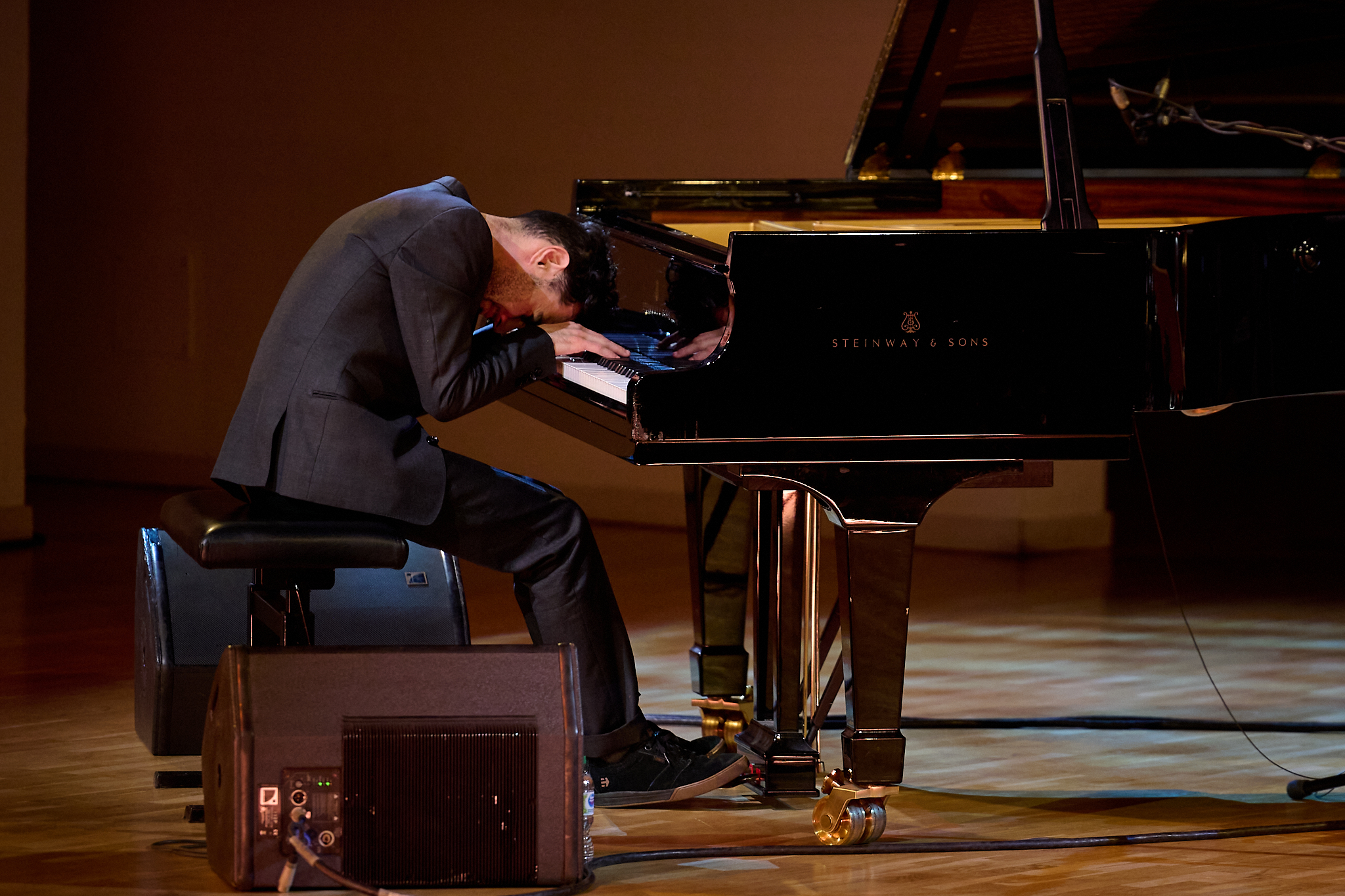
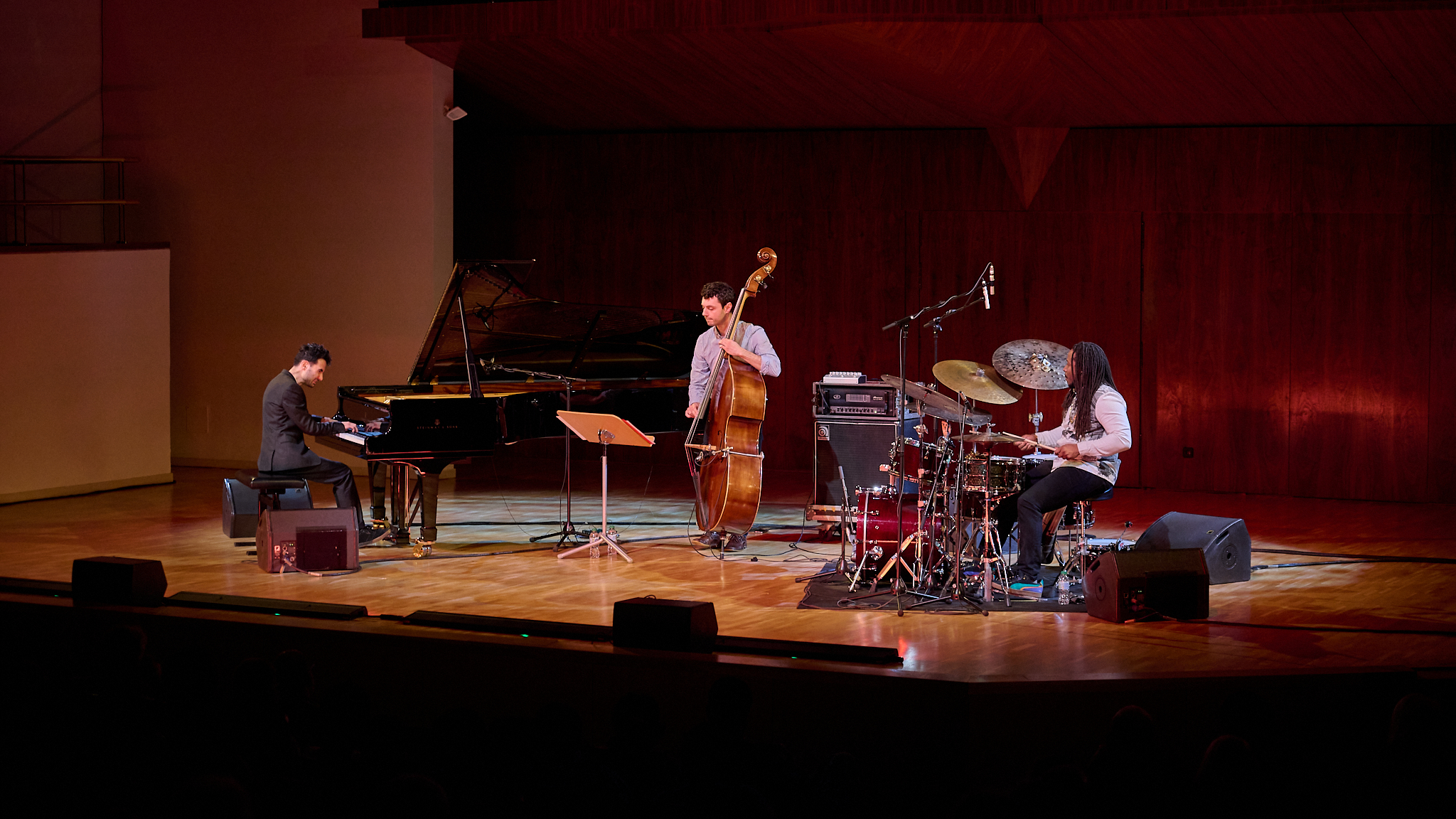
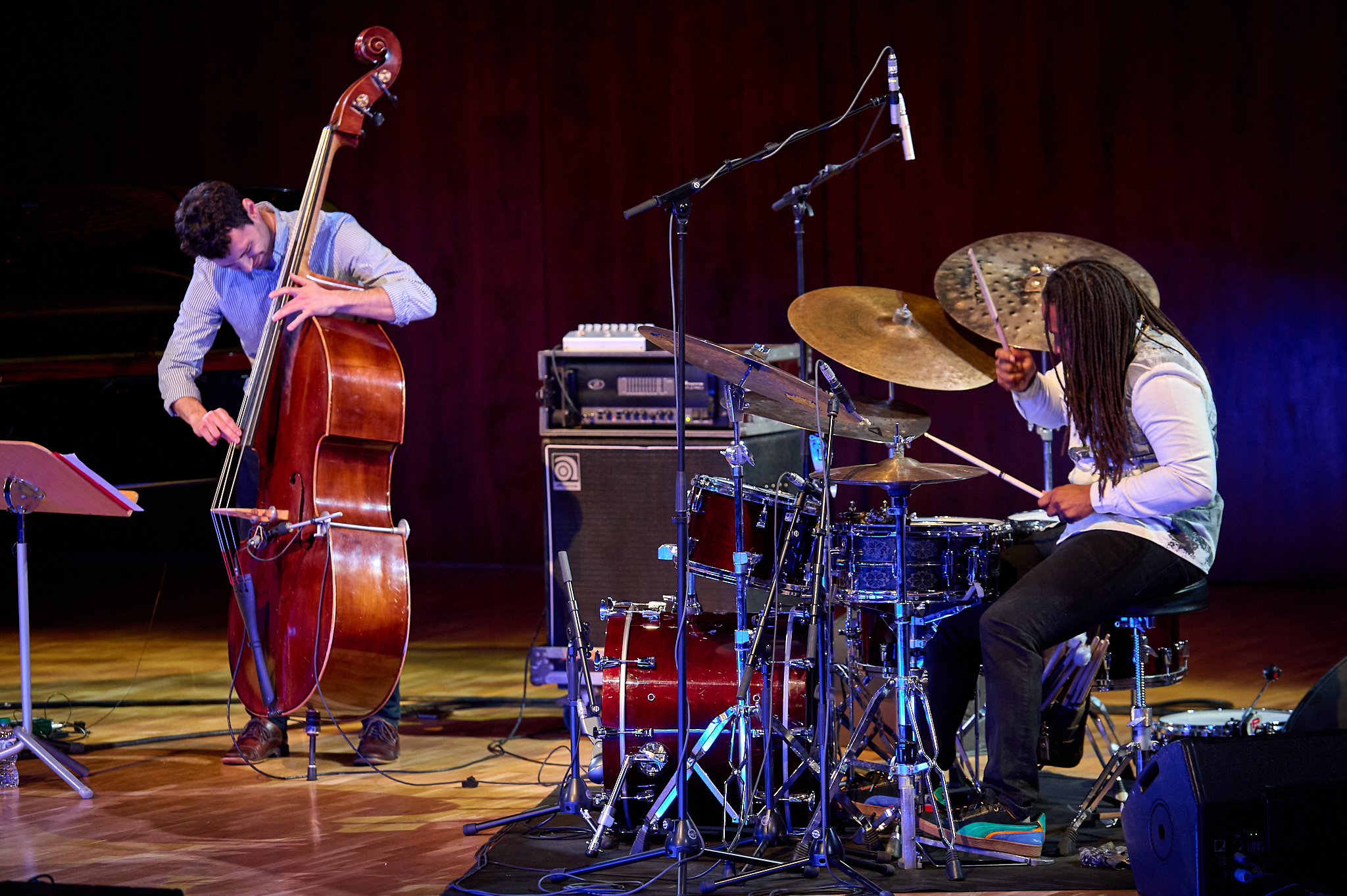
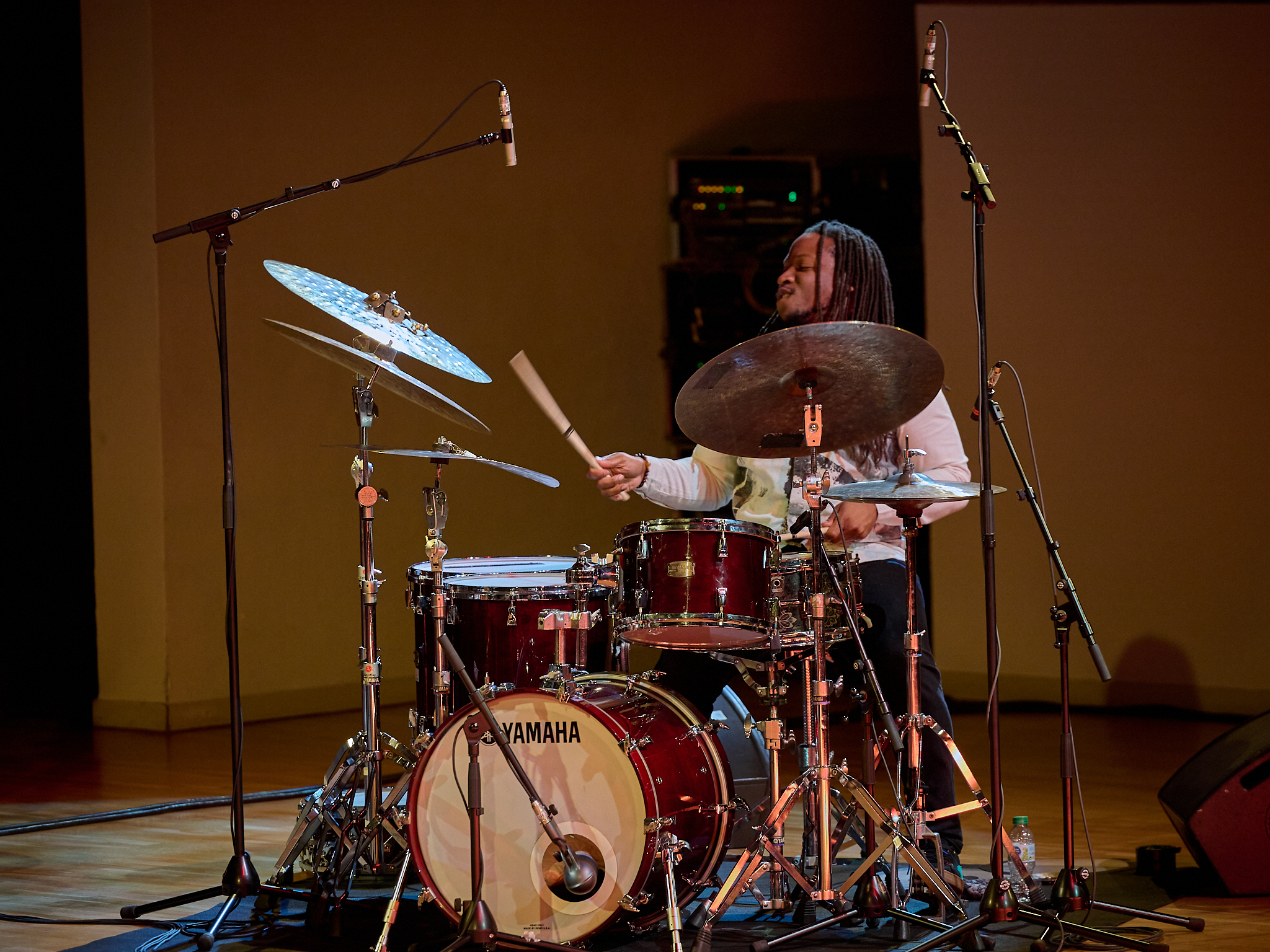
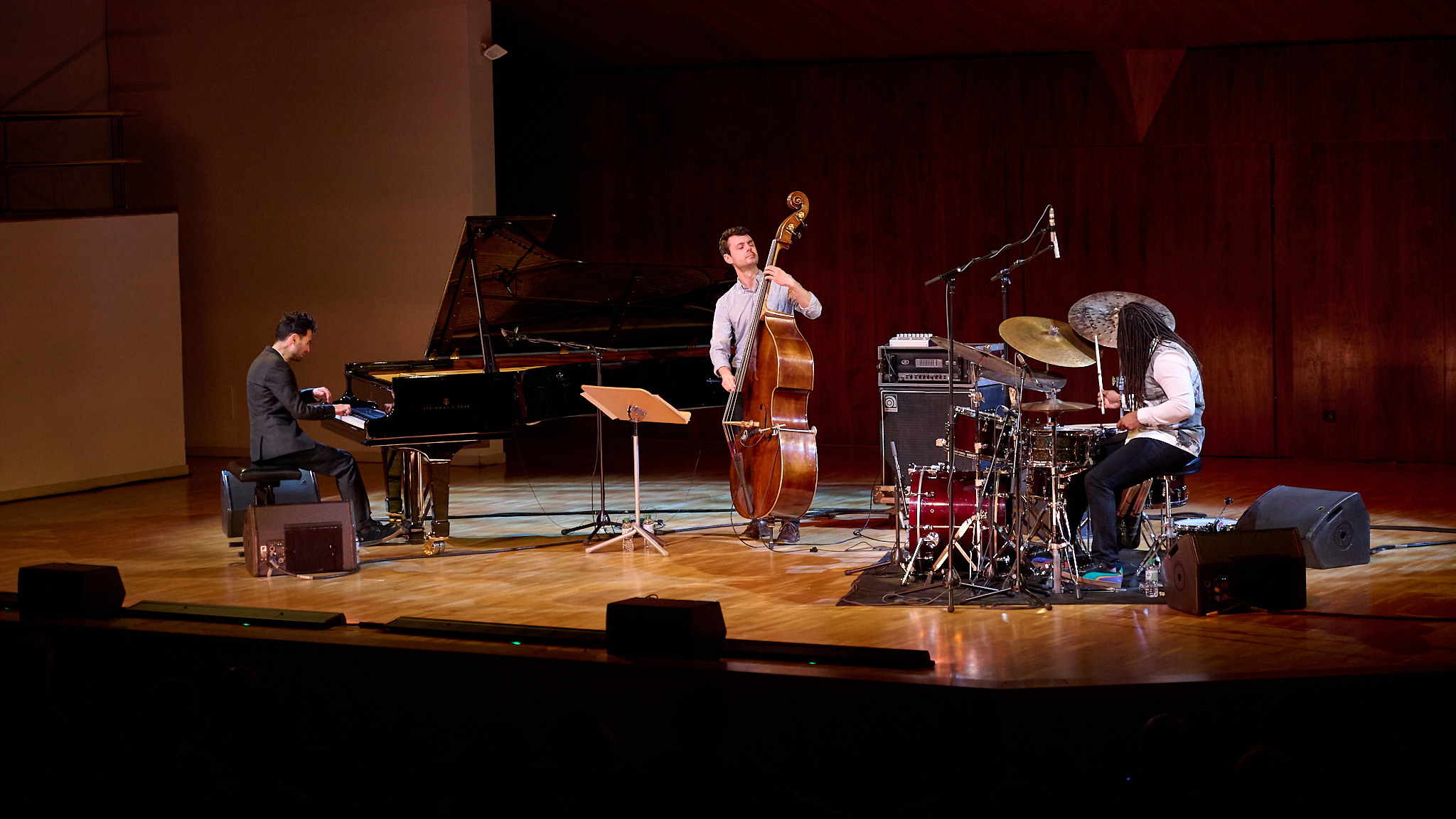
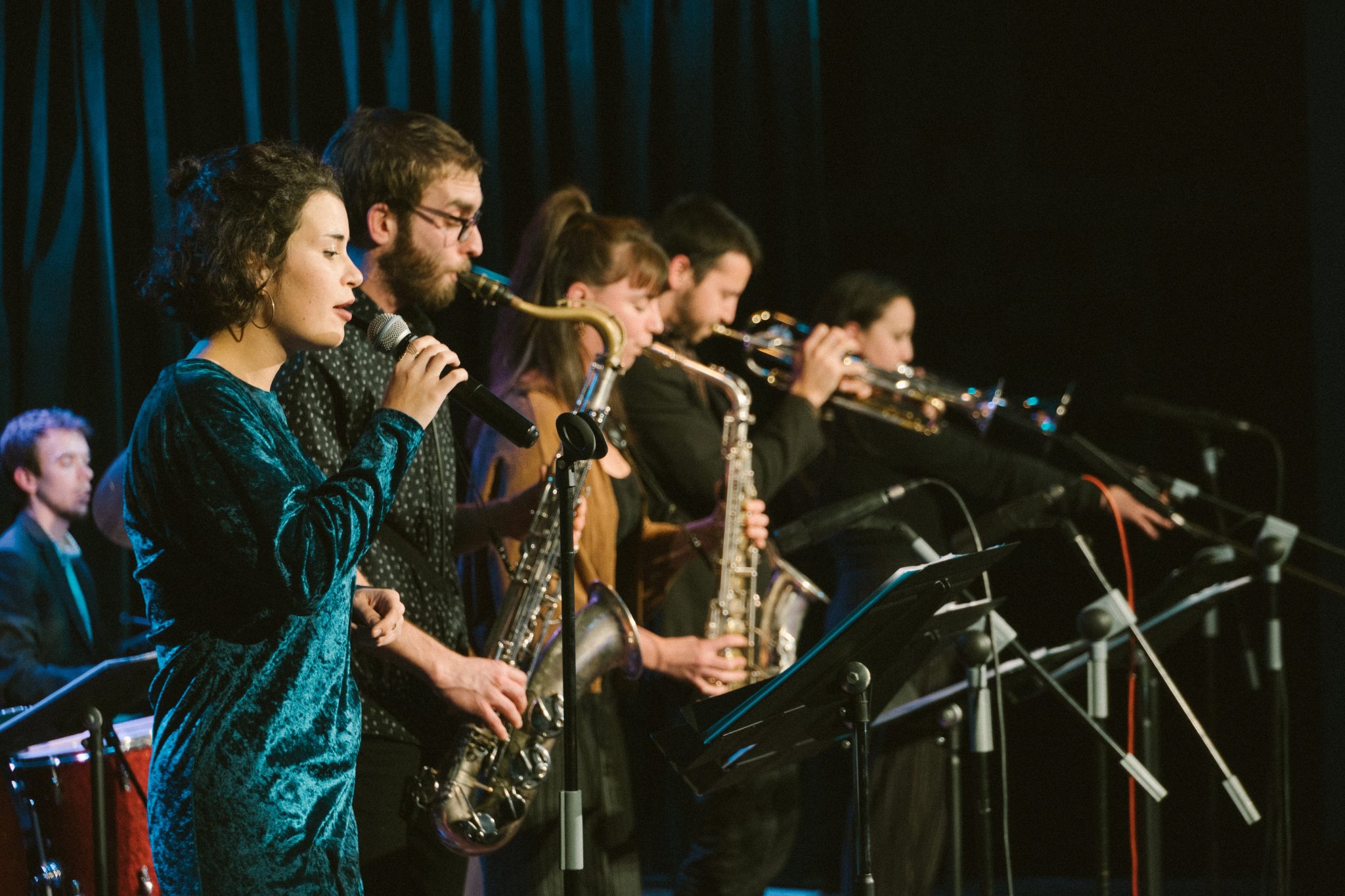
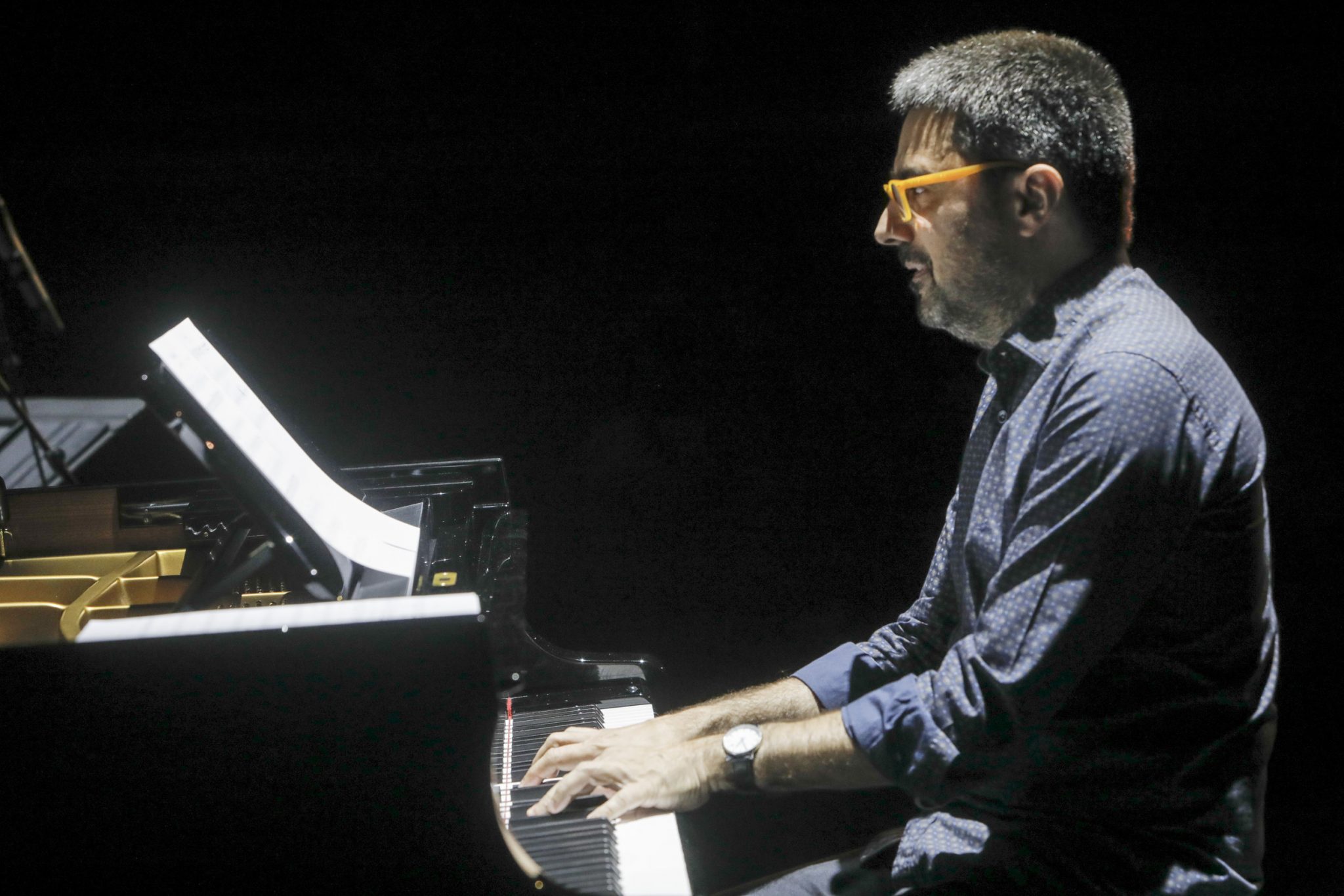
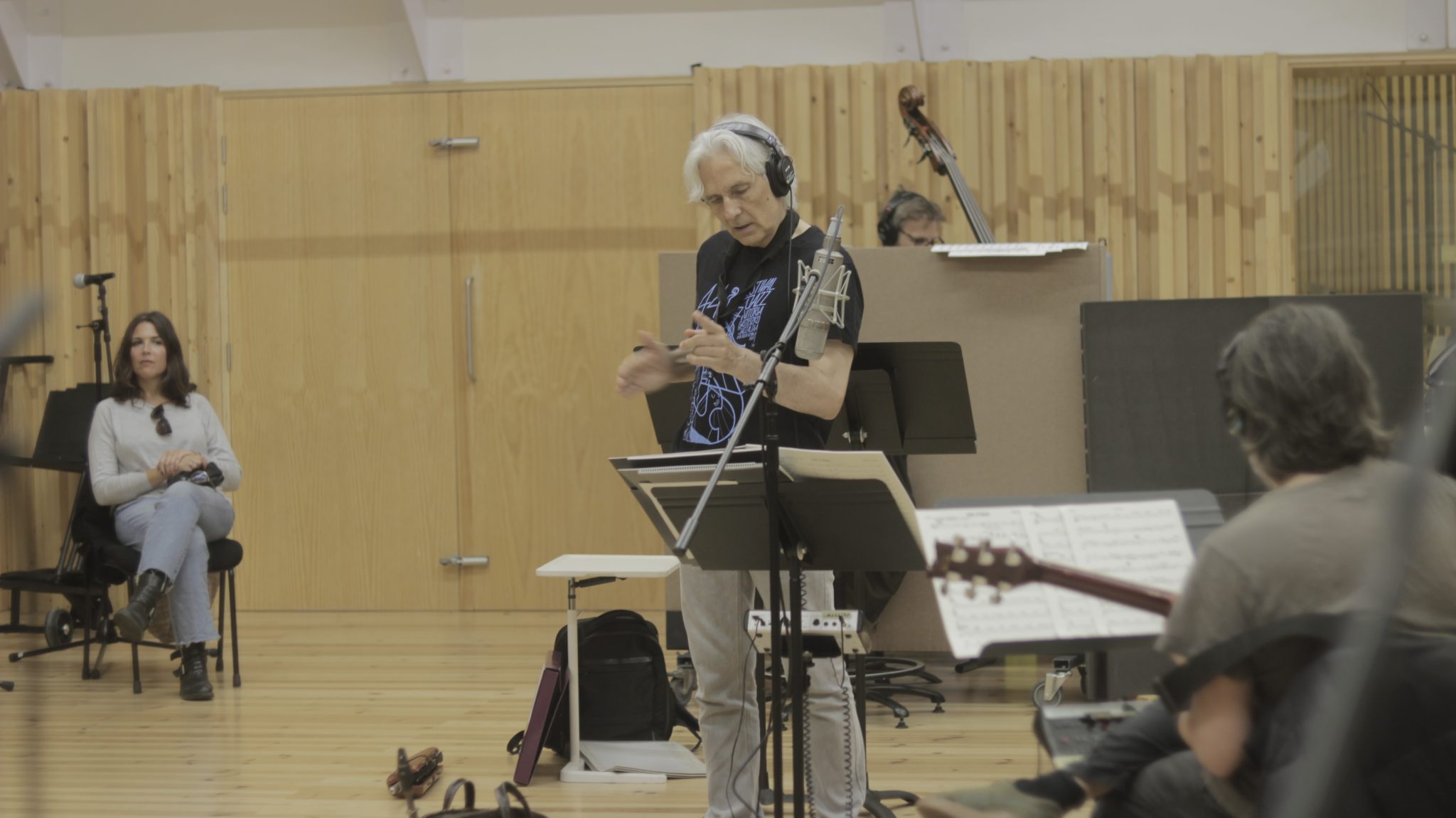
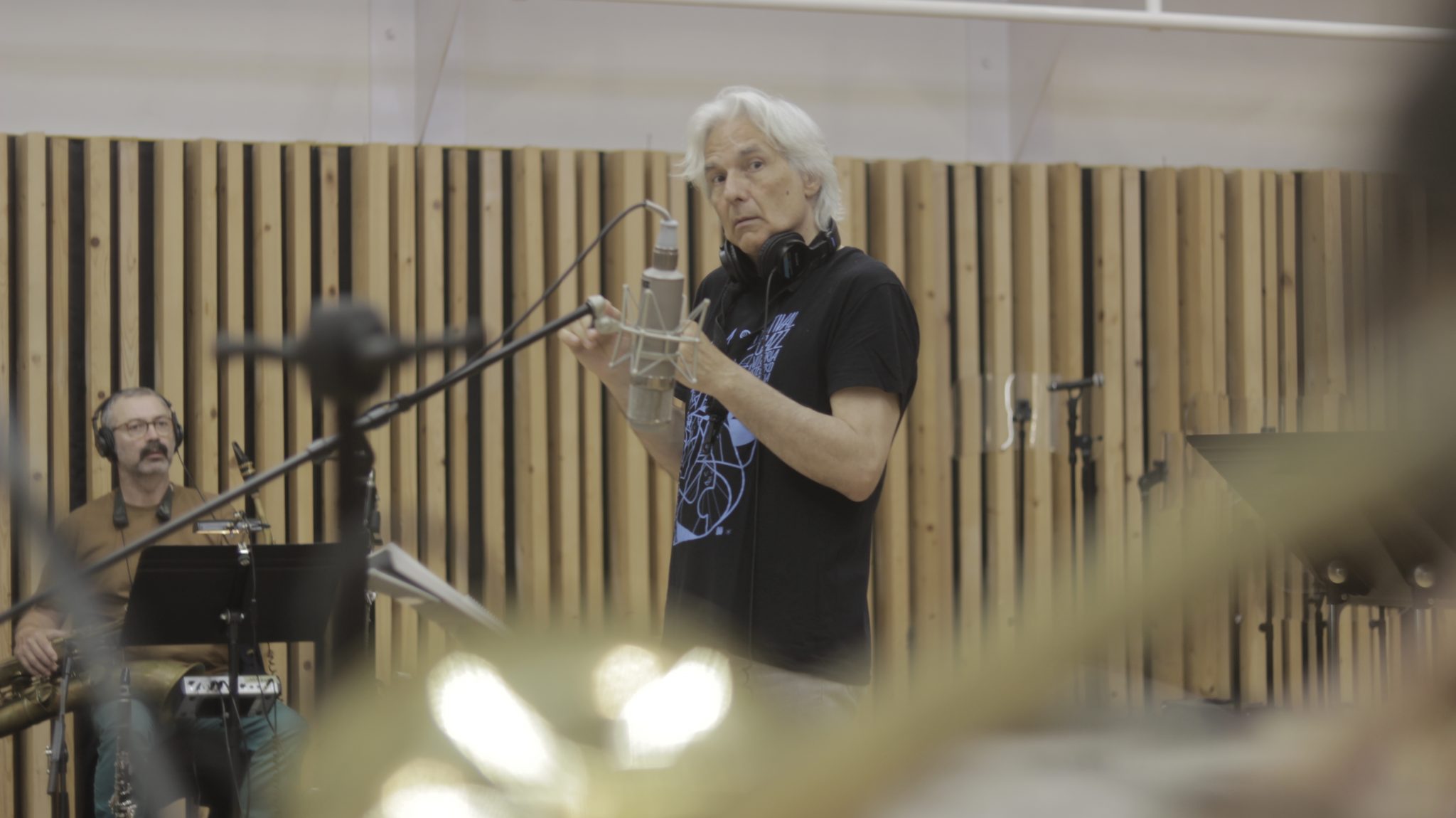
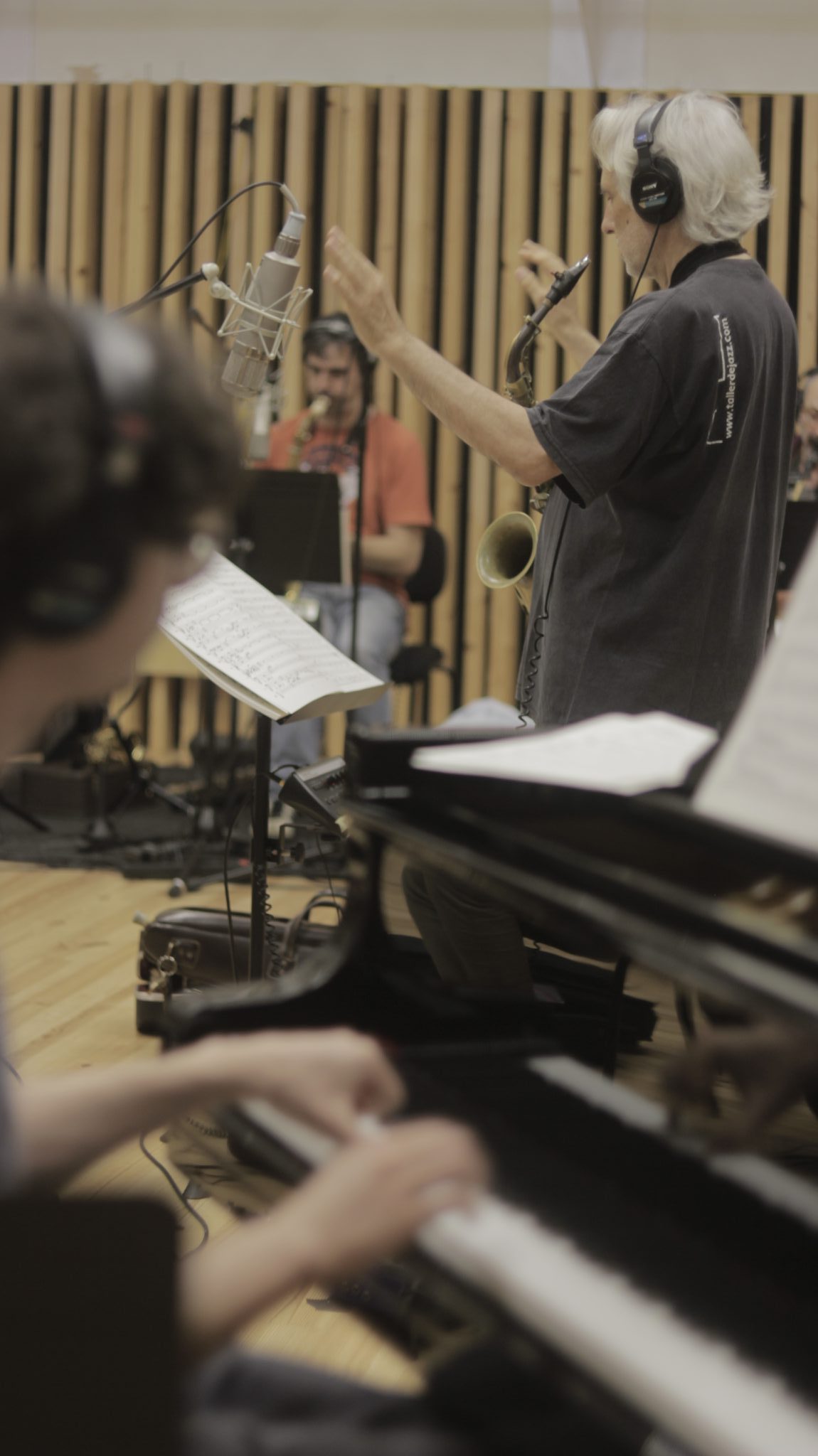
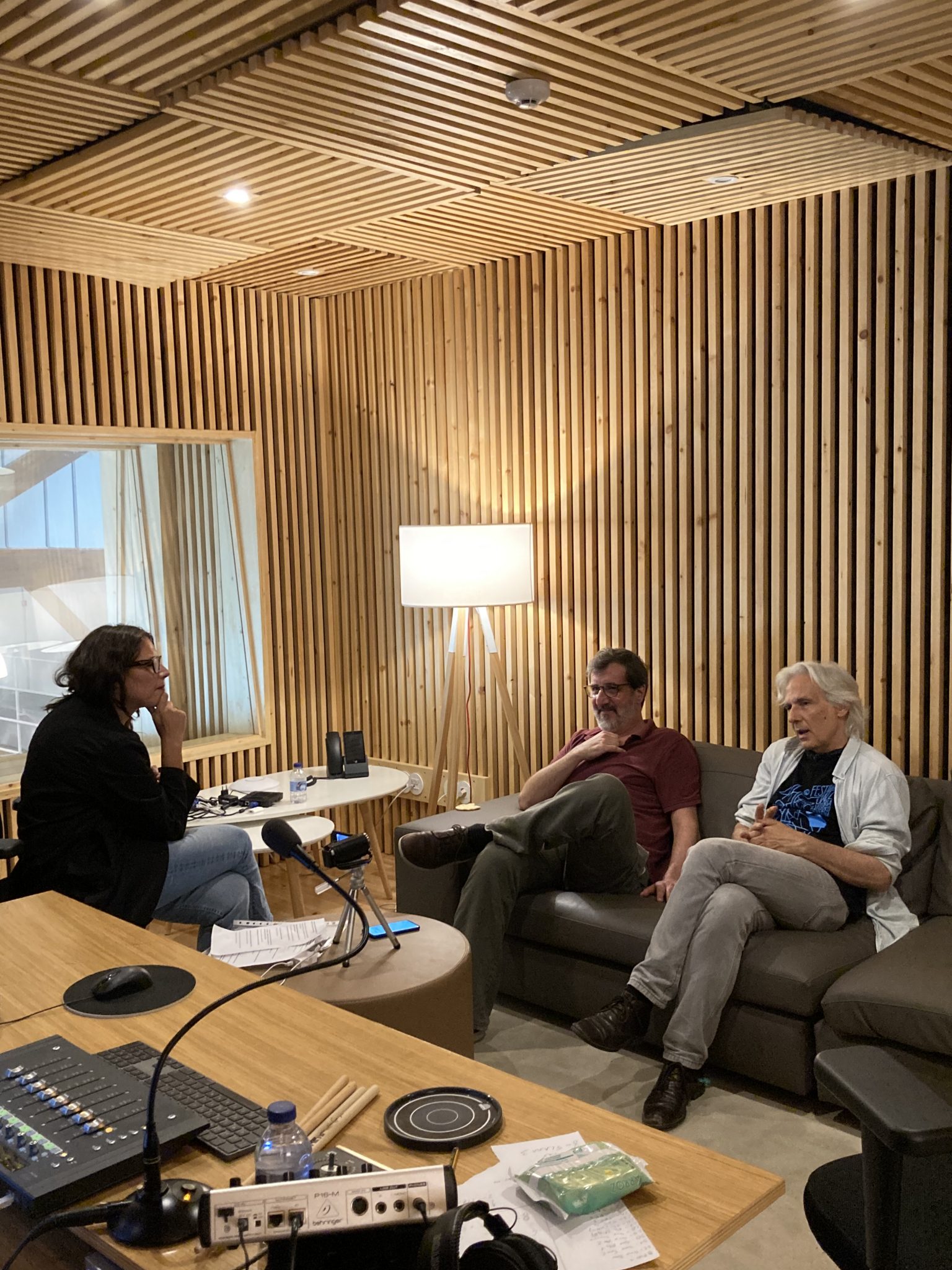
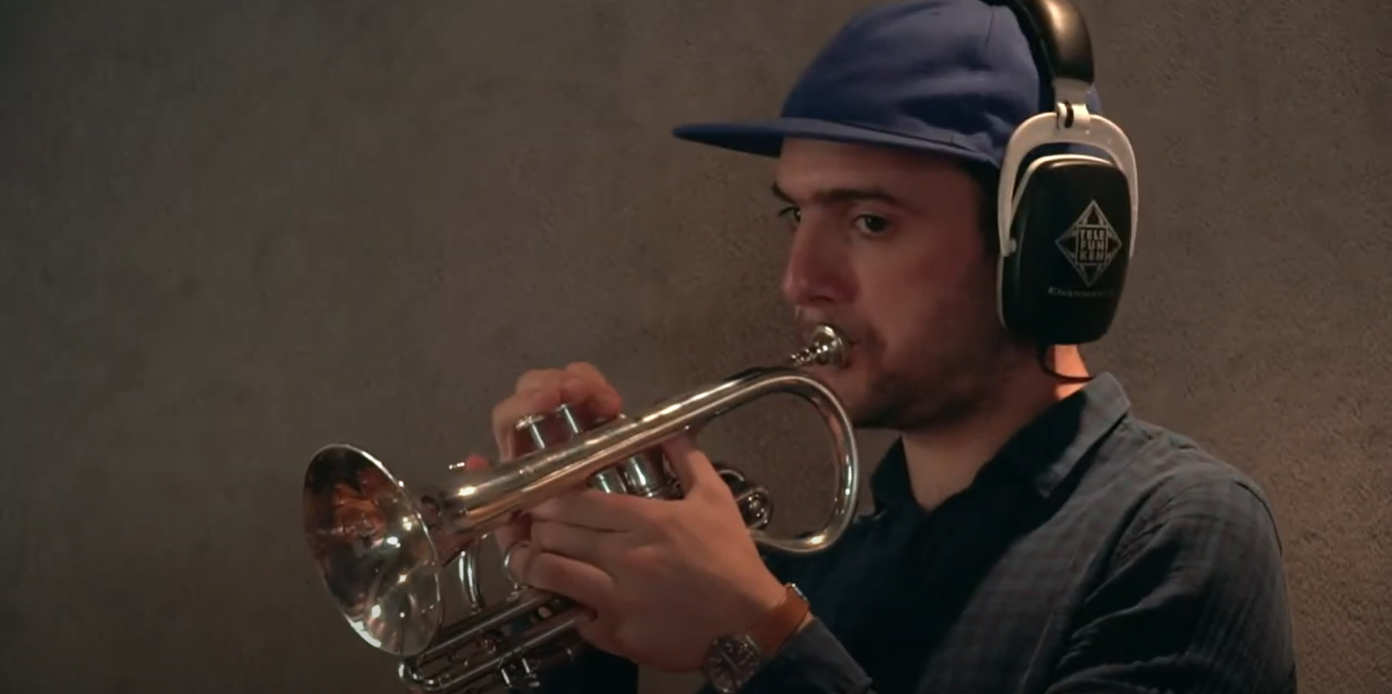
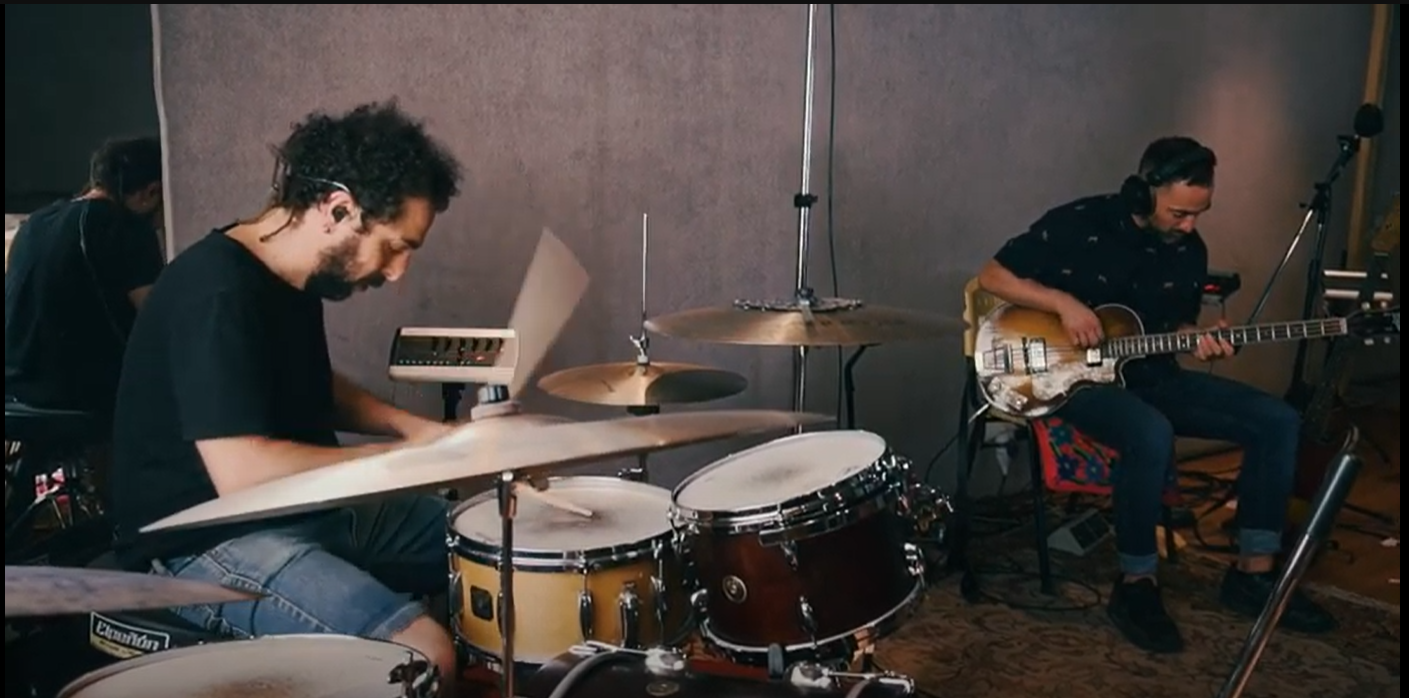
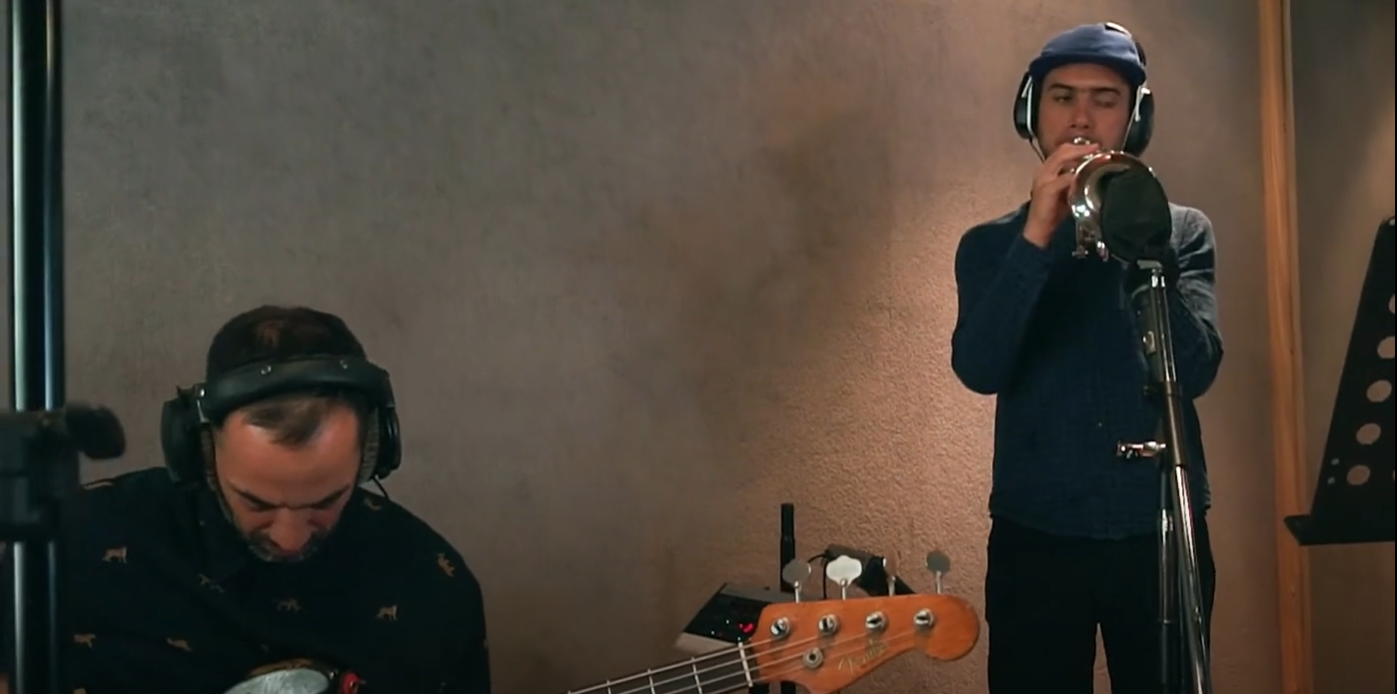
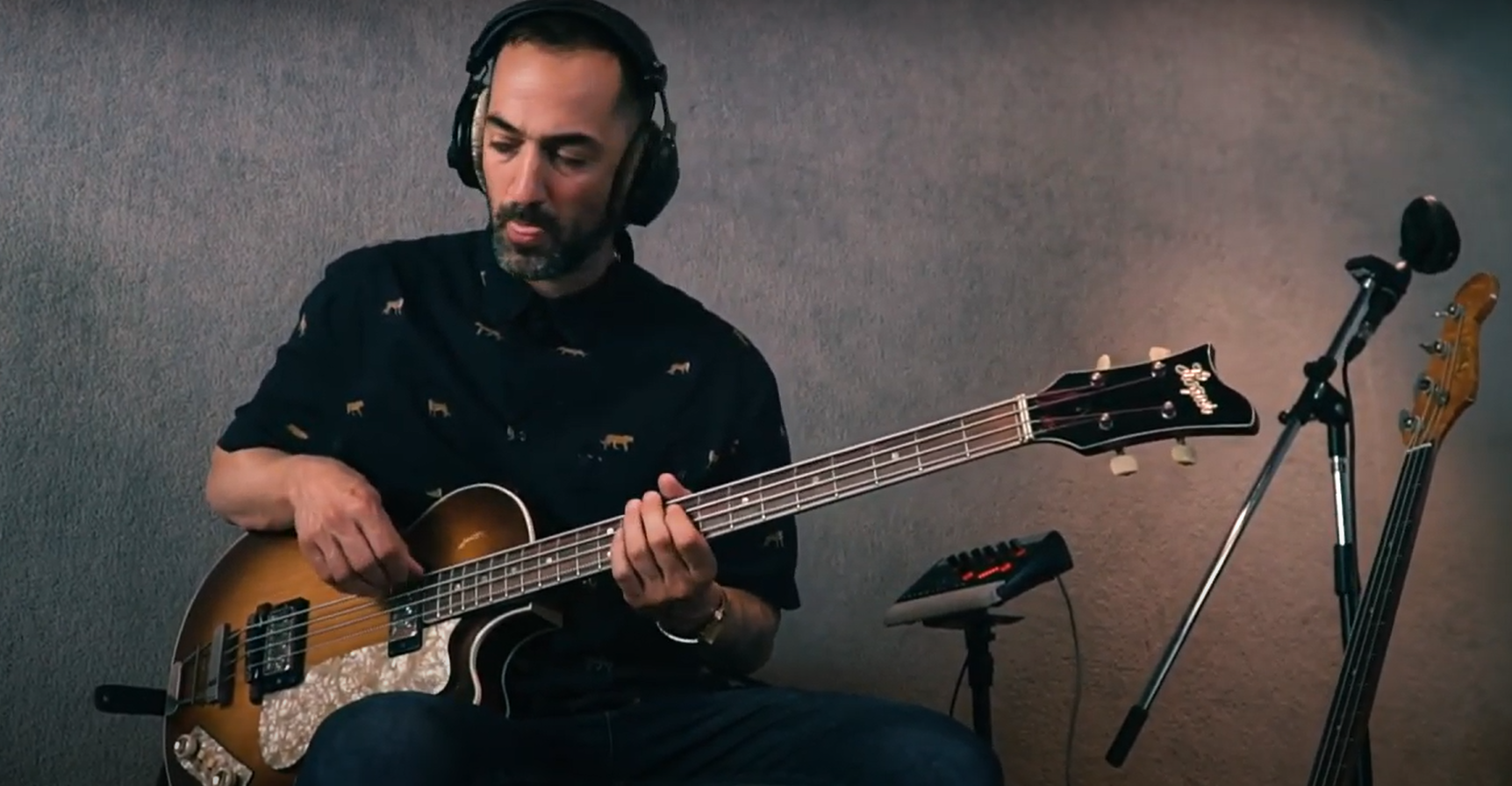
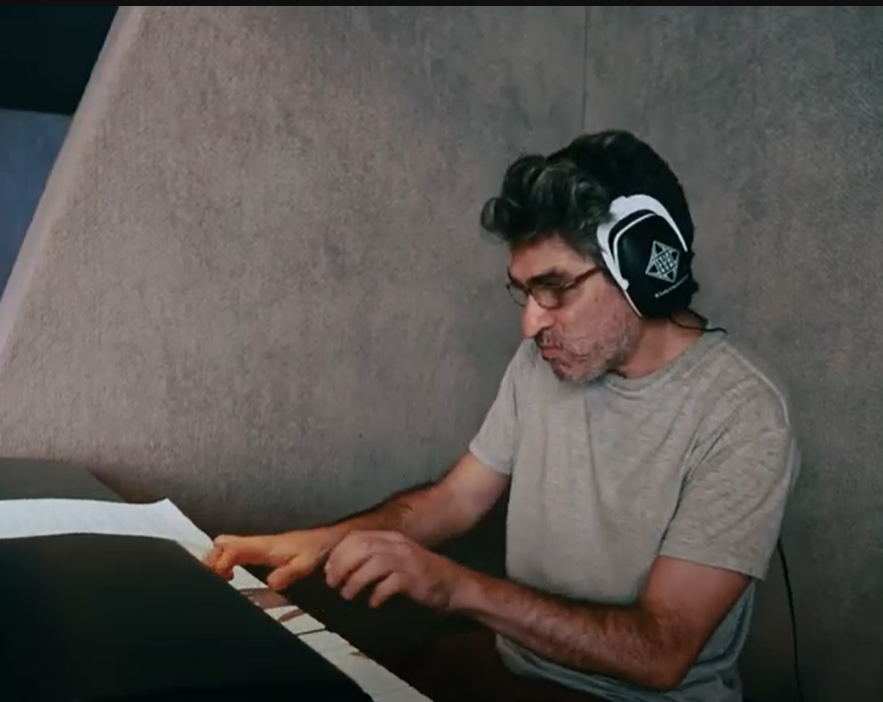
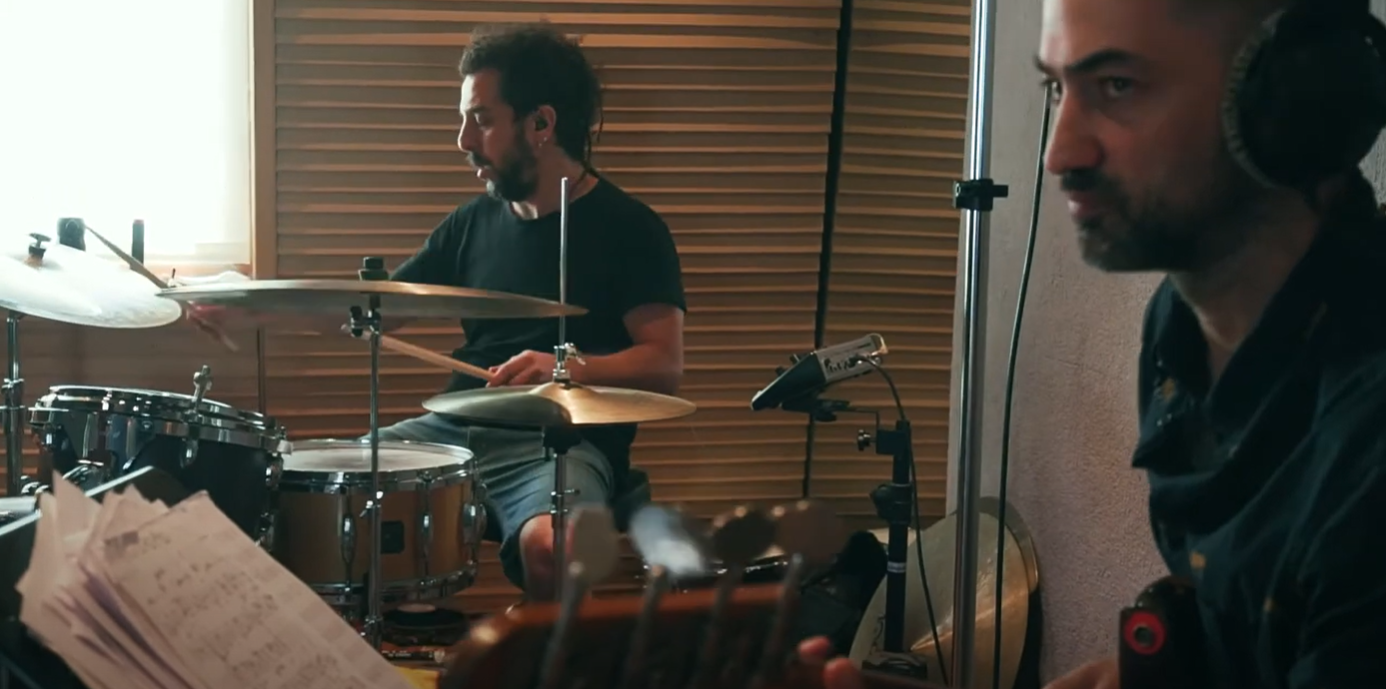
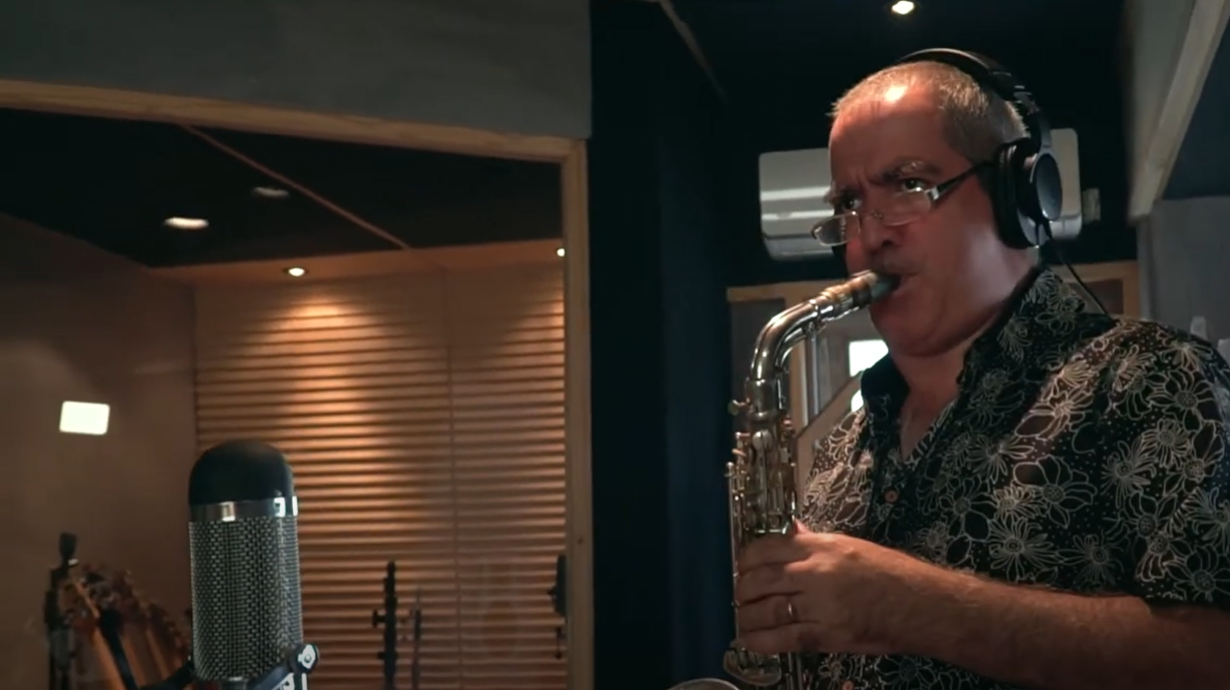
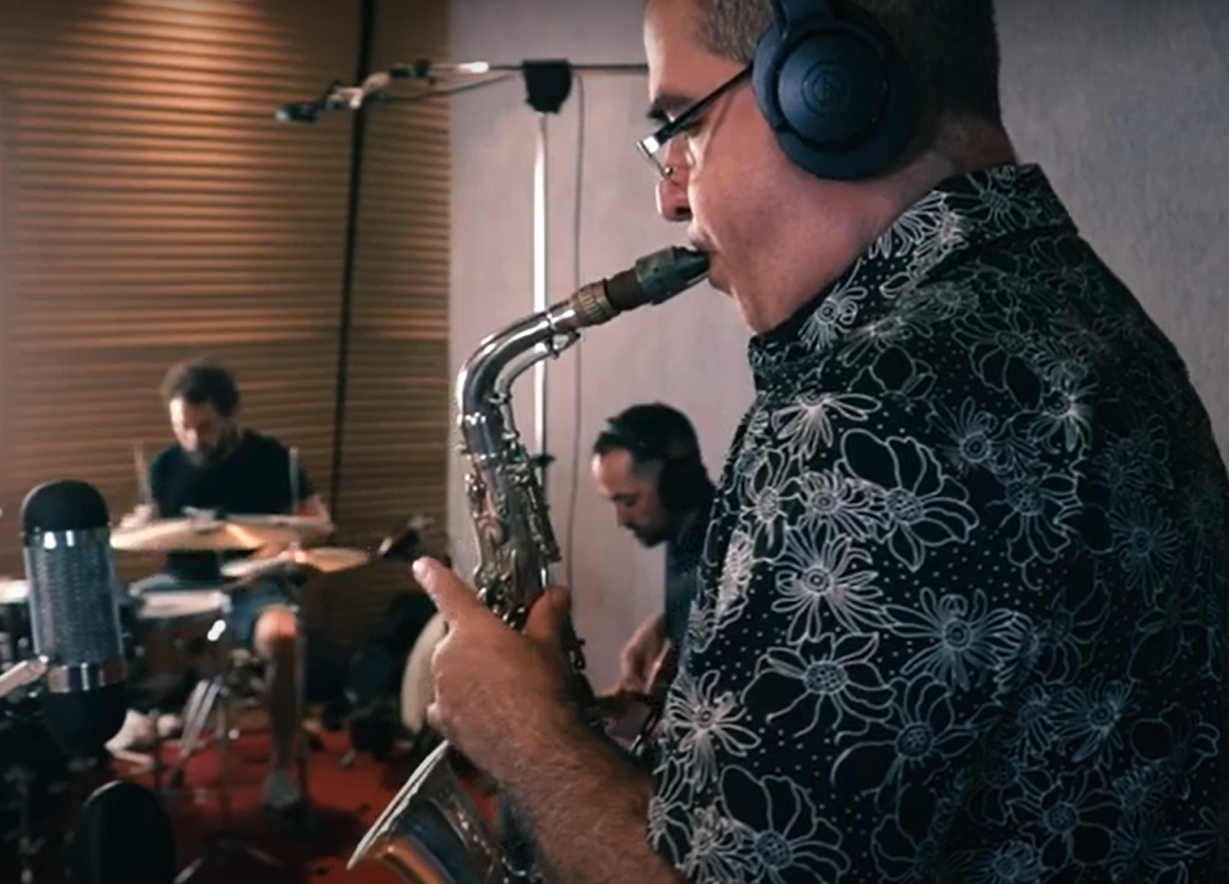
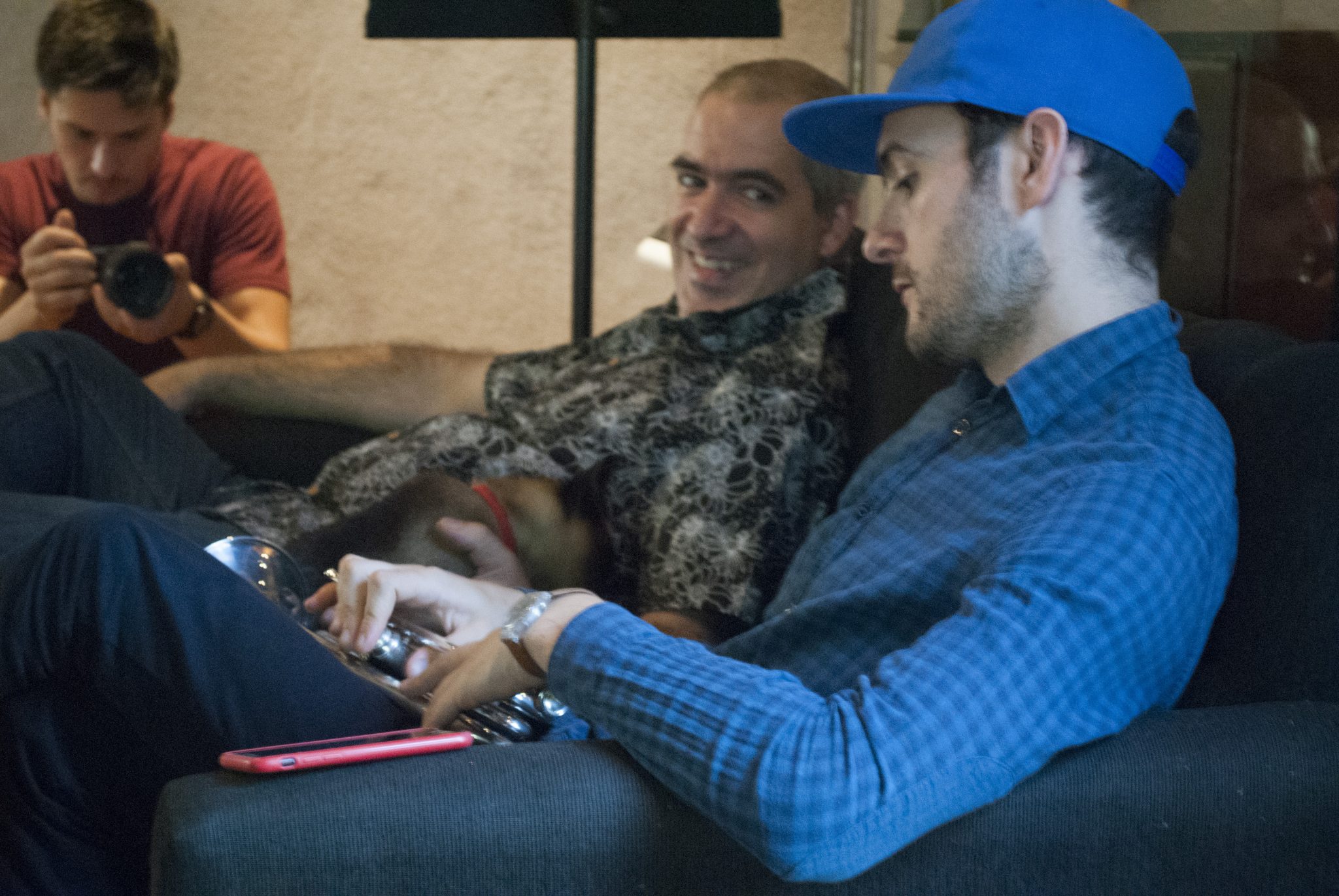
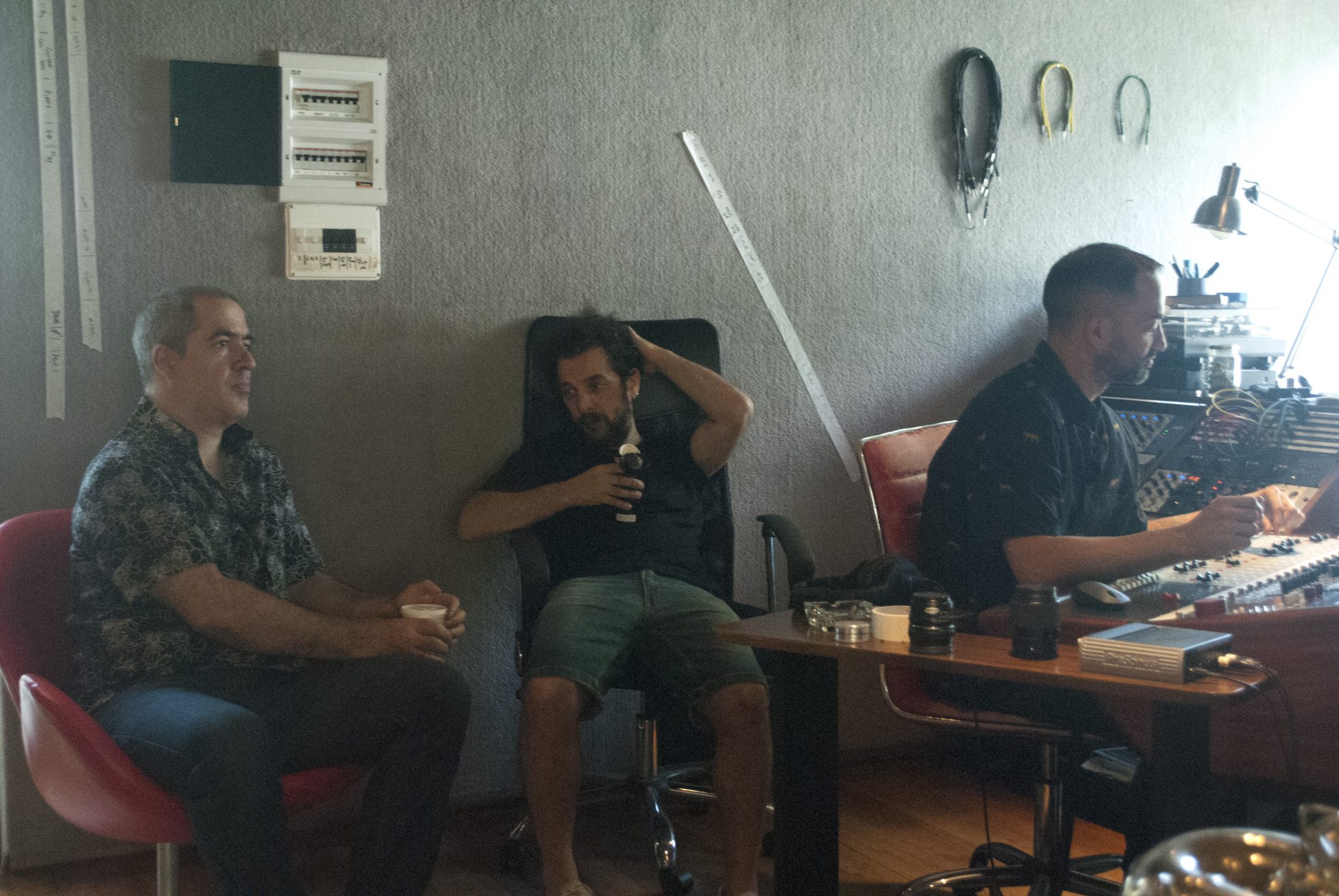
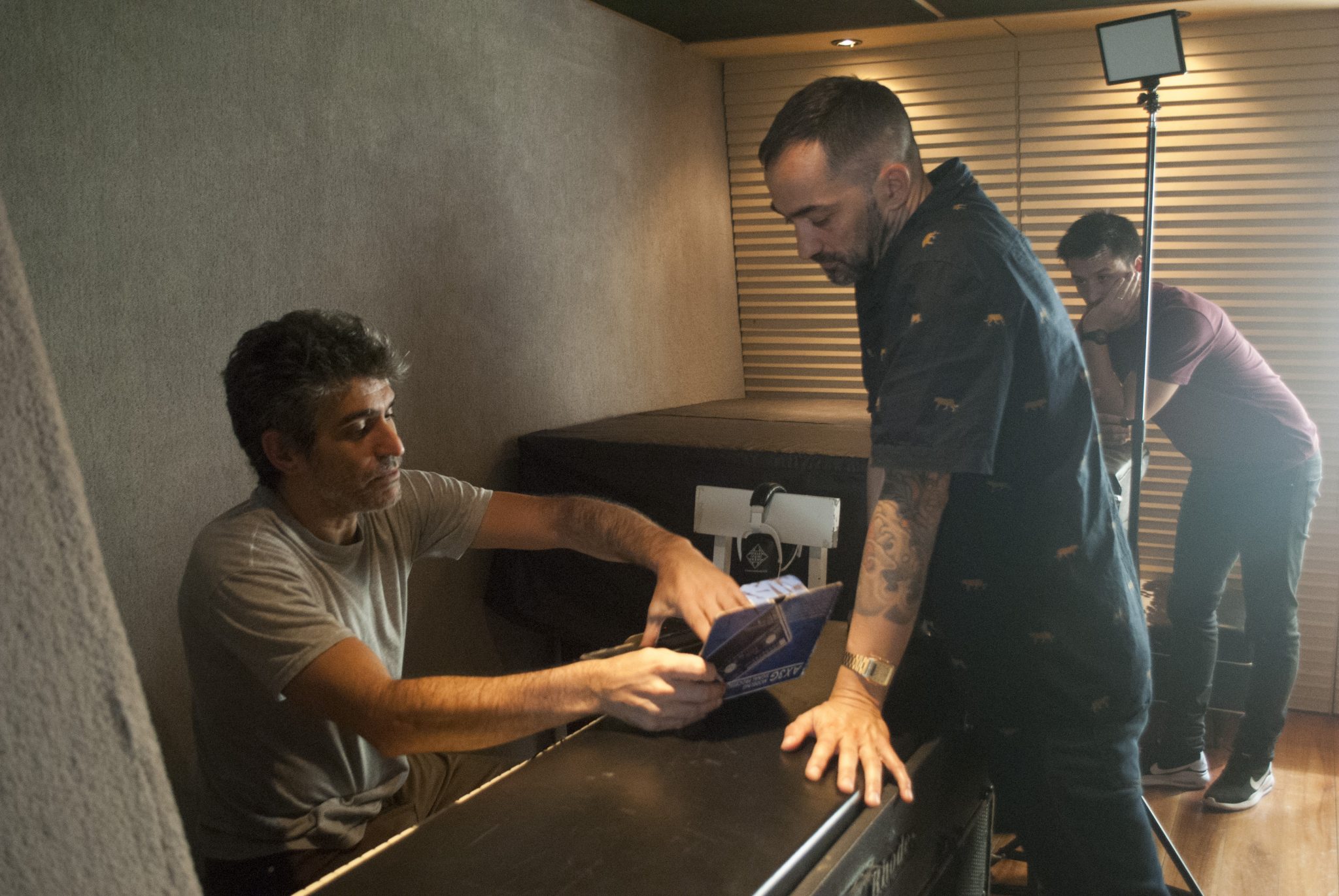
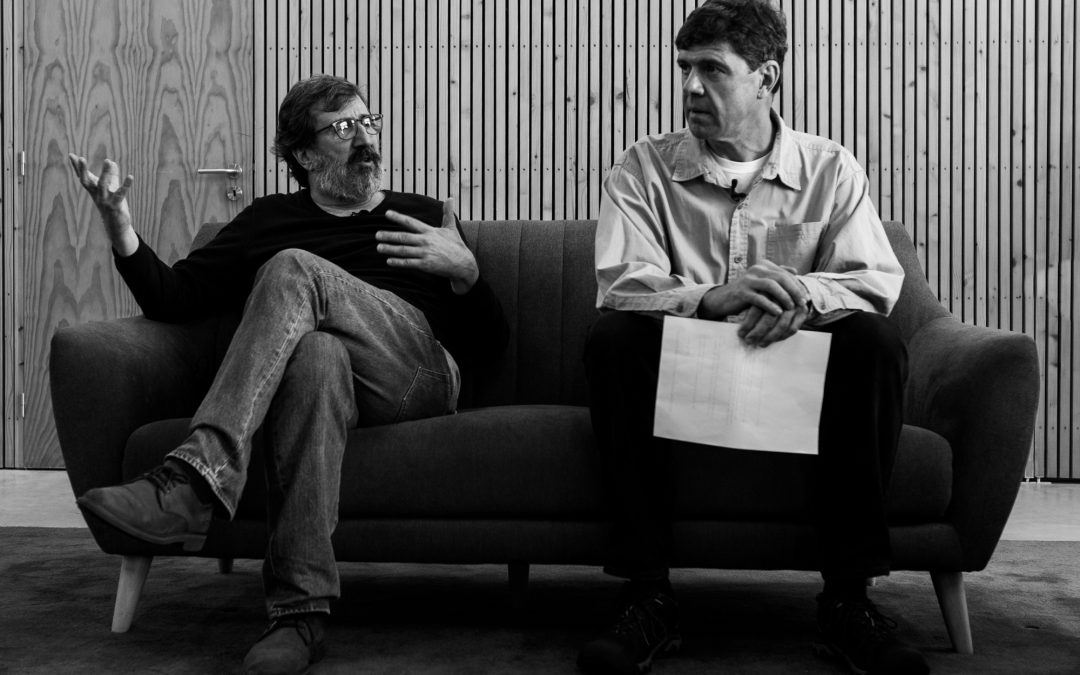
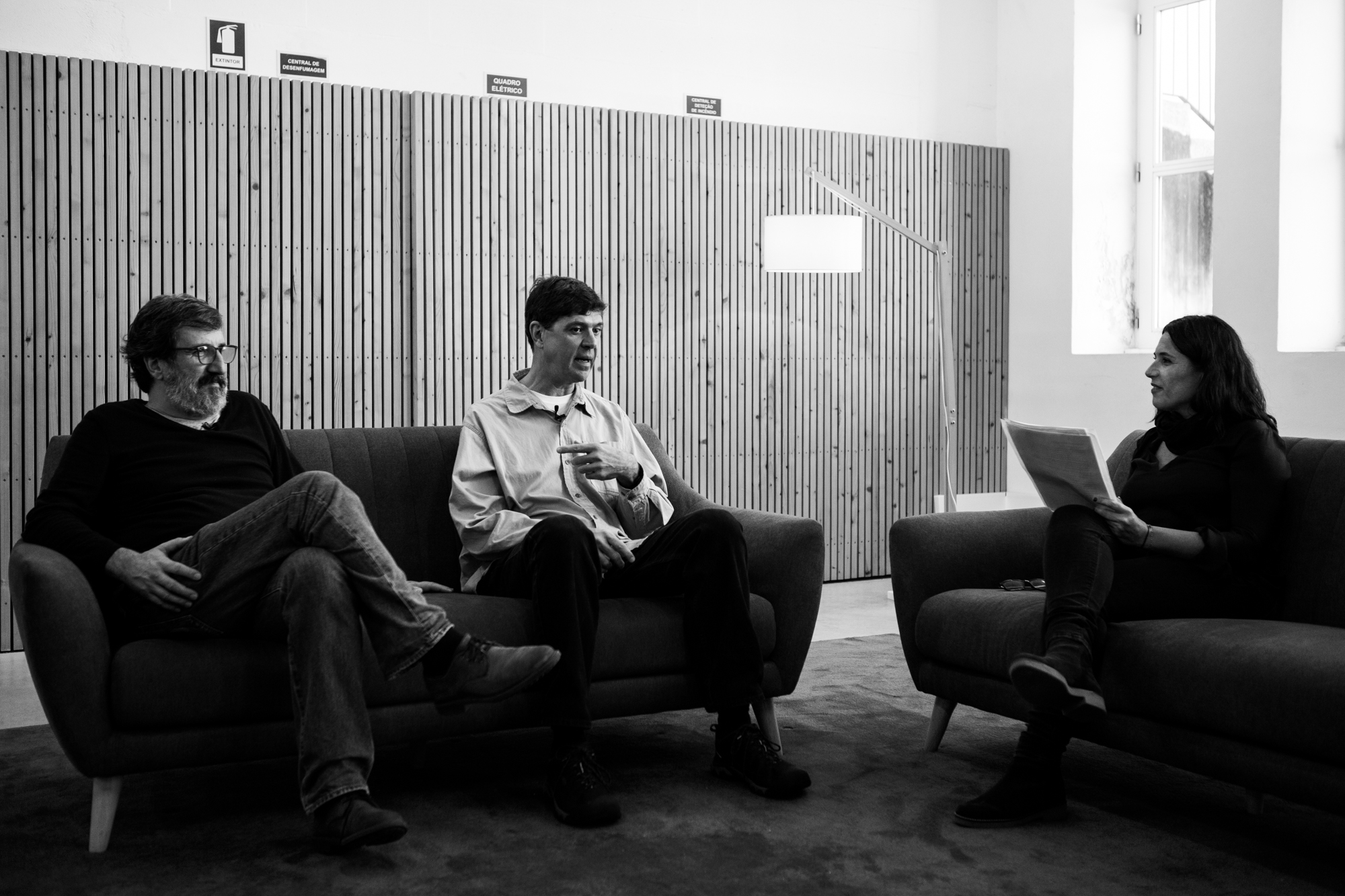
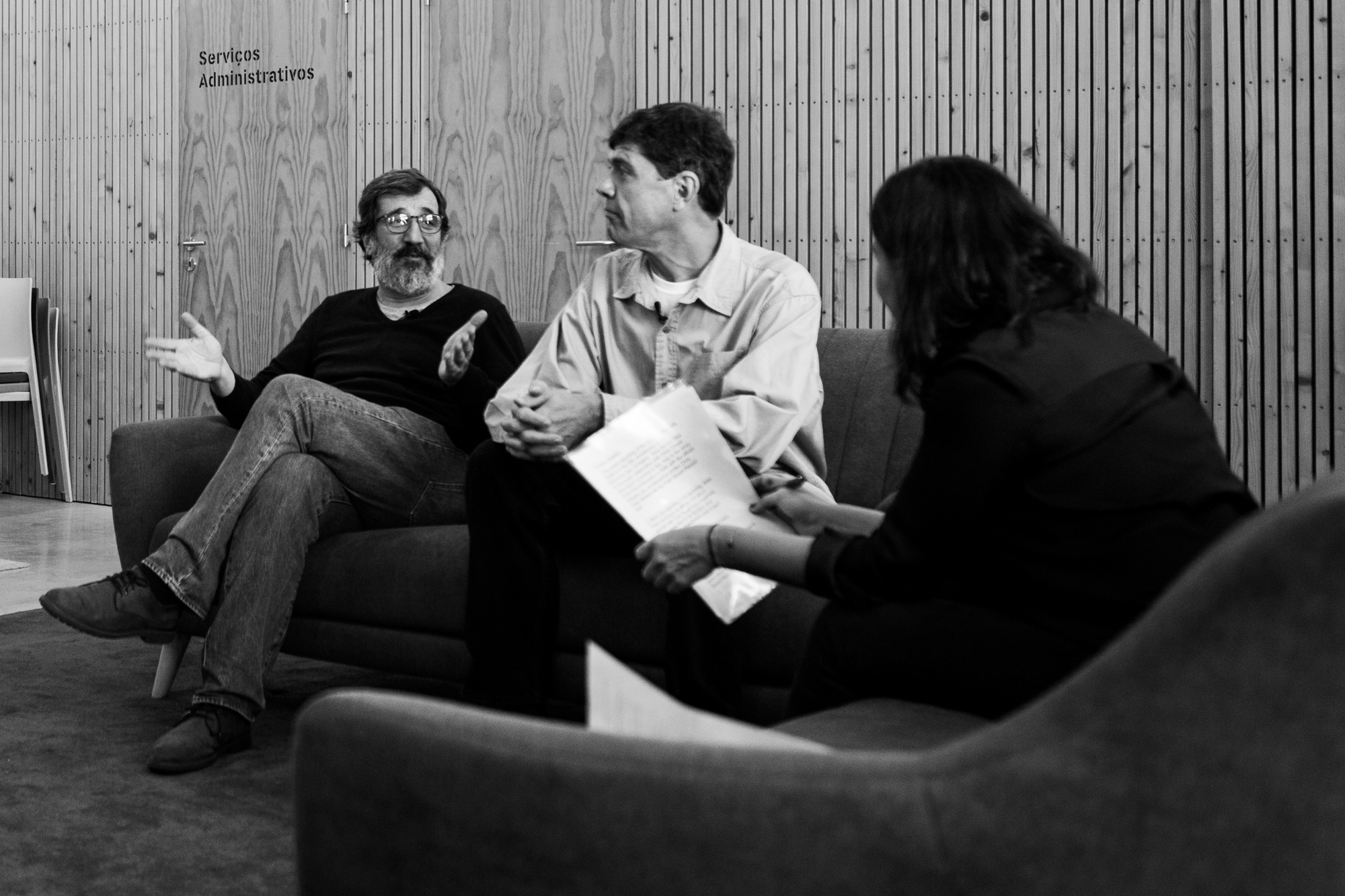
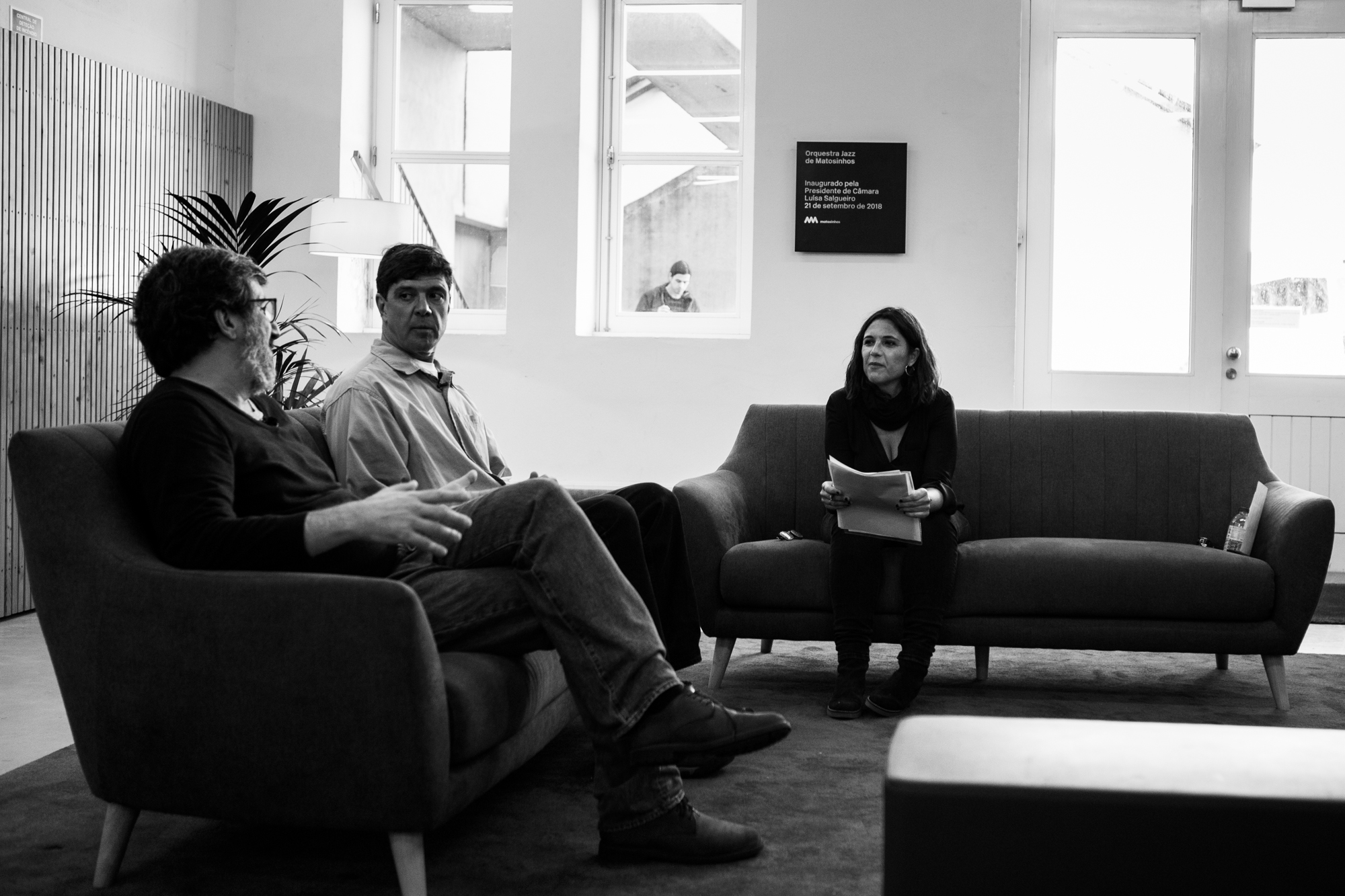
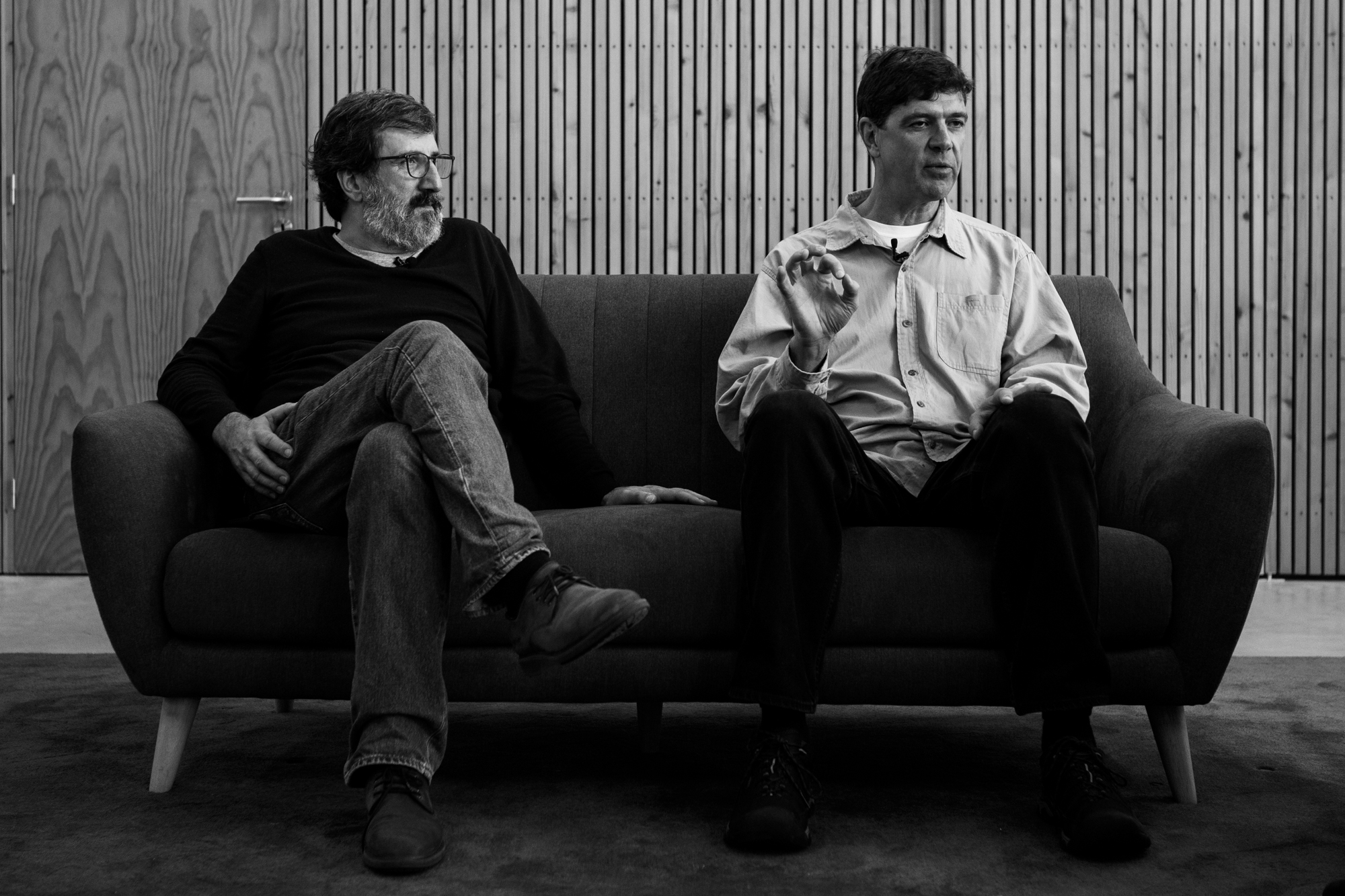
David Sancho, piano, teclados/Jesús Caparrós, bajo eléctrico/ Borja Barrueta, batería 

AIEnRuta-Jazz 2023

Texto: Ricky Lavado
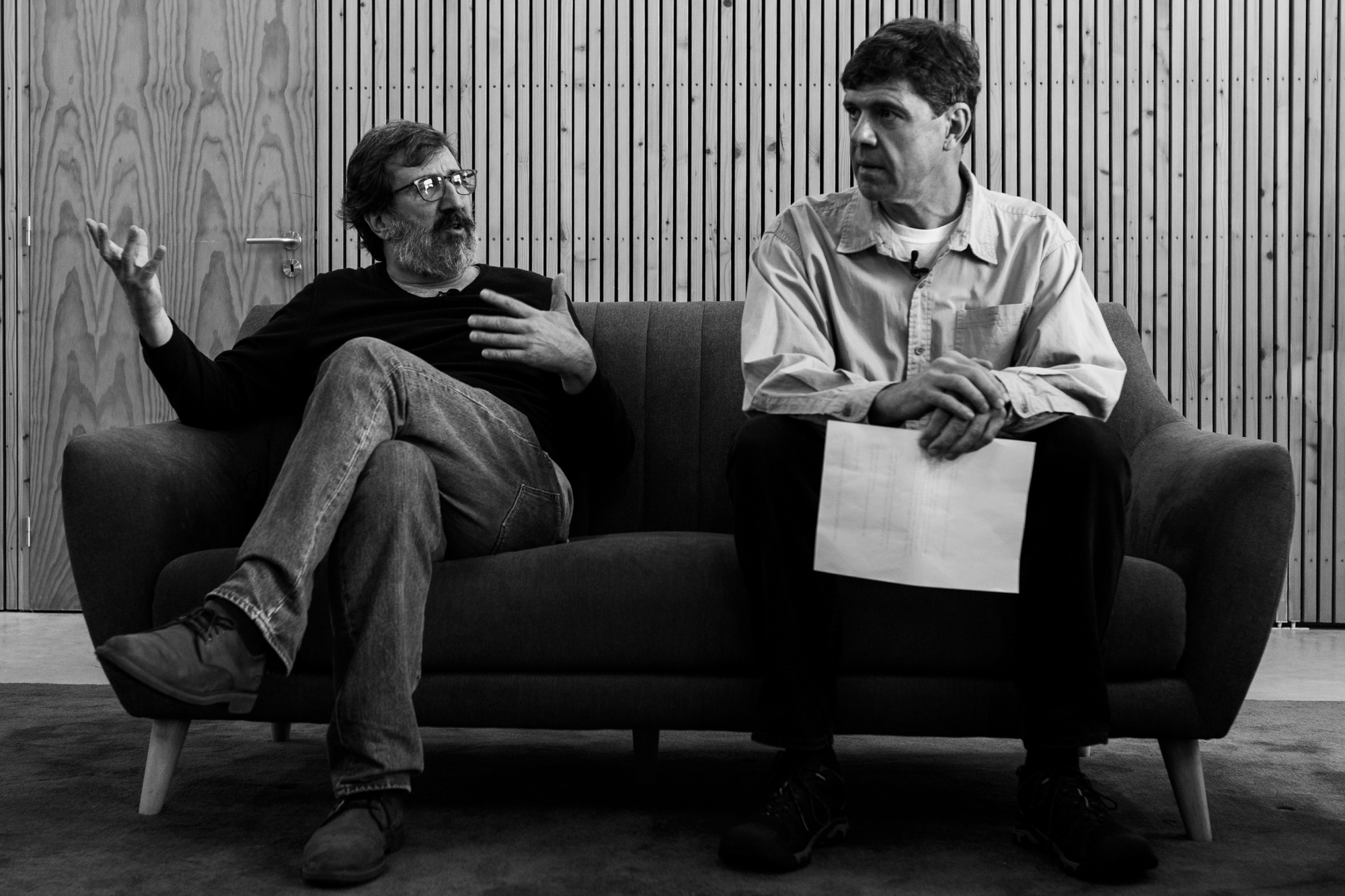
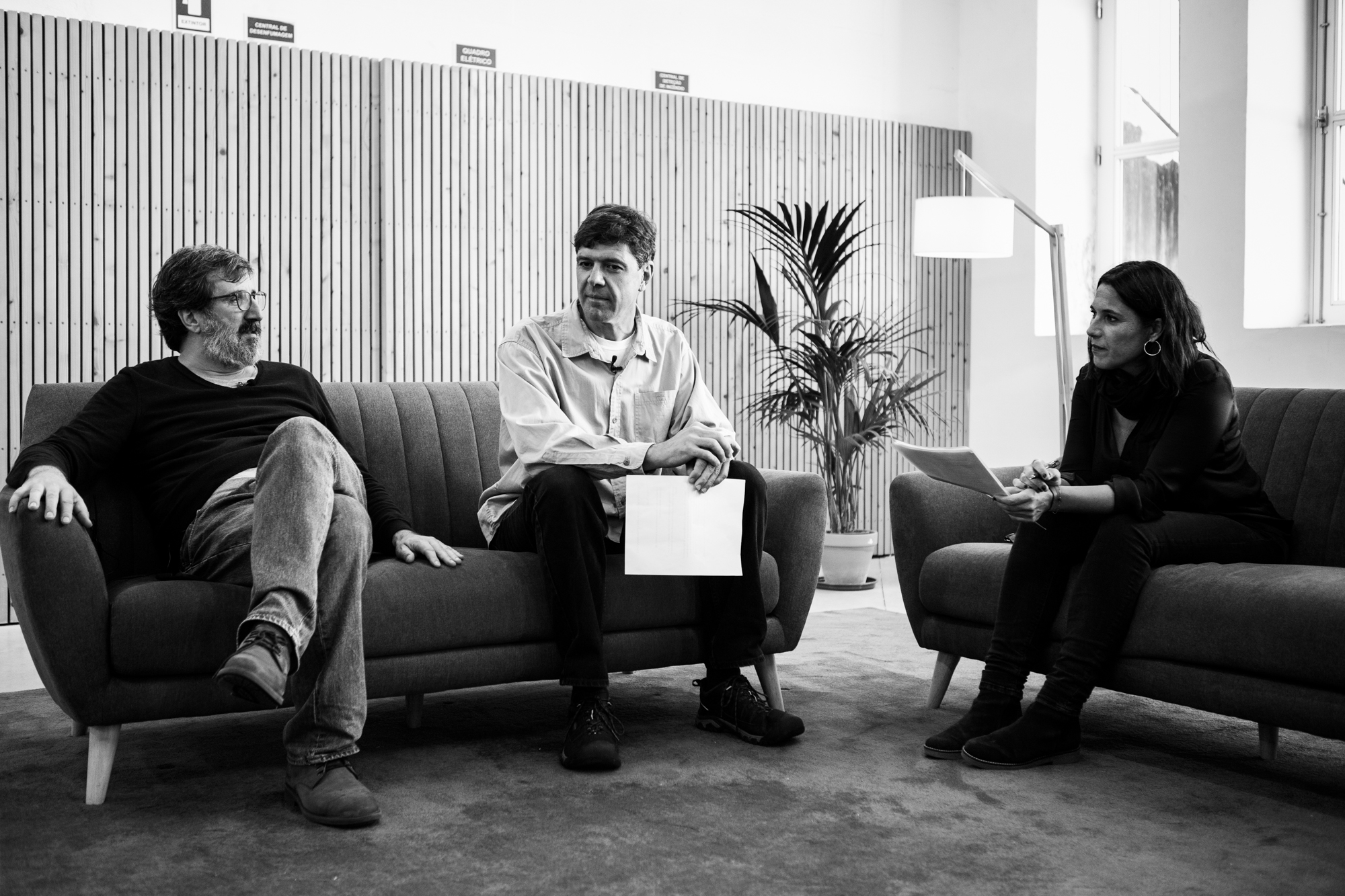
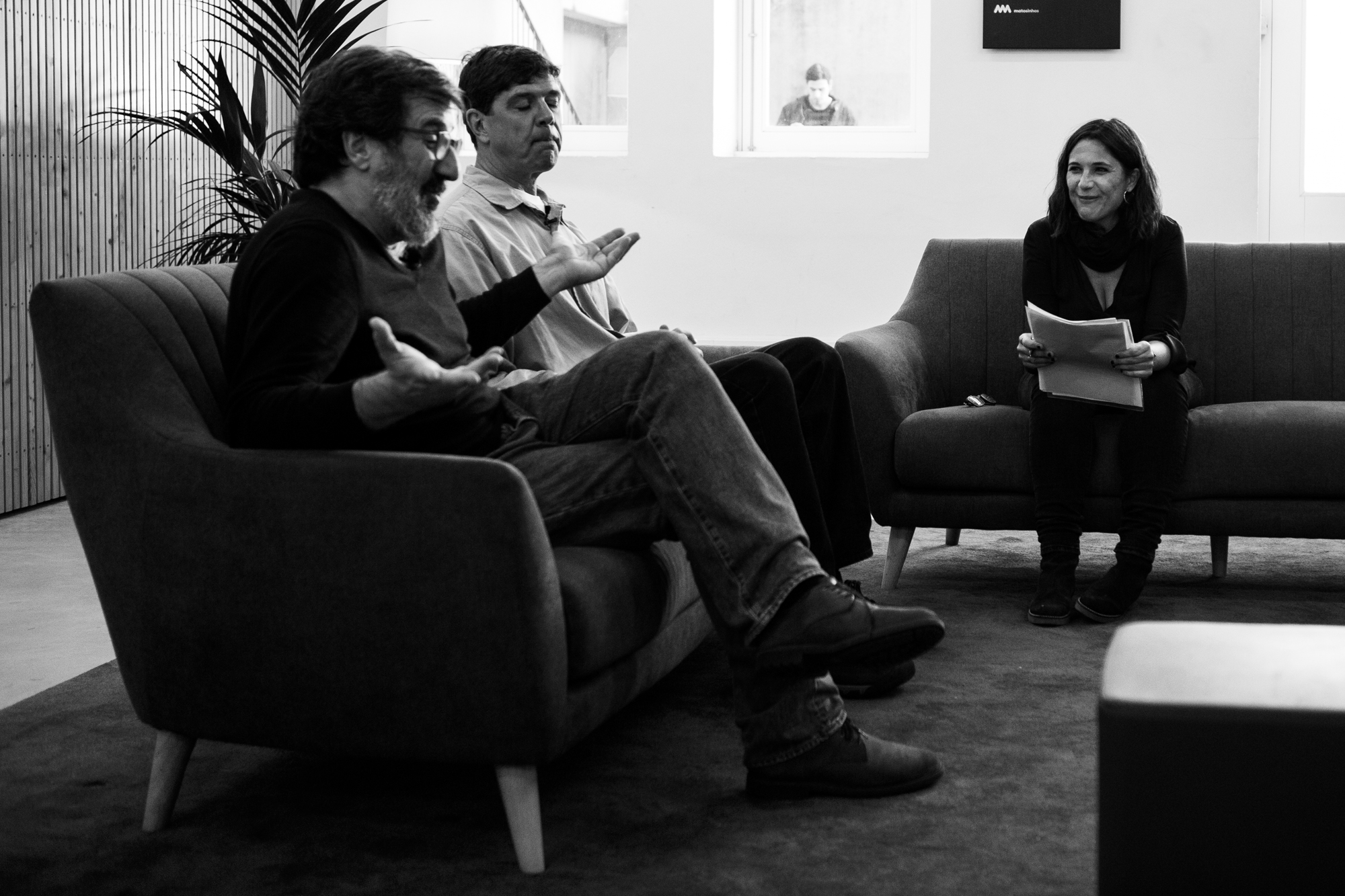
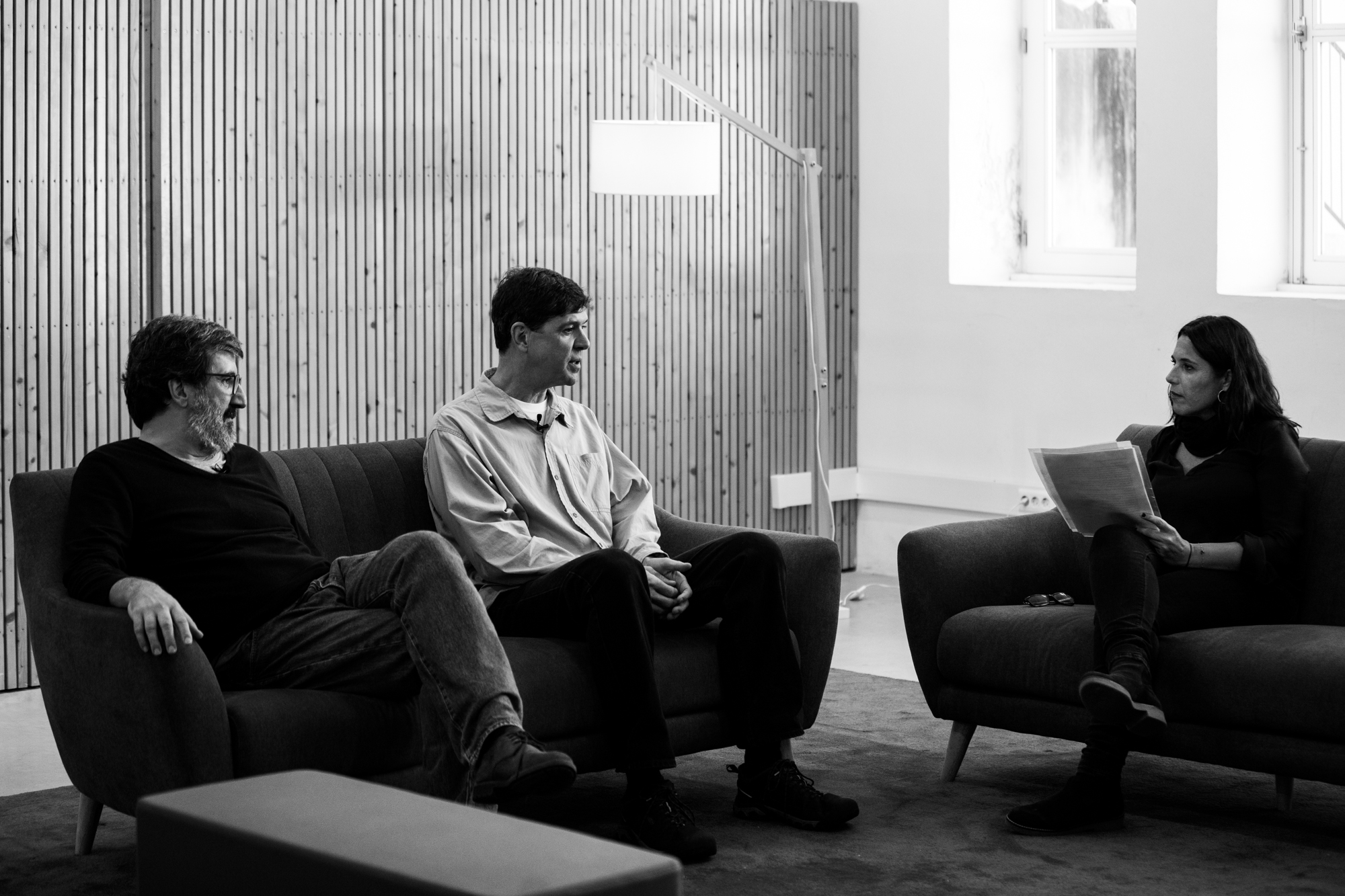
Foto: Valentín Suárez
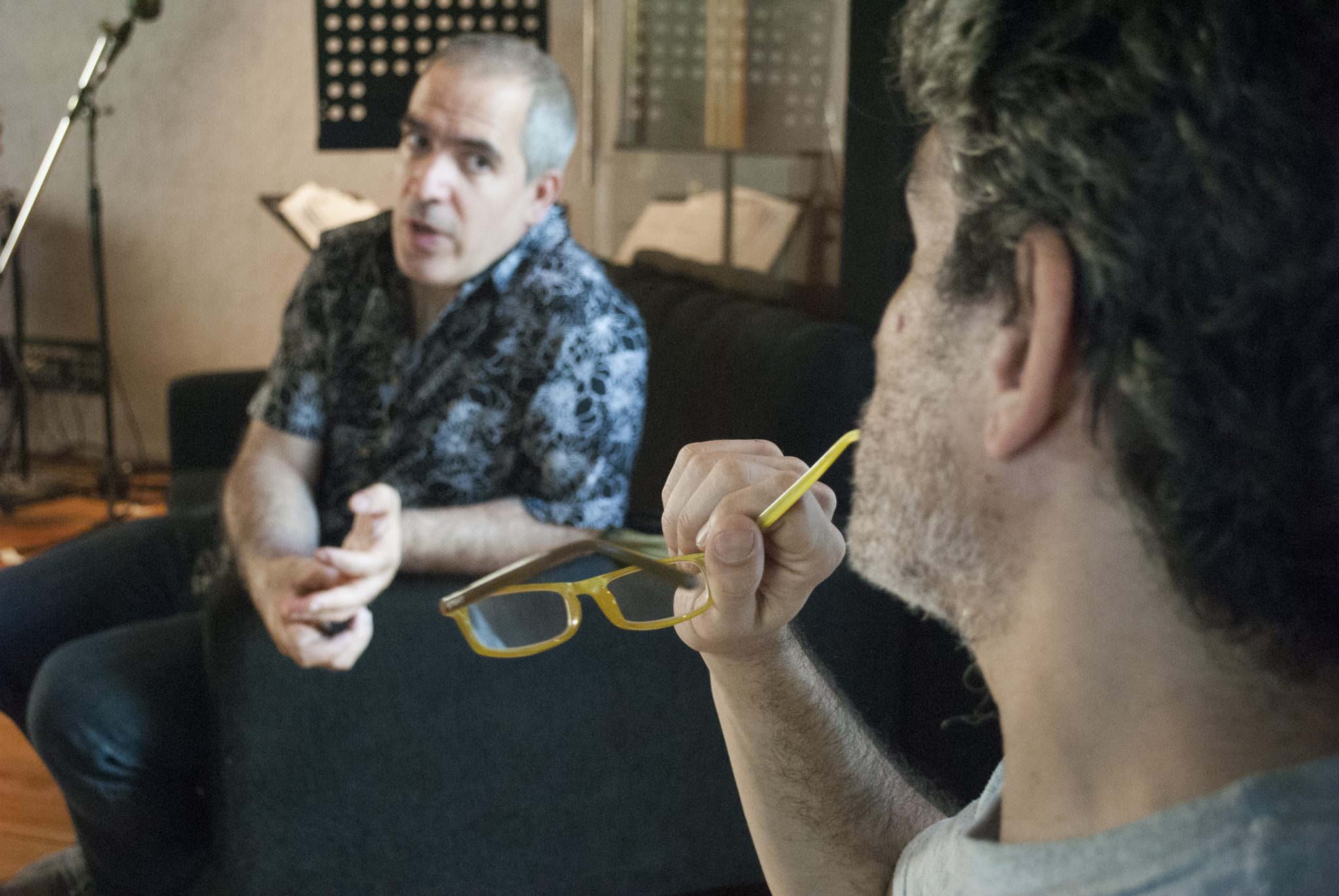
Localización: Café El Despertar

Pocas presentaciones necesita David Sancho a estas alturas de curso. El pianista y compositor madrileño se ha ganado por derecho propio un lugar destacado en la escena jazz nacional actual.  Miembro de The Breitners o Monodrama, y cómplice habitual de Marta Mansilla, Moisés P. Sánchez, Rosario la Tremendita o María Toro; Sancho atesora también una carrera individual que ha dado como fruto aplaudidos y laureados discos como Piano solo (2019) o From Home (2020). Para su nuevo proyecto, el artista madrileño apuesta por el formato de trío junto a dos gigantes como Jesús Caparrós (bajo eléctrico) y Borja Barrueta (batería); el resultado es Meditaciones, un trabajo que se expande siguiendo nuevos rumbos estéticos en los que cohabitan el ambient jazz, la fusión e incluso el rock sinfónico.


David Sancho: “El origen del disco son meditaciones, literalmente; no las practico tanto como me gustaría pero es cierto que de una época a esta parte, sobre todo después de la avalancha del covid y todo eso, me vi un poco tocado en lo anímico por alguna pérdida familiar, y empecé a intentar hacer algún tipo de meditación e intentar tener más foco; soy una persona muy proactiva en general, y necesitaba echarme yo mismo un poco el freno. Empecé a componer pensando en estructuras no muy complejas, pero con cierto análisis contemplativo, y poco a poco fueron saliendo los temas. El foco de la meditación y el estar en el aquí y ahora está muy presente en mi música, y en lo que viene va a estar mucho más presente todavía”

In&Outjazz: Este enfoque contemplativo y meditativo ha dado como resultado el disco más osado y completo de la carrera del inquieto pianista madrileño; un trabajo repleto de quiebros sorprendentes y texturas alejadas de la ortodoxia jazz que encuentra en el trabajo excelente de Jesús Caparrós y Borja Barrueta unos cimientos sólidos sobre los que edificar el personal universo creativo de David Sancho.

“Todos los temas los he compuesto yo, luego una vez que haces los ensayos con los músicos uno deja la vía abierta para que puedan aportar su mundo musical también. Yo doy ciertas directrices tanto en las partituras como estéticamente; por ejemplo, quería que fuera un disco de jazz, pero quería que fuera también un disco de rock sinfónico, que hubiera rock progresivo… Contar con Jesús y Borja lo hace todo fácil, estéticamente nos entendemos muy bien. Borja es un batería de jazz excepcional, pero es un tipo que hace giras de rock también; y Jesús es un tipo con formación jazzística, pero que está muy relacionado con el rock argentino, por ejemplo. Son gente que han escuchado rock y jazz, que básicamente es lo que yo más he escuchado. En mi caso he escuchado también mucho hip hop, y evidentemente mucha música clásica porque soy pianista clásico de formación, pero contar con Jesús y Borja es muy guay porque al final lo que necesitas es gente con la que entenderte, que entienda tu mundo y tus conceptos, y ellos lo han entendido desde el minuto uno, porque escuchamos muchas cosas parecidas los tres” 

Precisamente, la principal sorpresa que uno encuentra al enfrentarse a Meditaciones es un enfoque, tanto en lo compositivo como en el sonido, que se aleja muy conscientemente de la tradición jazz o clásica para adentrarse sin miedos y con más que brillantes resultados en senderos que nos hacen viajar al universo del rock progresivo de los setenta.

“En general, siempre me ha gustado mucho el rock progresivo. Viene de muy lejos. Antes de estudiar jazz yo lo que escuchaba era Pink Floyd, YES, King Crimson… de ahí pasas a Monk, a Brad Mehldau, a Glasper o a J Dilla… pero mi adolescencia está marcada por el rock sinfónico y lo progresivo, ese elemento siempre ha estado ahí. En Monodrama estaba, por ejemplo; en el proyecto de hip hop que tenía (The Breitners), si bien no en la estructura de las canciones o las métricas, sí que a nivel de color y texturas estaba también presente. Ahora he ido a tope con ello”


Otro gran acierto de Meditaciones, aparte del eclecticismo luminoso de unas composiciones que se desarrollan de forma orgánica para explotar en mil direcciones creativas diferentes, es la calidad de la producción y el sonido final del disco. Meditaciones suena MUY bien; no sólo está tocado de forma excepcional (tratándose de los tres músicos responsables del disco, eso sobra decirlo), sino que la grabación transmite una calidez y un sentido de la espontaneidad y la diversión que gana enteros con cada escucha y acaba resultando tan adictivo como fascinante.


“De la producción se ha encargado Shayan Fathi, y lo hemos grabado en un estudio de Vallecas que se llama Camaleón, que es un sitio que me encanta, con un piano extraordinario y en el que es fácil trabajar. Yo soy una persona muy mañanera y en ese estudio se trabaja muy bien por la mañana. Shayan es un mezclador muy top, le conozco hace muchos años y he grabado mucho en Camaleón, y él sabe perfectamente los gustos que tengo, así que el trabajo ha sido sencillo. Las cosas especiales y las tonterías que a mí me gustan, él las capta muy rápido” 


La incorporación de David Sancho al plantel de seleccionados para el ciclo de conciertos AIEnRuta-Jazz 2023 nos permitirá disfrutar de la traslación al directo de Meditaciones, como parte de la ajetreada e incombustible rutina creativa de una de las personalidades más peculiares, talentosas e interesantes del panorama de la música más libre e inconformista en este país hoy en día.


“En el directo yo creo que nos centraremos principalmente en presentar este disco. Puede que de cara al segundo semestre del año ya vaya avanzando algo de lo nuevo también, que lo tengo muy claro. No me gustaría tardar mucho en grabar otra vez. Si Jesús y Borja quieren, este proyecto tendrá continuación. Me gusta mucho tocar a trio, y he cogido este proyecto con muchas ganas. El primer disco que saqué es un disco de piano solo, básicamente como reivindicación de que existo en el mapa como pianista; como tengo un perfil un poco variado, conseguí meterme en el jazz en Madrid yendo muchas veces como teclista, y es algo que me encanta, pero luego dije “pero si soy pianista clásico”. El segundo disco fue mi vuelta a la infancia con los discos de Vangelis, Alan Parsons, la E.L.O… pero tocar a trio me permite volcar todo eso y que ocurran muchas interacciones en directo, y Borja y Jesús son muy proactivos y a la vez son muy respetuosos con la música que haces. Por otro lado, está Eme Eme Project (proyecto de funk, jazz, soul, hip hop y jazz liderado por Marta Mansilla); ahi estoy poniendo muchos huevos en la cesta, y tenemos varios conciertos por delante. Con María Toro estoy muy involucrado también, con Rosario la Tremendita hay gira cerrada… no sé, la verdad es que no paro”.

Written by Ricky Lavado

Abril 10, 2023

Ingrid Laubrock INTERVIEW

Ingrid Laubrock INTERVIEW

Ingrid Laubrock
Interview

05

DICIEMBRE, 2022

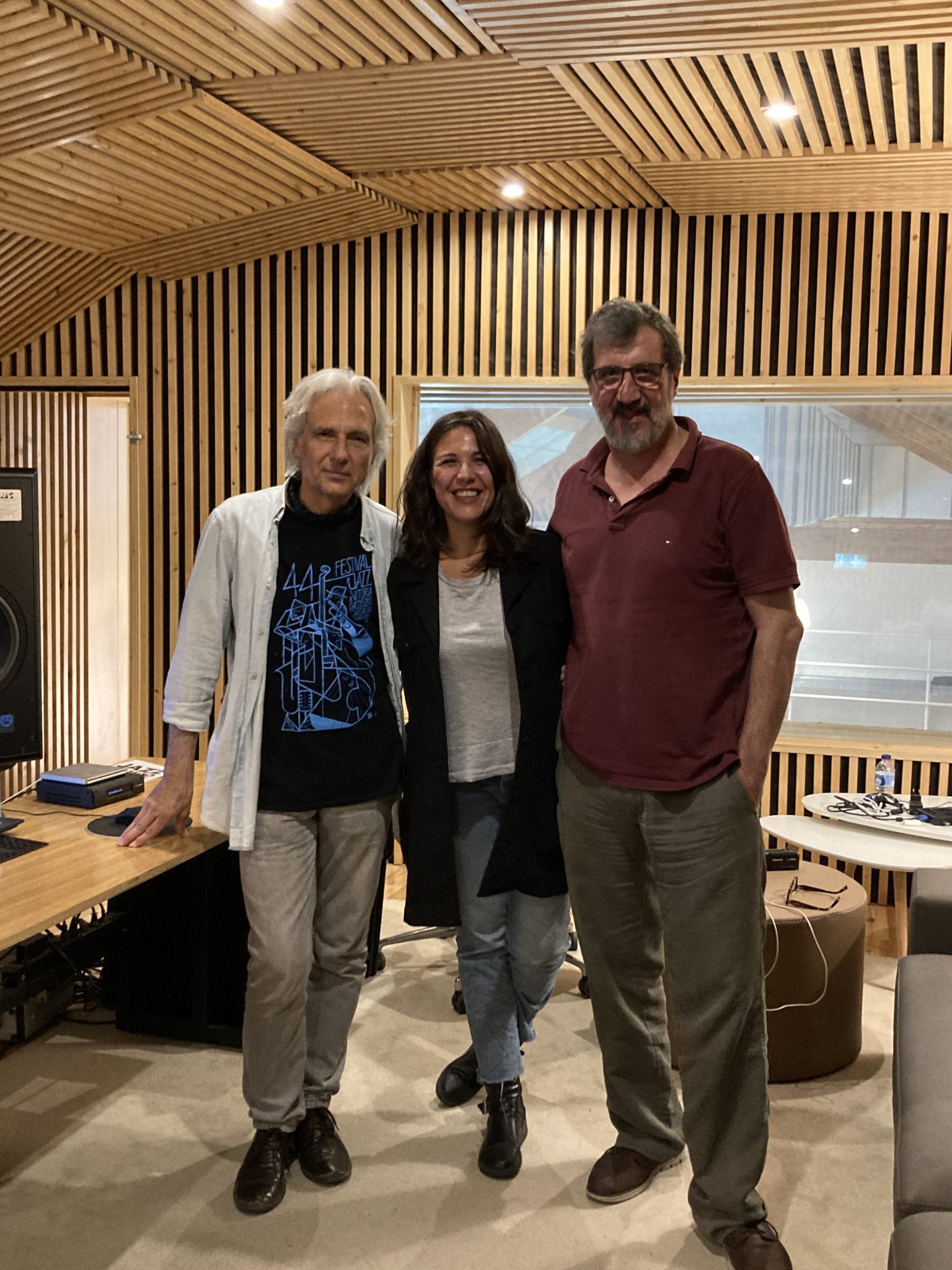
In the evening of November 21 st, I had the pleasure of interviewing one of the most creative musicians of her generation. The German saxophonist Ingrid Laubrock.  

The interview was done one day before her live performance with, Andy Milne, the Canadian pianist, at the Fernán Gómez Theater, within the Madrid International Jazz Festival 2022


In&Outjazz: Hello Ingrid, welcome to the interview, thank you for coming.The interview is for In&OutJazz Magazine.  So very excited for having you and sending you these following questions. So I should start with the first one. I saw that during the pandemic you recorded duo series. Is that what you’re going to bring here to Madrid tomorrow with Andy Milne. Is that how it’s said? I think so. 

Ingrid Laubrock: Actually I started the duo series I think in 2017 o 2018. So it’s a series I’m recording for Intakt Records over maybe…, spaced out over a decade. So the first record was with Aki Takase, the second one with Kris Davis and Andy Milne was the third installment. So, you know, hopefully we keep going, yeah, over another like five or six years, spread out. But yeah, Andy is the person I’m bringing…

Tomorrow right? And like, on the different series of duets that you just said and you have recorded, what does Andy Milne…, like what’s his contribution, like his personal contribution?

I think for every player is very different and I’m deliberately trying to pick people who I, who have a really…have a personality and are great pianists and composers. To me, Andy was

the person…, like I didn’t know Aki Takase really well before I played, before I recorded, but I had played a concert with her already. With Kris Davis I have a long long relationship, and with Andy I did not have this relationship, I knew him personally but not as a…, I had never played with him. So it wasn’t much more…, you know? I trusted my instict…

Yeah!

…That this was going to work well because I knew him as a person, he’s a really great guy, I like his music and I like his thoughtfulness. He to me is more steeped maybe in the jazz tradition

Okay, nice!

Although Kris is too. And he just brings a really…, there’s a sense of adventure and also he has such beautiful ways of harmonizing melodies, of harmonizing improvisation which I really

love, and a great rhythmic proportion aswell

Yeah!

And on top of that he uses, he has a very subtle and beautiful way of using piano preparation which I’ve always really enjoyed

Nice

And one of the concerts that I saw him perform was with his quartet with Benoit Delbecq and two japanese koto players whose names I can’t remember right now. And it was just a, there was a subtlety to it that I really, I thought it was beautiful

Yeah, nice. So can you tell me something about the duos that you’ve recorded with Tom Rainey? He’s a drummer right? It’s different from recording with a pianist right? Like, the interaction is different…

Sure…I mean. You’re basically monophonic as an instrument, right? As a melodic instrument when you play with drums. So you have to come up with different solutions. We Recorded over the whole pandemic, what we tried to do is to include a lot of compositions by friends or by people that we knew, so it felt a little bit like…We would bring our friends into the room and rehearse with them because we were so cut off from everybody in New York. So there was a sense of…, like…, we’re working on our friends music or we’re working on composer’s music that we adore, but we’re trying to find adaptations for this unusual duo, because that was what we had. That was the only possibility of playing music that we had, and it was really fun and moving for us, moving kind of creative…excercise in a way you know? To adapt large scale pieces and just play them on drums and saxophone. It was a good creative endeavor in a way, not to try and find out solutions of making something different every week

Very nice, yeah sure. Well, I think I know a few more people that do this kind of format, this duo format. I’m thinking right now of Ben Wendel. I don’t know if you’ve seen those “Standards with friends” sessions, but he also does duos, but it’s a different concept for sure. So, personally, how would you describe the biggest challenges and difficulties when approaching your music in this format of a duo?

In the duo format in general?

Yeah

Well, I mean, you have to generate a lot right? As a saxophone player, you’re basically playing a lot and the two duo partners have to be in an intense conversation. There’s no…, you

can’t really, I mean obviously you can leave space and not play but you have to be engaged at a very very high level of concentration, there’s a high level of concentration needed and in a way, creativity, and I love it because it’s so intimate and you can…, and also so open in a way, you have all these solutions because there’s just one…or all these paths that you can potentially go to because there’s only person to interact with

Yeah, sure.

So you’re not that fixed, you know? In terms of, we have to absolutely stick to this arrangement beacuase there’s twenty people that are following the same arrangement. You have a much more “effort-looseness” of the freedom with this kind of formation

Yeah, definitely. And in the other side you’ve also written a lot of music for large ensembles and big bands I think. So how’s that possible? How do you approach that other format?

Well, I haven’t really written for big band, like I maybe have one big band piece. But I have composed for orchestra and large new music ensembles. It’s something that I’ve been interested in for a while and just spent time devoloping over the last ten years. It’s just a sound I love being in, and there’s so much detail in this music. Like when you compose for musicians like that, it forces you to think a lot about detail. Where is the sound on in an instrument, dynamics, rhythm, you know? So to me it’s like a very, almost a spiritual…, spiritual is the wrong word I think, but almost a work where I collect myself, I’m with myself, I’m examining my own tastes, and my own rhythmic feel et cetera. And I can translate it into the more improvise music

Yeah, very nice. Actually according to improvisation, I read that Jason Moran has called you an improvisational visionary. What are your thoughts in such a…

That’s nice of him hahaha

What are your thoughts on that statement?

Well, you know?, it’s very nice of him. I have played with Jason a few times and I love playing with him. He’s a wonderful musician and conceptualist and, you know, fearless, and just super spirited and great guy. I’m honored that he said something like that about me hahaha

And how would you describe your musical evolution in these two decades, as an improviser?

As an improviser? I mean, it’s just like one of those things that I think you just grow gradually. Sometimes you grow and then you stay on a “plato” for a while, and then sometimes you grow faster, there is different rates of growth, but for me it’s always been like I’ve always seen myself as a sort of eternal student who’s hopefully getting better and learning the entire time. It has nothing to do with school or nothing to do with…, it’s just got to do with life.

And sometimes you learn life lessons that inform your expression, your musical expression. Sometimes you learn technical things, sometimes you learn about composition, there’s different strains of the whole music thing that eventually come together, or that come together throughout your life I think.

And that’s how I see myslef. I see sometimes I compose a lot, that informs my playing. Sometimes I’m put in a situation where I’m a side-person for somebody who writes some really amazing and challenging music, so I have to learn something, some new skills to be able to deal with that. And I’m, I like to be open and put myself into situations where I’m learning

And when you write, or you compose, what’s the method that you follow? Cause you were saying before that one of Andy Milne’s, let’s say highlights, is that he harmonizes in your improvisations in a very nice way. You have this improv situation going in your tunes, but you also have like a very detailed composition right?

Yeah, I write quite detailed

Yeah, so what’s your method? Do you write all by yourself and then bring it that to the rehearsal with the other guy or how do you work?

Usually yes. Like, usually that’s how I compose with…, for say like a project like this. I write at the piano mostly, specially if a piano player is involved. I write mostly on the piano. Sometimes on the saxophone if I feel, if the content is more melodic, like if it’s really coming from a melody, even if I write it on the piano, I play it on the saxophone, because that opens new possibilities or either avenues usually. But yeah, I usually bring the music in as, like finished, and then we work on it.

If something doesn’t work…, or I’ll send it to the musician in flagrante and say “please tell me if something is not working or something, or something could be easier or better in your instrument”, you know? I also work with some new music groups where I workshop the music.

So I’ll send them fragments and I ask them to play through them or I meet up with them and ask them to play through them. And they quite often…, just hearing it in the room gives you new ideas or gives you knew possibilities and…, so I personalize it for those musicians. You know I’m always wanting to change things…

Interesting, interesting, yeah, cause listening to your music I was shocked and wow, how does this person write this music? How does she approach it? Very nice, very nice!

Two last questions. Could you tell me something about your relationship with Arts for Art?

Arts for Art? Yeah, they’re really lovely hand hardworking organization. Based, led and runned by Patricia Nicholson Parker and William Parker. They are mostly there to promote free jazz, free improvised music, black free improvised music, and they have been around for a long time, they’re incredibly supportive, and really really active, and just great people

Yeah, sure! What are you into right now? Hearing, listening, what are the records your listening to right now?

Oh wow, to be honest, what’s happening right now is that I’m writing actually a classical piece for a piano trio, so piano, chello and violin. So I’ve been checking out a bunch of piano trios

Okay, wait, classical trios?

Yeah, like one by Ravel, one by Morton Feldman, Anthony Cheung, just, actually a lot of them, like…, the chellist send me a big footer of music to check out, and I’ve been sort of, just listening to that a lot

Very nice, that’s a surprise. Okay, one last question. How’s your experience being with Intakt Record Label?

Intakt Records? Oh great, they’ve been supporting me since 2008, they’re like one of the few record companies I think that have survived, in a kind of meaningful way, right, that they still create a lot of music, but they don’t overextend either, they know what they’re doing.

They have become friends, they have become like a family really, and, yeah, so, you know, they reléase music by artists that they trust, so they don’t mess with your music. They let you get on with it.

Yeah, it’s always greatful yeah!

I’m pretty happy to have them as a general support. They’re also very open to let you release on other labels, as long as it fits in with their programm and you’re not abusing

I’m thankful too for their job.

Yeah hahaha, I will tell them that!

And for being able to listen to artists like you are. Thank you very much.

Well I hope I get to see you there and it was nice to meet you

Yeah, I hope that too. Very nice. Thank you for being. It’s been awesome to have you and to meet you.

Written by Begoña Villalobos

Diciembre 05, 2022

Steve Coleman INTERVIEW

Steve Coleman INTERVIEW

Steve Coleman
Interview

04

DICIEMBRE, 2022

In the evening of November 18 st, I had the pleasure of interviewing one of the the basic development pivot of the M-Base Collective concept, and one of the most important pioneer artist that runs through contemporary black music. The Chicago alto saxo Steve  Coleman 

The interview was done moments before his live Steve Coleman & Five Elements “MDW NTR”, along with Kokayi , Jonathan Finlayson, Anthony Tidd, and Sean Rickman, at the Conde Duque Auditorium , within the Madrid International Jazz Festival 2022


In&Outjazz: Hi Steve, nice to meet you, great pleasure! Welcome to the interview!  Would be why are you more sympathetic to the term “spontaneous composition” rather than the term “jazz”?

Steve Coleman: I mean, there’s many many musicinas that don’t like the term “jazz”. It goes back to Duke Ellington, Max Roach and all those guys so it didn’t start with me. We just don’t feel like that word is representative of the music. What do you mean when you say “jazz”? Do you mean Louie Amstrong? Do you mean Kenny G? There’s so many music that’s so far appart and they call them all “jazz” that the term is useless. It just doesn’t mean anything.

What about the term “spontaneous composition”?

Because, the big part of our music, is that the “spontaneous composition” is a big…, is amajor element. The spontaneous part. And it is composition, you know? So it’s just a descriptive term.

According to this topic, we find that two main elements of your music are rhythmic structures and the energy. And you’re always seeking change and spontaneity through these elements. What is the meaning of energy and rhythmic structures for you?

Well I mean, in music of the african diaspora rhythm is one of the main elements, you know? So I’m just part of that tradition. It’s not something that I created, but it’s something that was happening before, before I came along. So all my mentors, all the people who taught me, who I admired, the older people, it was important for them, and so I just come into this tradition. Those things are not things that I created myself. They’re things that were already in existence before I was even born.

And so it’s just part of a culture, like flamenco, like japanese snow music, like indonesian music. These is all traditions, different traditions. And so the things that are important for the different people in different places happen beacuse of culture. It’s not really because of music, it’s beacuase of culture. Cause see, rhythm is important for us in basketball, in boxing, in all of these things, it’s not just music. So I happen to be a musician, so yeah, for me I express music, but Mohamed Ali expresses boxing and it’s the same principle, it’s the same thing. And many people think that it’s special on the music, but no, it’s everywhere.

It’s in the way that people walk, the way they talk. It’s in all of that. And the music comes from that. It’s not the other way around. It’s the culture first and then the music is coming out of it, of the culture.

And so, what’s the lesson that the culture gives music in terms of change? How do you take change into music?

Well, I mean, I think that change is the natural state of humans, I mean, just look at human society. Look at what’s happening in the last hundred years or the last two hundred years, it’s a lot of change you know.

Or the last couple of days

Yeah, yeah, yeah, I mean there’s a lot to happen, so change is happening all the time and we’re just expressing it in music. I prefer to express this music than war or some other destructive kind of thing, or fucking up the climate or the planet or something like that, but

change is happening there too. It’s happening in politics, it’s happening everywhere. So we just we express this in music. We happen to be musicians, so all these things are coming out of this music. But we’re still human, so the same things that happen with other humans happen with us. You know? Sometimes I go on stage, I have a stomachache or I have a problem with something…

That also takes and important role in how you play?

Sure, sure, because the music is coming from us.

Very nice

Yeah, yeah

And according to this, how important is the intuition?

Well, again, that’s again in human, you know? Quality for humans, intuition…It’s al important, intuition, dreams, what you inhert from the people who came before you, like you DNA and all this, all of this things play a role. But intuition…I don’t think of inuition and logic as really separate things, for me it’s like a holistic kind of thing. Because whatever created people gave you all of this ability. You have te ability for inuition, you hace the ability for logic, you have the ability to dream, so I think you’re supposed to use all of these, this is what was given to you, these abilities. I mean, your not a mosquito right? You’re a human so…

So intuition is not that it is different from the planned structure of the tune you guys are playing. Both things take an important role?

Ah, you ….how we play? Well the best analogy I can give for what the way we play is talking, because language is the thing that I model the music after. So just like we have a conversation and I’ve never had this conversation before with somebody else because you’re saying things to me that other people have never said, and I’m answering to you the other thing you know? But we’re using the same words, the same phrases, we have a language…etc. The music is kind of like this. Every night is like a different conversation but there is a language. If there’s no a language we would not be able to understand each other. If we just take a musician off the street and bring him on the stage is not gonna be the same, because he doesn’t speak the same language. He has his music, but it’s like saying Catalan, English, Urdu, these are different languages, they all sound, but they’re different languages, they have a different syntax, and what things mean and things like this. In one language “ah” might mean one thing and “ah” might mean something else in China, you know?

That’s also the beauty of languages

Yeah sure, it’s like you have all this variety and everything, so whenever you see a group of musicians that have been together for a long time, they usually develop a kind of language that they’re able to speak with each other. So I think of it as language a lot. For me it’s like

conversation. Each concert is like a different conversation.

How do you keep your creativeness going for three decades?

Three decades…, it’s been long in three decades, yeah. I started this group in 81, so it’sbeen fourty one years,

Four decades…

Yeah hahaha, and I’m going for Duke Ellington’s record. Duke Ellingon had his orchestra together for fifty years. I’m trying to…I have nine more years haahahaha.

And how do you keep your creativeness going? Your inspiration and all that kind ofstuff?

I mean, sometimes I don’t. I can’t say that for every moment it’s been like this, sometimes you get depressed, sometimes you get down, you have bad months, bad years even. I mean, this pandemic year, 2020, was very difficult for a lot of people. A lot of musicians you know. Some musicians even stopped playing.

And you understand that in terms of changes also?

You know what I’m saying, it’s the same question, either you do or you don’t. Either you don’t keep going, or you do keep going. And we’re all going to the same place. Everybody is gonna diesooner or later. But you just keep going until that point happens. Is the same thing to music. The music for me is not separate than life. Is a part of my life, it’s like eating, drinking, shitting, you know, it’s just a part of life. It’s become a part of me, I don’t think this separate. I don’t say “now I’m going to do some music”. All the time in my head, even when I’m eating is the going on. So, I don’t know, it’s not a separate thing, so it would be like me asking you “how do you keep going?”. Yo don’t think about not keep going, you just keep going you know?

And what meaning does MDW NTR have for you?

Oh that stuff’s…your talking about that from the record. That stuff’s egyptian. The words look like that because they didn’t use vowels when they wrote their language. I mean there were no vowels used. So for example if they were to write “heru”, if you write it “h-e-r-u” today, they would just write ir “h-r”, without the “e” and without the “u” and everything. So that’s why the words look like that. So this is “medu neter”.

Yeah, we found that the meaning of that is, that they were referring to they’re writing language and…

Exactly, sacred writing or beautiful writing or something like that

Or God’s Word

Words of God yeah

Or divine Word

That’s good you did your research hahahaha

Well, but it’s very interesting cause you were saying before that we’re all gonna die sometime

Sure, it’s definite

But there are different approaches to like, this reality actually. You can approach it in like a more spitirual way. So maybe you were like going through that way of thinking about…

Yeah, well, a lot of the way I think about the music, I’ve been into ancient egyptian stuff for a long time, since the late 80’s or 90’s or something like this, so for a long time. You’ll see this a lot in a lot of my albums and saying things like this you know? It’s a little more exagerated on this album but it’s there a lot. Even in the albums of the 90’s there was all these “heru” and “mayat” and all these terms of stuff like that. So it’s not a new thing, it’s something that’s been there for I would say thirty years, at least, since at least 91 or something like this. Because it’s on,

I mean Dimitri you know it’s on all these albums, I made those, in the 90’s, BMG albums.

Yeah, definitely, that’s also a big part of life.You are one of the most influential musicians for the new generations of jazz musician, what do you have to say about this?

I mean, I think a lot of this is, I won’t say accident, but it’s just a matter of when you wereborn. Because if you notice, the people who were influenced by Charlie Parker were all younger than him. Nobody older than him was really influenced by him. The people who are influenced by John Coltrane were younger than him. So, after you start getting ten years beyond when I wasborn that’s when you start to see the guys being influenced by me. Some of it I think, and it’s not just me, I mean, Mark Turner has people, he’s influenced people, there’s other people too you know, Geri Allen, is a great piano player, she had a lot of piano players were influenced by her. Me and Geri were born in a certain time, and so we influenced the certain generation who’s come behind us. And then those people will influence generations that come behind them. It’s a chain that keeps going you know. So it’s not…, when you say there are people influenced by me is usually because they were born after me. And yeah, you do have a choice, you could be influenced by me or you could be influenced by Wynton Marsalis and other guys like my contemporary. Of course you have a choice but we all have influenced a certain generation and then they will all influence a certain generation. You might see Joel Ross and guys like this influenced by us, that’s because they’re much younger. That’s all that there is. And also, most of these people we used to teach. You know? I mean when they were like…, I met the trumpet player here when he was thirteen years old, and he’s fourty now.

I think we’re done, thank you very much Steve. Have a great gig.

Written by Begoña Villalobos

Diciembre 04, 2022

Mark Guiliana Interview

Mark Guiliana Interview

Mark Guiliana Interview

05

NOVIEMBRE, 2022

By: Manuel Borraz

Pictures by: Fernando Tribiño


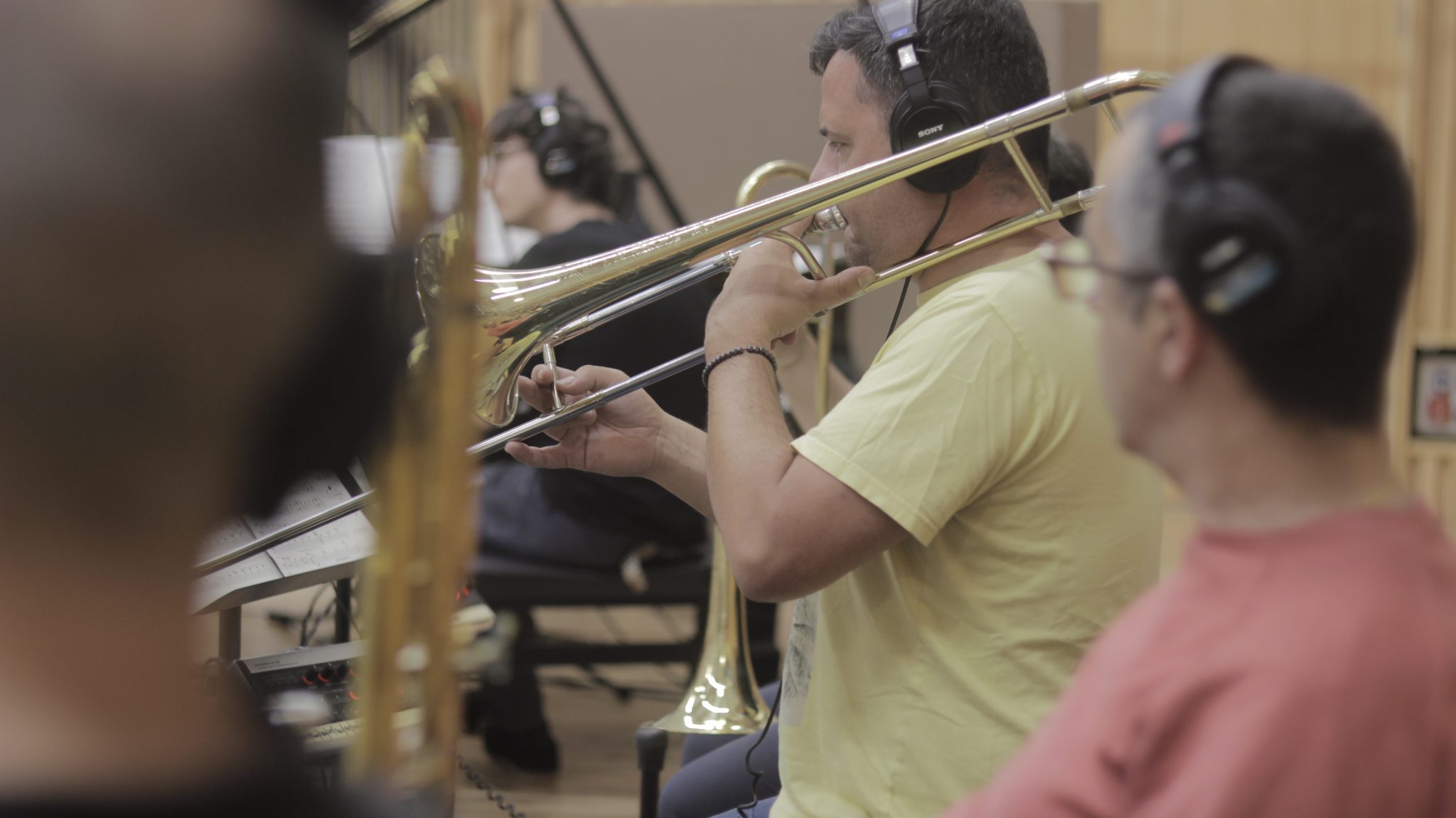
It was October 14th, and Mark Guiliana was waiting for us at the bar of Teatro Pavón, minutes before his European tour with Jason Lindner (piano) Jason Rigby (saxophone) and Jasper Høiby (double bass) began here in Madrid. In this case they were playing for JAZZMADRID22 in collaboration with Villanos del Jazz, playing Mark Guiliana´s own compositions in a jazz quartet format.

Mark Guiliana is a great personality, versatile and original. It is remarkable his work and investigation into electronic music in parallel with jazz. All his trajectory has made an impact in both genres and aesthetics and his ways of thinking and playing are so open to many sonic possibilities handling projects which are between nu-jazz and contemporary jazz, like the quartet he brought to JAZZMADRID22 


In&Out. Hi Mark, it is a pleasure to have the chance to talk with you today. We would like to know how do you combine these two different jazz genres or aesthetics in your everyday life and how do you handle this close and at the same time different worlds? 

Mark Guiliana. I understand that these two worlds by definition are different, but, to me, they are actually all the same thing that comes from one place, so the ideas come from one place and then, as they get more specific, maybe they end up one far from another, maybe one idea starts here and ends up on an acoustic piano or another idea ends up in a synth, but because they start from the same place in my mind they are very similar. I think that this is helpful, and I am so deeply inspired from many kinds of music that makes me try to represent all those influences every time I play.
When I was young I thought that if I was playing jazz I could not let people know that I liked Nirvana, but of course all the elements can match together and end up leading in a more personal statement. For example, I love flamenco since the first time I came here in 2013 with bassist Avishai Cohen. I really felt flamenco as a deep influence to me, and of course this is not obvious in my music – I am not playing flamenco as a style. But to me, there may be influences that are more obvious or deliberate from the ones you can draw a straight line from the influence to the way I play, and in other cases some other influences act as an inspiration that I take but are not so evident in my playing, even though they are still there. If I can play drums as Camarón sings, that is what I want to do, so it will not be obvious in a ¨drummistic¨ way, but still the spirit is in there.


Does that mean that aesthetic limitations do not interfere with the freedom you feel and the creation itself? 

Correct, everything is possible as long as the choices that I make at that moment are the best for the music.


How do you see the scene in New York, USA… and the world when it comes to the use of new sonic explorations and sounds of digital technology, analog synthesizers, aso. and how do you use it, affects your creations and think about it in your everyday life? 

I think that everybody nowadays has access to make music like that, so it is exciting to explore. Anyway, I also really appreciate the relationship that can be created with an acoustic instrument. Sometimes with electronic instruments after a very short relationship, in the beginning of it, the electronic instrument can let you already create something, but there is no shortcut with the relation of a player and a drum or saxophone, so we are talking about a very different timeline. So I really value someone who has committed his path to an acoustic instrument, because it takes a long time to find oneself in that place. In the end, I am always happy when I use both.

If you buy a synth and you turn it on it will sound cool because it has been programmed to reproduce a specific sound, but if I have to pick up a saxophone it will not sound cool, it could take years to sound good, so there is something about that commitment in the relationship, you have to earn it, and sometimes with electronic instruments this comes sooner and effortless… of course excepting people who are the masters of it.


How is it to come here today to play with a master like Jason Lindner, who knows a lot about the synth world and with whom you have a long past playing in different kinds of proposals and artistic paths such as David Bowie, Donny McCaslin, aso? How do you feel doing this project with him?

It is great! As you may know, he has not only played piano in the last 15 years but has included a lot of keyboards and synths at his concerts. I know him from a long time ago, when he was just playing piano in New York with Avishai Cohen (bassist) and he had his own band playing piano, these are my first memories of him. So when I invited him I said to him: “you can say you do not want to” because I am aware of his commitment to his electronic path, but I got very happy when he said yes, because it is very refreshing to play like this as we have not played in this way for a long time. Moreover, the relationship is so strong that communication is easy and feels natural.

On what do you focus your musical energy right now?

I think that energy means to just keep going, it might sound simple but sometimes it is enough. I simply try to put my head down and just keep going because if I put my head up sometimes the world is a scary place and it might not encourage you to go ahead, and sometimes if you look back you may feel tempted to do today what you were doing in the past, only because at that time people liked it, and that is dangerous too. So I just try to keep making what feels right on the day I am living. If inspiration is present I just take advantage of it, and I am not worrying about where it sends me. I am just glad with the fact that inspiration exists, because it might not always be there. Inspiration is the seed and I am not worried about what it becomes, I maintain the energy and just keep going, trusting in what I do. Trusting in the process, trying not to be too calculative, of course you might be scared of what’s next but also I try to settle into that.


You have just released  “The sound of listening”, an album which is deeply influenced by Thich Nhat Hanh and his concept of the inner silence required to truly observe the world. In this album in which you count with great players as Shai Maestro, Jason Rigby and Chris Morrisey you combine all your projects but the jazz quartet predominates in an introspective way. How did this project come to Earth?
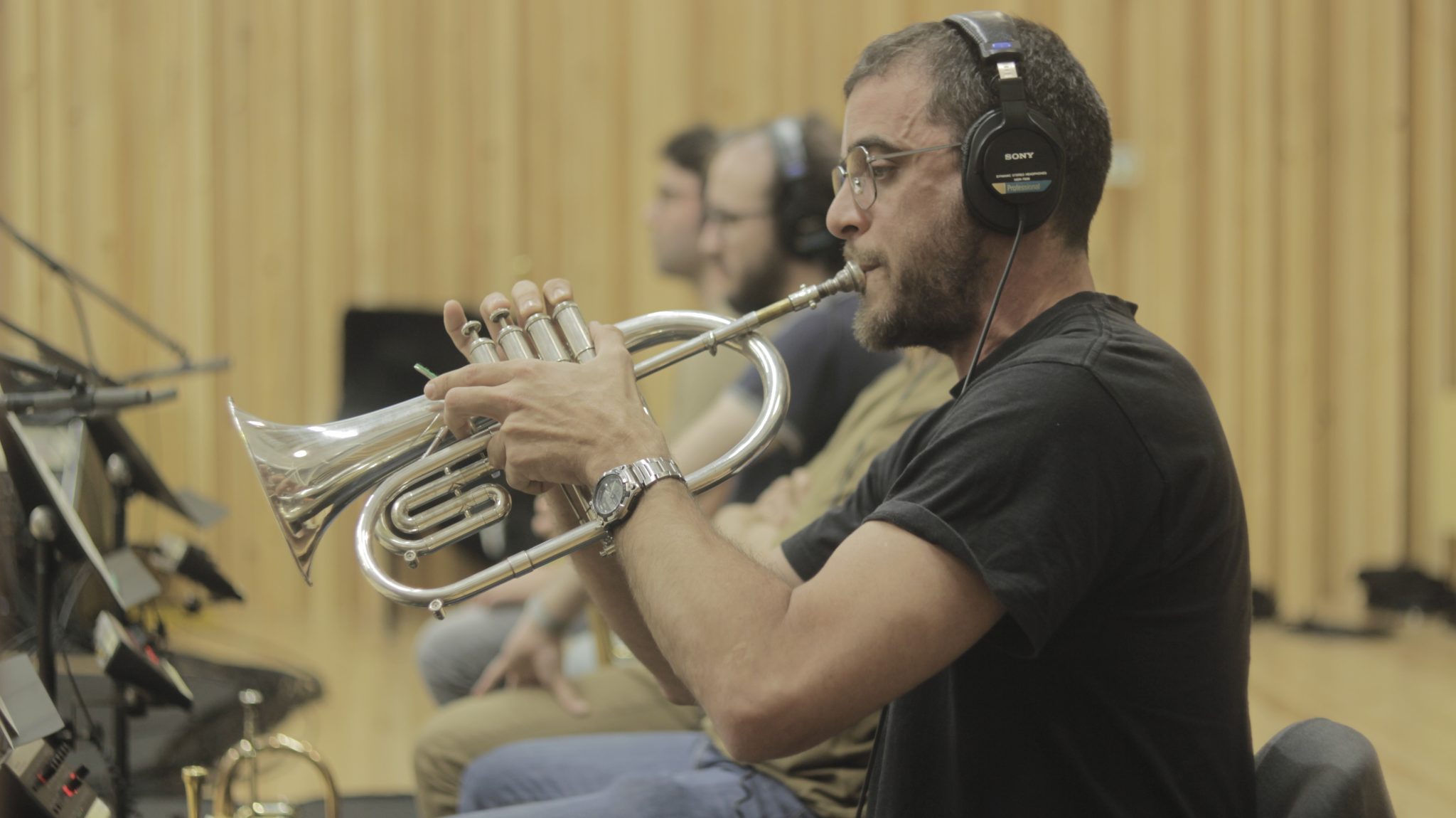
Only the title and the music are inspired by Thich Nhat Hanh. The pandemic was an introspective moment in my life, so his teaching was very helpful for those moments and it made its way into the compositions. I am a person who is always doing things, being in movement, without asking the meaning of them, and in the pandemic everything changed, I was at home, I totally stopped and that made me raise big questions and think of what I was doing.
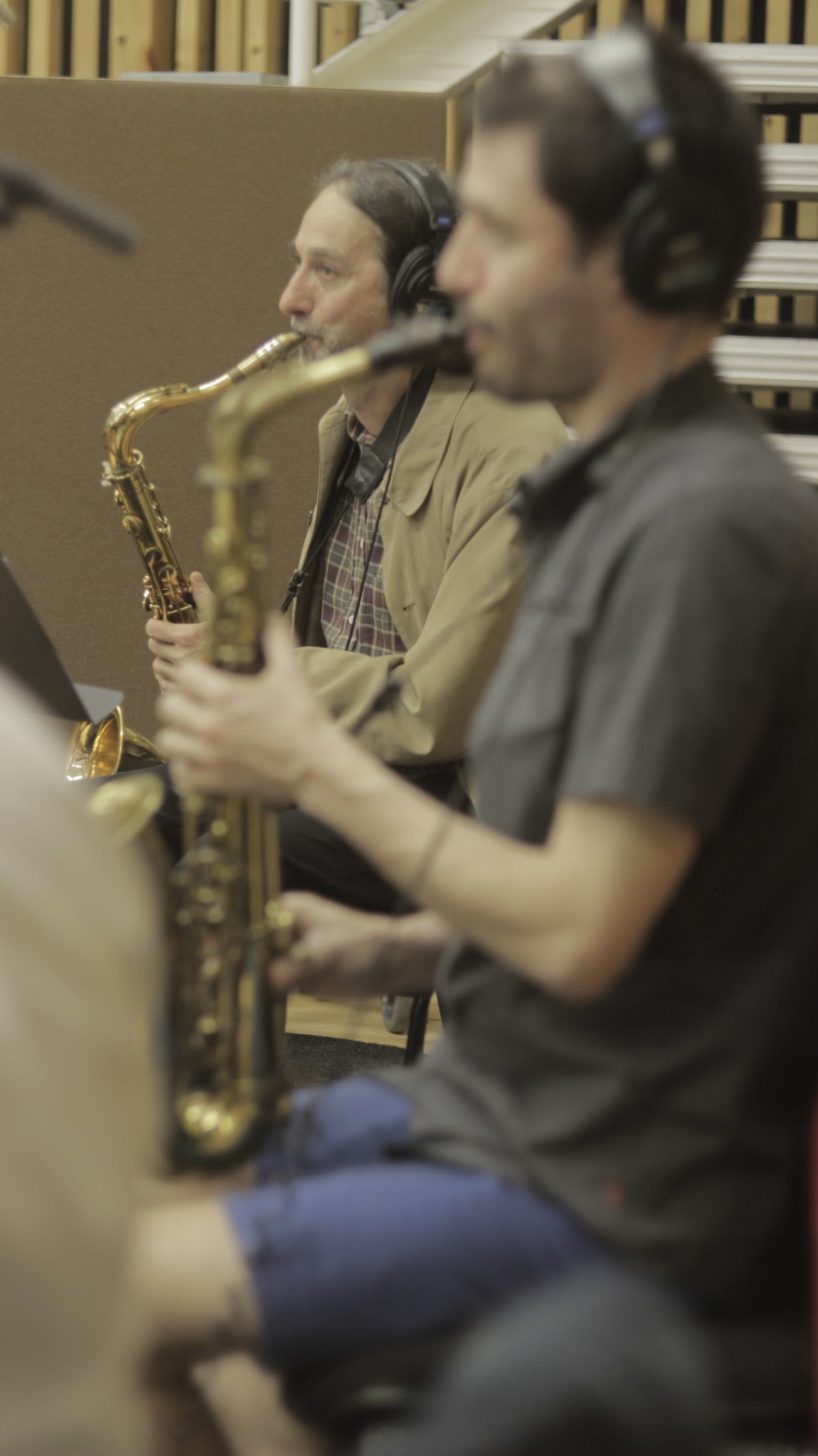
 

You have created your own label, why?

I created a label in 2014 because I often got impatient due to the great amount of time that happened between making an album and releasing it. I just wanted to mix some music and put it out. Also, I released two albums on the same day which probably a traditional label would not have liked. So it was less business-minded and just focused on doing something and setting it free. That was the intention behind my label.


You are on tour now with your jazz quartet. What will happen next?

Today is the first day of the tour and we will be in Europe for two and a half weeks. Most of the time I will be playing the music I will perform tonight and, after that, we will go to the USA and play at Village Vanguard, and so on. But also my inspiration and ideas now are looking to the future, I have three albums in my mind that I would like to record and they are all different. Sometimes I have to be patient and let it develop by itself. Nevertheless, I feel very lucky to have both outlets (Beat Music and the Jazz Quartet) but I want to keep for each one its own space, the space they deserve.


Do you choose which project to do next based on the people you are in contact with,  taking into account the energy you receive from each musician?

Totally, this is also a great motivation. I feel I am always kind of one record ahead in my mind.  I have an idea for a little bit more electronic album. In addition, when we recorded “The sound of listening” we recorded twice as much as what we released so next year probably there will be another album with these songs.


Like your album “Family First alternate takes”?

Yes, but in that case it was the same takes and now it will be an album made out of new and different tunes.


We have reached the end of the interview. It was a great pleasure to have you here today, thank you for your words. We look forward to listening to you in a few minutes!

It was great, I wish it had been longer. Thanks, I enjoy living the present moment and it is great to play with these musicians in this jazz quartet. It is such a joy, I cannot wait.

Written by Manuel Borraz

Noviembre 05, 2022

Fred Hersch Interview  JAZZMADRID21

Fred Hersch Interview JAZZMADRID21

Fred Hersch Interview
JAZZMADRID21

Madrid International Jazz Festival

13

DICIEMBRE, 2021

Entrevista: Manuel Borraz

Fotos: Rafa Martín/CNDM

On November second, I had the pleasure of interviewing one of the greatest jazz piano players of all time. After his last duo concert in Hamburg with trumpeter Dave Douglas, Fred Hersch came to Madrid, where he played with Avishai Cohen an intimate acoustic performance at Auditorio Nacional de Música (JAZZMADRID21), playing jazz standards and his own compositions in his unique, buoyant masterful way. 

Well known for his long jazz career, sideman in the past of jazz legends like Joe Henderson, Stan Getz, Bill Frisell… composer and piano bandleader, Fred has contributed to jazz music with an extended creative artistic work with many formations and formats. Despite his complicated life situation due to contracting AIDS in 1984 and coming back from death after a two months coma in 2008, Hersch is still touring the world, creating amazing music and leaving a legacy that will last long. The morning before the concert, in the living room of a hotel, Fred Hersch shared with us some aspects of his approach to music nowadays, his feelings and how is he living the current moment.

In&Out JAZZ – Welcome to Madrid, we are delighted to have you here. How are you feeling?

Fred Hersch – I am good, thanks. I don’t remember now, but I think that the last time I was in Madrid it was with the trio. Something I can tell you is that lately I remember good halls and good pianos around the world, how they work or the difference between them, specific ranges that sound better depending on the model. 

In&Out – You have had a close relationship with the piano for more than 40 years and you are still touring, most of the time in small formations like this concert with Avishai Cohen or by solo performances. What is your relationship with the piano now?

F. H. – I love it and I feel really loose. Since the pandemic, fortunately, all of the concerts where I have played have been with musicians that are in the flow of the music, not much is predetermined. I have played with Enrico Rava, Dave Douglas, now with Avishai Cohen all of them are different but great. I find it hard to play with musicians that are too much inside their heads. I always say to people I love my work. I make stuff up and I get paid for it. It’s a great job.

In&Out – Then… was playing piano solo concerts a natural consequence of your life, due to your needs and loves, or was it a conscious decision?

F. H. In 1977 in New York I was hanging out a lot at Cork Bradley’s, where all the piano players were hanging out. There were lots of piano players and bass-piano duos there, with Tommy Flanagan, Hank Jones, Jimmy Roles, Kenny Barron… I remember Rolland Hanna said to me: “you would be a very good solo player, you should really develop that”, and he was a very good solo player, so I did it. In 1980 I gave my first solo concert and my first solo album came out in 2001. I have equal solo albums and trio albums. Playing solo… is very challenging, you can´t take a break for the drums solo! (laughs)

In&Out – You have used many different approaches, textures and creative skills in your performances, we could say that your piano playing has a very sensitive and refined touch, where do you think that this art of playing comes from?

F. H. I played classical music, not so much in public but for me, but I grew up listening to it. I did not listen so much to popular music. When you listen to a lot of great piano players and piano music you can hear the possibilities of the piano, so I never transcribed solos but I got ideas and tried to incorporate all these elements, for example: the piano can be a drum set, an orchestra, a singer, a horn, it can go in opposite directions, multiple directions or play different voices. This is a feature of my playing and I find it interesting to do… You don´t read into the piano but different piano players have their own particular sound, not the notes but the way they engage with the instrument. 

In&Out – The pandemic has greatly affected a lot the sector of music and culture, how did you deal with the Pandemic from the beginning of it until now?

F. H. I actually did not even touch the piano for months during the pandemic but, among many other things, I did meditation -but not Zen. What I do is, I sit everyday for 35 minutes, although is difficult to do it when being on the road.

When I started meditating, I realised that I had been meditating for my whole life with the piano, so instead of the breath as the encore, it was the sound the anchor, how you actually make the sound and how you put this sound in rhythm, this is active meditation. It is not about what you play -a hype chord or something fast-, it is about the feeling. 

In&Out – Also, during the Pandemic, you did one album, Songs From Home, right?

F. H. Yes. That album, Songs From Home, was simply me playing songs I like just to make people happy. So, people could be with me relaxing in my living room while I play songs that I Iike and, in that way, we all have some nice moments together.

In&Out – Talking about the Pandemic and the difficult moment of global health, we know you have been dealing with health issues for years, how did your health situation affect your playing?

F. H. – I was very sick I almost died twice, and when I came back things changed, so there is kind of a pre period and post period. It was 13 years ago, since then I know my playing has changed but I cannot tell you how.

Also, when you get older, your memory is not so great, your repertoire gets smaller and now, after a year without practicing or playing music in the pandemic, I appreciate music more. I have got to the place I always wanted to get to, where on the one hand I care deeply about the music but on the other I just do not care about whatever it happens. 

In&Out – You said tonight, with Avishai Cohen, the main focus will be on improvisation, but also, you have been using composition for a long time. Which area takes precedence in your life?

F. H. Nine of the last twelve albums were live because I do not like the studio so much. I feel that is real jazz, my best stuff is live. But as an artist I’m conscious of my career, and I know you cannot just do always the same thing, otherwise no one would pay attention. 

In&Out – You have been teaching for many years in institutions, and also influenced big musicians like Brad Mehldau, Ethan and Sullivan Fortner… what do you think about the institutionalization of jazz?

F. H. Well, in order to set things to students or to make a model for jazz education, it has to be driven by information, not by theory and transcriptions… In a way I was lucky because I did not have a teacher before I went to New York, and I was an apprentice, that was what everybody did at my time: I played with Joe Henderson, Stan Getz…

I composed my own pieces very late. Now everybody has the goal of having their own band with their own music and I think is equally creative to play something somebody else wrote. Not everybody is a great composer, something great for me is something that sticks, like a Sonny Rollins solo that I can almost sing… I would never write it down, for example, but I sing it. 

In&Out – Did you enjoy being a sideman? As I see you do not do it anymore.

F. H. Lately I do not tour with other people as a sideman, people do not think of me as a sideman anymore, they think I am busy or that it would be too much expensive, aso. There was a time that I was a sideman, when I was thirty, and I learnt from that. But now it is different.

In&Out – How is jazz education now?

F. H. Jazz education consists now of students who do it like a duty, they learn and can play but nothing is personal, it is more craft than art, and then there are musicians who have big influences and take it personally. They take music from other countries or from hip hop or classical contemporary music wherever, so there is not much swing inside so maybe it’s jazz but not jazz, although there are very accomplished musicians who have found a way to speak to their generations and to themselves.

When you suggest playing or writing down what Herbie wrote in 1963 it makes people develop a lot of fear but if it is something new you cannot be afraid of, you just have to embrace it. Also, now we have a group of people who have doctorates but never tried to make a living out of music, so it is very academic, and that fact can make people competent but it does not make them creative artists.

In&Out – How was jazz life back then for you?

F. H. When I went to New York I was 22 years old and it was very simple, you had to be able to know how to swing, how to compose, to read music, have the tools and be prepared to return phone calls… Now everybody is expected to be a bandleader, composer, social media expert… what is expected nowadays is different than before.

In&Out – What would you say is missing nowadays?

F. H. One thing that is missing is listening not only to what happened in the 70s but to the whole history of jazz. Throughout these times there have been and there are amazing pianists.

Man has to understand the different trees of jazz piano. Like, for example, Duke Ellington, Monk, Herbie Nichols, Andrew Hill. That would be one tree, or James P. Johnson, Art Tatum, Fats Waller, Oscar Peterson… that is another. 

Unfortunately, people don’t listen to albums anymore.  We read to the note, aso. Our attention has got shorter due to new technologies, and this is affecting a lot the education we are having.  

In&Out – Is jazz nowadays more skills centered than an artistic expression?

F. H. Most of jazz students want to know: “how can I do this?” but you just have to try things and commit mistakes until you learn… it is not I am going to do this and this and I am going to be a good jazz musician, it is a language and you have to speak it, and so, it takes time.

In&Out – The history of jazz has a very concrete, determined character, geographic origin… but the different paths that it has taken are creating a very thick and lush forest. Jazz is now being played around the world. Do you see a difference for example between European jazz and jazz in the U.S.?

F. H. Before, Europeans and Japanese wanted to know the authentic way to play this music, but now, there are a lot of European players who do their own thing: Enrico Rava, Bollani, John Taylor, Jan Garbarek, aso. You can put a lot of jazz music in ECM category or Avant Garde category, there is some in the middle but most of it is this. There is not so much swing anymore, but more straight 8ths odd meters, aso.

In&Out – I suppose that man learns a lot also playing with great characters of the history like you did in the past. What did you learn from playing with true legends at that time?

F. H. Playing with Joe Henderson for 10 years I learnt a lot. Sometimes he played great but sometimes not so well, or he started okay and at the end got amazing, so I learnt not to panic at a moment of the concert because it is a long trip. The trap I got into once was worrying about what I was not able to play, like young pianists who can do amazing technical things, but they cannot do what I do, so you have to know who you are.

There is no law saying “you have to do that“. So, you just play one phrase, then another, then another, loving them, like meditation… every breath is a little different from each other, some days you are focused and some days you are not. I like to think that I normally do good performances but sometimes I am more inspired. For example, in Village Vanguard, which is my home, I feel like I am in my living room, I do not have to worry about a thing. 

In&Out – It seems that your meditation practice has affected a lot the way you express and conceive your playing, did it influence you as well in the way you listen to jazz? 

F. H. When you listen, you cannot see what are people doing, you can just hear it. In a lot of shows I close my eyes, even in my own concerts, I do not look, I pay attention, it gives me a center. I like to take one track that I like, close my eyes and I listen to it seven times in a row, and each time I listen differently, how do people phrase or deal with harmony, if the drums are ahead of the beat, how do they deal with it…

In&Out – How would you qualify good art then?

F. H. – I always say good playing is like pizza. Basically you have sauce, cheese, dough and when you are playing solo you have rhythm, sound and the way you connect with what you play, these are the three most important elements. We all have had terrible pizza but when you get good pizza it is so great, bad pizza can fill you up, but good pizza…what a difference… wow! You can feel it was made with care and the best ingredients and skills… 

In&Out – So, do you influence yourself from other forms of art?

F. H. – I go to art museums, enjoy visual arts, theatre, other kinds of music, all kind of classical music. I like to explore everything, I like to learn stuff from different artists or periods or cultures and connect with them. You cannot only do jazz, maybe when you are young… but at this point I cannot just practice jazz, the closest I get is taking one tune and playing it for twenty minutes. I search for new stuff if it gets boring, I go to a different thing.

In&Out – How free do you think jazz music actually is?

F. H. – A tune is like a picture frame. It gives you a limit, that is the basic form, harmony, melody, or words… To me, the three great revolutions of jazz were Louis Armstrong, who invented scat, stepping up front of the band and being a really great soloist. Bebop era is the second, this is basically said: jazz is not dance music, it is more complex, virtuosic, people were writing their own things… and then Ornette Coleman, who was like: “I am just going to play on the feeling of the tune or I am not going to play any tune at all“. Of course, there are a lot of amazing great musicians but for me this is where the real innovation lies.

In&Out – How do you see the evolution of the jazz industry? 

F. H. – In the past years classical music and jazz albums sold were rated about 2%. And within jazz there were always singers and guitarists who sold more records than instrumentals, but it has always been a very small percentage of the music industry.

In&Out – In your opinion, why is this percentage so small?

F. H. – In both of those genres, the more you know, the better you feel when you listen, and more satisfaction you get, and you can at least have an opinion about it. In pop, big famous artists and their projects are driven by personality and sometimes it is more entertainment than art. Jazz and classical music, without any willing to be pretentious, is another kind of artistry, but it has always been a tiny part of in the industry…

Some people would say: “I like smooth jazz“, which is not actually jazz of big bands or whatever… and that can be great, or not. You know, there is nothing wrong with entertainment: sometimes you just want to have some fun. But in terms of artistry, not so much. It is another layer… just a deeper one.

In&Out – I guess society has also changed a lot. How do you see the acceptance of the LGTBI movement in jazz nowadays?

F. H. – Let’s say you have 5% of population of gays in the world, just to say a number, and not all of them belong to jazz or are jazz fans. I was one of the first ones to really come out and I like to think that it gives people confidence to say it too. When you play with other musicians it’s very intimate and you don’t want to bring sex into it.

Specially in the U.S. now they are tending towards women instrumentalists and people of color. Honestly, I don’t care what race or sex anybody is when I play with them, I just play with musicians that are compatible with me. When the music starts and I close my eyes, the music is what matters. I went to a multiracial school with no ethnic majorities so I did not think about it much, and then I played with lots of musicians…

A lot of people, for example, would wonder why would Joe Henderson  have a Jewish white gay piano player in his band… but if you are gay and in the closet, it is harder to express yourself also in life and in music. Now we have people who don’t know which sex they are, aso. That’s the next frontier.

In&Out – Now before we end, we would love to know if you have any upcoming projects.

F. H. – I am doing a string quartet plus a trio project. Nowadays this seems fashionable but I just did it in my own way… it will come out in January. It contains 8 movements of a suite and the different movements go together as a unit. They are based in my meditation practice.

Also, with Enrico Rava we will record an ECM album in a couple of weeks. They have a particular way of working and it will be interesting to make it. After Songs from home I realized that meditation could be an interesting subject, maybe I will do something about it or maybe my next project is a live I recorded with Julian Lage, who knows! We are just listening to it, you never know… or a jazz trio album, who knows.

Written by Manuel Borraz

13 de Diciembre de 2021

AMBROSE AKINMUSIRE INTERVIEW  JAZZMADRID21

AMBROSE AKINMUSIRE INTERVIEW JAZZMADRID21

Ambrose Akinmusire Interview
JAZZMADRID21

Madrid International Jazz Festival

03

DICIEMBRE, 2021

On the evening of November 21st, I had the pleasure of interviewing one of the flagships of the renewal impulse that runs through contemporary black music, the Californian trumpeter Ambrose Akinmusire, one of the most restless and creative musicians of his generation who is reshaping the jazz tradition.

The interview was done moments before his live quartet, completed with Micah Thomas, Harish Raghavan and Kweku Sumbry, took the stage at the Fernando Fernán Gómez Theater, within the Madrid International Jazz Festival 2021.


In & Out JAZZ: Why is Origami Harvest not released on vinyl yet?


Ambrose Akinmusire: Oh, I have a very easy answer: because there’s a lyric, just one lyric, that Blue Note didn’t like. And they didn’t want to get slapped by people. That’s the only reason. I won’t say what the lyrics are! It was pushing a little hard… That’s the only reason. 

I have read that your parents were very religious and that your mother played piano in church. In your work there is a spiritual dimension that goes beyond the music, similar to the spiritual dimension of John Coltrane. In your opinion, what personal and musical elements must coexist to reach that spirituality?

For me it has to be a willness to wrestle with the ego and to get rid of the self. So the music can come inside you and come out as opposed to everything being produced from your head. So all of the practices that I do is to make sure that the music can just come out as it wants. So I practice technical things on my trumpet so the music doesn’t run against any technical limitations, and I do practice on myself and my ego so that when the music comes inside of me I don’t judge it. Si I think that is maybe the first thing that must happen or at least is the thing that I’m focusing the most on. Other things… I guess it’s just openness. Even as a jazz musician or a creative musician checking out other music and checking out other opinions, having conversations with people. And also… being willing to make mistakes and to fuck up and say “I’m sorry”. Even in life you can just… even as a creative person I try just do what I gotta do and if I fuck it up say: “Sorry, my intentions weren’t bad”. That’s also part of life so… I think those three things are the things I am focused on for a long time. 

You seem incredibly free in everything you do. What does the concept of freedom mean for you and for your music?  

No one has ever asked me that…  Free… When I think of freedom I think of dancing within a frame because if there’s no frame, then it is chaos. If there’s no rules, there’s no frame, then it’s chaos. So for me it is finding ways to be creative with all the rules. Musically that’s what freedom means for me. But if we talk about free jazz and the free movement, I think that free jazz is what comes after the blues, you know. It’s like the next sound of the blues, where the blues is a little bit more optimistic, the free jazz and things associated with that are just expressing the pain in a very visible way. And freedom on my instrument just means being able to play what music says to play. 

So, in that way, it means a lot of practice…

It means too much practice. I practice a lot, yes. I practice to be free. I even practice if I play an ugly sound… The freedom in terms of technique is to not be there. I practice so I can be on stage and just play what it comes through. I know that I’m not the one making the music. That also is a form of freedom. I don’t have the pressure to come up with all this amazing stuff because I really believe that it’s already there. I just have to submit to it. If I can do that it just comes out.

You are the medium.

Exactly. And that’s free. I don’t have to create it, I just have to stand there. I have done all the work before that.

You are always searching for new ways of expression and you’ve displayed a huge range of sounds and styles throughout your career. Does your work start from improvisation?

When I was younger I could write music very easily and then I stopped for many years, I stopped writing music. And then I realized that I have to find ways of walking to the muse and sometimes that’s writing the story or playing games with numbers, but that’s just to get me to the point where I’m interacting with the muse, and often all that stuff goes out of the window when I’m there. So the process of getting there is always changing but the getting there is where the creativity comes out.

Do you have any method to identify when you are on the right path?

Oh, no. When you are in the flow, you’re in the flow, you know? It’s like in basketball: after shooting you know if you are in the flow. It’s like you enter that magic zone and you just know. It’s just a feeling of something else taking over and you really have to fight to not come up with that. Things that take you out of there are judgement and ego. So when you are there… I feel it. And I rush to put it on a paper before my ego says it sucks or it’s amazing.

Do you record yourself?

Yes.

Every time?

Not every time, but a lot. 

Do you come back to those recordings?

No, not really. Sometimes, if I have a big project, I’d listen to the stuff and try to see if I heard something. 

What is your experience with Fresh Sound Records?

I did one record with Fresh Sound, the first one, and my friend Walter Smith did one or two that I did. The experience was great. Jordi was very supportive to a lot of musicians that nobody knew who we were. I didn’t meet him until years later. He’d always respond to the emails and send the money… he was cool. He let us do whatever we wanted to do. Furthermore, he didn’t say: “I want a jazz record”. My first record has an opera singer, it has all this crazy stuff, you know… I really have a lot of love for Jordi and what he’s done for not only me but for my generation and the generation before us, just giving us a start and giving us experience in recording and creating a CD. I think that without Fresh Sound a lot of people wouldn’t have careers and maybe a whole generation wouldn’t had been heard. 

You have managed to innovate from a deep knowledge of traditional music but what are your references or pillars in music?

Joni Mitchell, number one, Björk, John Coltrane, Clifford Brown, Bud Powell and Benny Carter. Those would be my strong people. Björk is the last musician that I really want to play with. I’ve played with Jonny, I’ve played with Herbie (Hancock), Wayne (Shorter), Kendrick Lamar… all those people I’ve played with but not with Börjk. If I go to one of her concerts I would sit in the front row… I can’t wait. I know it’s written. I really like people that you hear and think “Where does this come from?”. You can hear references but they just drop it down so complete, out of nowhere.

That’s exactly what you’ve done.

Oh, no! (Laughs). Thank you…

What are the most important learnings you got as a musician, since your beginnings with Steve Coleman and the Five Elements until today?

Oh, very easy. The most important thing I’ve learned is simple: try to be a good human. Just try to be a great human being. Be responsible for how you make people feel. That’s the biggest lesson that I’ve learned. Because I’ve got to meet and play with all my heroes and that’s the one thing they all have. Herbie, Wayne, Ron Carter… all these people. They all feel the same, they are generous, open and warm. So that’s been the biggest lesson so far in my career.

You are an artist who has taken jazz to another level. Was this a premeditated idea and where does your creative force lie?

Was it premeditated? Yes and no. Yes in the sense that I believe in innovation; a lot of people don’t and more specifically I believe in innovation being a part of the Black tradition. So yes, it was premeditated. But, did I sit down and say: “I want to come up with something new”? No. Do I think that I came up with something new? Not really. But I understand why people say that. 

‘Origami Harvest’ is a jazz-hip hop album, but ‘On The Tender Spot of Every Calloused Moment’ is more of a blues album, like it is connected with your first album. How do you feel about this?

It’s connected through very specific comparison: it’s me knowing who I am in the last album and who I was in the first album. I was there standing with my eyes closed in a suit, feeling the pressure and all this, and in this last one it’s me standing near in a hoodie with my locks, and the first one had all these colors coming at me while the last one is just a stark black and white with no design… Also musically: the first album starts with a trumpet intro and the last album starts with a trumpet intro, so there are some things there that in a way make me think as if the last album is the first album grown up. And that’s the way I feel about it. It feels like the right time to complete the circle. And also, I’m a little less… I don’t want to say “optimistic” but I’m much more connected with reality now than then. I feel like now I’m super straight in everything like in aesthetics, my personality, I don’t give a fuck what people think about me and all this other stuff, and I don’t feel the pressure in anything… In the first album I thought I was walking into something so grand and now I feel like at any moment I can walk away from this and be fine. So that’s another thing about these two albums and how they are linked to each other.

So now that the circle seems closed, what is your next project?

To start multiple circles, not just one anymore, and have them developing all over the place in coexistence.

As a modern jazz reference, what kind of advice would you give to new generations of jazz musicians? 

Just work hard and say “Fuck it!”. Not often… (laughs) but don’t be afraid to do that. And be a good guy. Also for me, the inspiration and the reason I do this is not about me for a long time. I do this because now there’s two or three generations underneath me that look up to me, so I know that I’m the inspirations for thousands and thousands of people around the world like some of my heroes, like the way Roy Hargrove was for us or Winton (Marsalis) or Herbie (Hancock), I’m that for a lot of people. So that’s been clear for me for a while. But before, yeah… I didn’t even have the luxury of thinking about inspiration. I was just working my ass off. I often tell my students that it is a luxury not to be inspired. Being an African-American and having such a culture, you know, people were slaves for three hundred years and stuff… they weren’t inspired to pick cotton, but they had to do it. So I imagine that playing the trumpet or creating music is easy, you know? I also grew up with my Mum and saw here working 9 to 5, five days a week and sometimes working overtime on a weekend doing something she didn’t like doing… so that’s inspiring for me. That’s always been there since I was a kid. So I personally never had deep vaults of being uninspired. Sure there are times where I don’t feel like practicing, like some times you go to bed and don’t want to brush your teeth, but you have to do it. So that’s the way I see it.

What does music mean to you?

It’s humans trying to sonicly represent love and nature. I think that’s what it is for me.

03 de Diciembre de 2021

Pin It on Pinterest