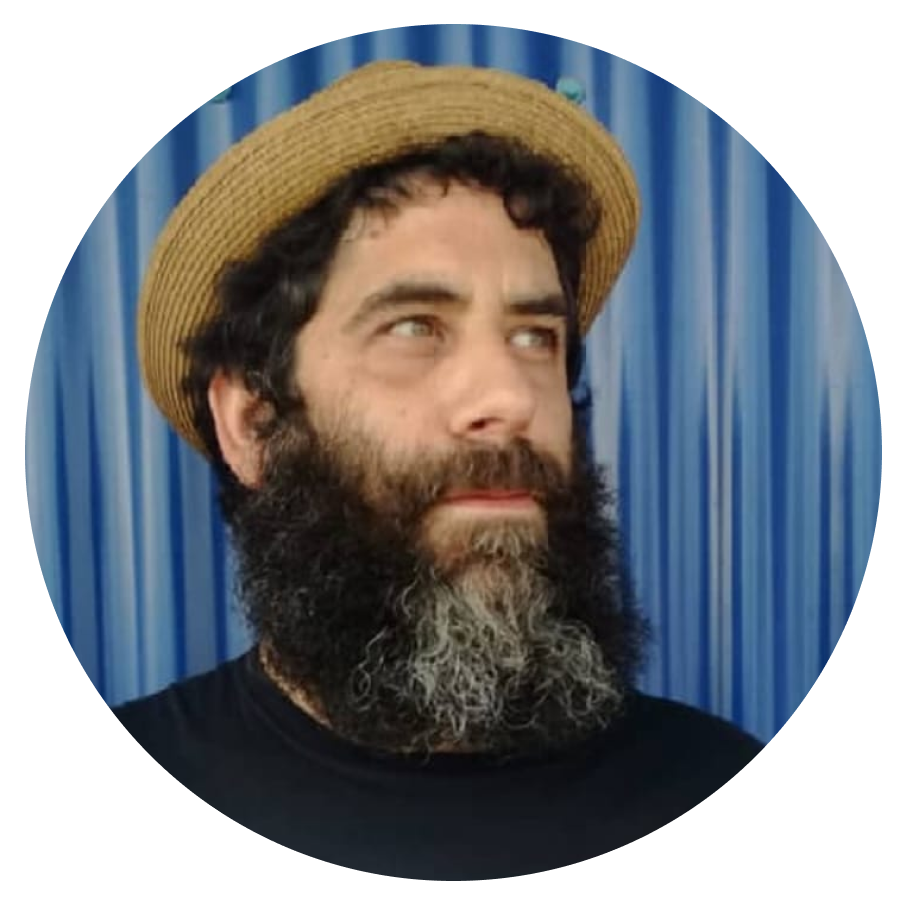
Román Filiu Interview
ROMÁN FILIU
Interview

Prácticamente en vísperas de la publicación de lo que será el primer disco firmado por su propia discográfica, Román Filiu nos ha concedido un rato de lo más encantador en el centro de Madrid. Nos ha compartido sus ideas respecto de dos de sus últimos proyectos, así como percepciones generales acerca del mundo del arte. Hemos entrado a fondo en su proceso compositivo, los principios de su sello discográfico y demás temas del todo interesantes. En la entrevista comparte datos de valor acerca de sus próximas publicaciones (Suite Oriental Vol.1 e Inkalimeva) y nos llega a hacer cuatro recomendaciones muy apasionadas sobre música, cine, literatura y comida. ¡Menudo gozo estar con él!
¡Esperemos que también lo podáis disfrutar vosotros!


In&OutJazz: Genial, Román. Oye, muchísimas gracias.
Román Filiu: ¡Gracias a ti, Jose!
Gracias por cuadrar esta entrevista con nosotros, con In&OutJazz. Ya sabes que somos unos cuantos colaboradores que nos gusta apoyar música de grandes como tú y música de otros que son más emergentes, pero en todo caso música fresca. Y la tuya no es menos, ¿no? De hecho, es un gusto porque tú eres por todos conocido un gigante de la música, de la música improvisada, de la música jazz, de la música libre. Desde Cuba hasta Madrid, pasando por Nueva York y pasando por tantos templos de la música improvisada, del jazz y en general por ciudades muy emblemáticas también. Por tanto, con un bagaje amplio. Has liderado muchos proyectos y has colaborado con un sinfín de artistas de una envergadura espectacular. O sea, tienes una lista de gente con la que has colaborado. Y nada, para que la gente que no te conozca lo sepa, dejaremos tus redes en la publicación para que sepan exactamente de qué bagaje estamos hablando, o de qué protagonista y de qué personaje estamos hablando cuando decimos Román Filiu. El objeto, sin embargo, de la entrevista de hoy es principalmente dos de tus últimos proyectos. Uno de ellos, la Suite Oriental Vol. 1 con el cuarteto ASSAI. Algo que nos interesa mucho. Y el otro, tu disco a duo con Iván Melón, que es Inkalimeva, si lo digo bien.
Exactamente, exactamente.
Muy bien. Y todo ello abrazado por tu discográfica o tu sello discográfico Suona Records. Así que nada, la primera pregunta que te lanzo y vamos ágiles porque tenemos muchas cosas que queremos aprender de ti hoy. ¿Cómo ha sido el proceso de composición para la Suite Oriental? ¿Qué ideas y conceptos habéis propuesto en el disco? Y ¿con qué músicos has contado y por qué ellos?
Bueno, la idea de la Suite Oriental viene de que yo siempre quise hacer algo con este violinista que es el líder de ese cuarteto. Porque yo lo conozco desde hace mucho tiempo y para mí es uno de los músicos cubanos más importantes que la gente no conoce. En Cuba lo conocen solamente los amigos o la gente que estudian y tocan música clásica. Pero este violinista es un importante violinista cubano que estudió en el Conservatorio Tchaikovsky, y se graduó con honores muy buenos y yo siempre lo tuve en mi vista para hacer algo con él. Y Conde Duque me ofreció hacer una residencia. Y cuando me hablaron, me dijeron “bueno, ¿qué quieres hacer? ¿A dúo, a trío? Lo que quieras”. Y yo rápidamente pensé en él, sin saber qué tipo de música iba a hacer, pensé en él y en su cuarteto. Y se sorprendió la gente del Conde Duque, “pero ¿quieres hacer eso?” Y, bueno, la música que propuse ahí es un poco…, intenté llevármelo… Porque yo había escrito un cuarteto de cuerdas para él y su cuarteto, más bien en el estilo de música clásica contemporánea. Pero luego yo pensé que para hacer algo con él teníamos que llevarnos a un sitio en común que tenemos los dos. Y el sitio en común que tenemos los dos es que los dos somos Santiago de Cuba. Tenemos la música clásica, tenemos las canciones de Santiago de Cuba, la tradición riquísima que tiene la música Santiaguera, y a partir de ahí fue que yo empecé a concebir la música, uniendo los dos lenguajes. Su lenguaje de música de cámara y mi lenguaje que viene del jazz, de música contemporánea, y buscando la inspiración en el folclore santiaguero. Y ahí es donde escribí la música. Basado en la tumba francesa, la conga santiaguera, la trova, los boleros, todos.
¡Qué interesante! ¿Su nombre? Perdón si no lo he escuchado.
Él se llama Reynaldo Maceo.
Interesante, interesante. ¿Ha habido más gente colaborando en el disco? ¿O sois simplemente el cuarteto de cuerda y tú?
Bueno, hay mucha gente que ha colaborado en cuanto a que han trabajado y han puesto sus parte. En cuanto al diseño gráfico, el sonido, todo ese tipo de cosas. Pero la música, la hice yo. Yo hice la música, yo planeé todo, escribí los originales, hice arreglos.
¡Qué bueno! Y, ¿dirías que ha habido algo, alguna cosa concreta que has aprendido tú en el proceso de composición? Musical o en la relación con ellos, cuando te has juntado…
Claro, claro. Siempre que uno afronta un proyecto nuevo aprende mucho. Pero una cosa que aprendí bastante es… en confiar más en lo que yo oigo y no en lo que yo sé. La música…, escribir más desde lo que yo oigo que desde lo que yo sé. Lo que yo sé, yo lo sé y lo aprendo. Pero lo que yo oigo es para mí lo que tiene valor. Eso es lo más…
Tirando el hilo, ¿cómo se materializa esto?
Eso se materializa de forma que…, nosotros tenemos en la cabeza…, o sea, los músicos estamos medio locos y escuchamos cosas. Y, confiar en eso que uno está escuchando en la música, a dónde te va a llevar, cómo te vas a mover, eso lo pones en el papel. Confiar en lo que estás oyendo. Lo que te está dictando el oído y el sentido, ¿sabes? Y lo que yo sé, bueno, sí, lo que uno sabe, tú puedes aplicar algo nuevo para mejorar. Pero lo que uno oye, para mí es principal, es fundamental en la música. El oído es fundamental. Y eso, en este proyecto… Yo lo sabía, pero en este proyecto me lo llevé…, me di con ello. Y lo seguí a rajatabla.
¡Qué bonito, qué bonito! Bueno, sin pretensiones de hacerte sonar para nada prepotente, que desde luego no lo eres. ¿Qué crees que han aprendido estos músicos de ti en este proceso?
Bueno, los músicos clásicos…, los músicos de música llamada clásica, sinfónica y los músicos de jazz tenemos un approach, un acercamiento a la interpretación diferente. En cuanto a sentir el tiempo, la improvisación… Y es normal, porque, por ejemplo, si tú estás poniendo una conversación conmigo y yo te estoy hablando de otra cosa, o acerca de lo que tú estás hablando, pero yo estoy hablando por encima de ti…, tú puedes confundirte. Entonces, hemos llegado a un punto en el que nos hemos entendido a niveles de dinámica, de interpretación y sobre todo, de sentir al mismo tiempo. Porque la música clásica tiene otra manera de…, la música sinfónica tiene otra manera de…
Sentir el pulso.
Sí, de sentir el pulso. Con los directores, tienen otra manera de reflejarlo. Y nosotros vivimos más arriba del tiempo. Nosotros vivimos aquí. Inclusive con la música cubana están ahí. Entonces, un poco más como estar consciente de eso. Y lo logramos, lo logramos, sí. Hemos logrado…, ahí hemos aprendido mucho. He aprendido mucho yo de interpretación, de cómo lograr ciertos efectos y también de escribir para cuerda. He aprendido mucho.
Oye, ¿y cuándo podrá el público, el pueblo llano, nosotros incluidos, escuchar este proyecto?
Este proyecto ya yo tengo los discos. Lo único que yo tengo una idea, como en esta disquera yo he invertido mucho y tengo mucha ilusión, le he puesto mucho mimo a la música, al diseño, a todo, yo voy a sacar los discos físicos.
Ah, mira qué bien.
Por ahora. Luego lo pondré en el streaming. Pero esta primera jornada de discos es físico. Porque me parece que el formato físico está muriendo. Los músicos… Yo disfruto de poner en mi casa mi CD. Yo no oigo ya Spotify, no oigo nada de eso. Yo pongo mi CD, me compro los discos, los escucho. Quiero escuchar el disco, una canción, el disco entero, ¿sabes?
Sí, quieres tener la experiencia…
Pero esa experiencia es diferente.
Totalmente, más física, más visceral.
Y también uno le pone mucho mimo como para que de pronto lo pongas así en Spotify con una portada y realmente no se aprecia el trabajo que hay detrás en el sentido de que hay un trabajo de arte que está precioso. Cuando tú lo veas…, mira lo traje aquí mismo, te lo voy a enseñar. Y yo primero le voy a dar una oportunidad a la cosa física y luego lo pondré en el streaming.
Muy bien, porque dirías que este es uno de los principios de tu sello discográfico, de Suona Records.
Vamos, esos son los primeros dos discos que vamos a hacer, sí.
Digo, pero a nivel de principios de vuestro concepto, vuestro modus operandi…etc. De las cosas que desde el sello discográfico tú quieres potenciar, ¿dirías que una de ellas es esta relación con el disco físico?
Exactamente.
Me parece totalmente bien.
A mí me parece que el artista, hoy en día, como que se ha diluido. Se ha diluido el papel del artista. Ahora está como que cualquiera puede subir un EP en Spotify. Y yo no digo…, no estoy hablando de la calidad o no. Y cada cual puede hacer lo que sienta, porque para eso es que el arte. Pero hay que hacer una diferencia cuando uno le pone mimo a un proyecto. Yo ese proyecto lo llevo soñando desde 2021. Me costó trabajo, ¿entiendes? Lo hice, salió muy bien el día de la presentación. Mucho éxito. Después no tuvimos más oportunidades. Volvimos a tocar. Y ahora que lo retomo, claro, tengo que mimarlo. Le he puesto mucho empeño al disco en sí, a la música, al arte final. ¿Entiendes? El arte final, cuando tú cojas el disco, tú vas a querer tener esa cosa física en tu casa.
Claro, claro.
Porque es muy lindo, muy lindo. La marca que me hizo el diseño es un trabajo increíble. Y aparte de eso, el sello quiere un poco…, como una vez al año un artista emergente.
¡Qué bueno!
Porque los músicos no tienen la oportunidad de sacar su música y los artistas emergentes no tienen la capacidad ni los fondos para invertir en algo suyo. Entonces, yo quiero, en algún momento empezar con… “a ver, hay este grupo de artistas, a ver quién puede ser el que podamos financiar y podamos…”, porque yo creo que hay que empujar la música. Porque está muriendo, ¿entiendes?
¡Qué impresionante, Román! La música te va a dar las gracias.
Cuando tú ves por ahí, hay muchas cosas que no tienen calidad aceptada. La gente…, no sé, es difícil, es difícil. Hay que ver el talento verdadero y decir “mira, venga, haz esto”.
Hay que empujar.
No prometo que va a ser una cosa…, nadie se va a enriquecer porque ya se sabe que no hay dinero aquí y ya se sabe que esto es a perder. Pero yo quiero tener la oportunidad, darle la oportunidad a alguien que yo crea que tiene un talento y con la guía de un productor o de otra persona, que no voy a ser yo porque no puedo ocuparme de todo, pero que lleve su música a buen puerto, ¿sabes? Eso es importante, eso es importante.
¡Qué valioso, Román! No, no, muy interesante. Antes nos comentabas algo. Si quieres, díselo tú a todos. ¿Cuándo lo vamos a poder escuchar en vivo o en directo?
Bueno, en vivo y en directo estamos haciendo este concierto, el lanzamiento del disco será oficialmente 23 de febrero en el Teatro del Barrio en Lavapiés, a las 8 de la noche. Eso va a ser domingo, 23 de febrero. Domingo, Teatro del Barrio, en Lavapiés. El disco saldrá una semana antes, diez días antes, un viernes. Entonces, el disco no va a estar, como ya dije, no va a estar online, no va a estar en streaming, va a ser físico, va a estar en ventas en mi página de Bandcamp y en mi web, y en el concierto. Entonces, el plan es que vamos a grabar un segundo volumen en marzo o abril.
¡Qué bueno!
Cuando yo haga ese segundo volumen, que lo vaya a sacar en el otoño, entonces yo pondré ese disco en streaming.
Muy bien. Pues nada, animamos a todos a acercarse al Teatro del Barrio en Lavapiés y escucharte ese día. Estaremos ahí, al pie del cañón.
¡Gracias, gracias, gracias!


In&OutJazz: Genial, Román. Oye, muchísimas gracias.
Román Filiu: ¡Gracias a ti, Jose!
Gracias por cuadrar esta entrevista con nosotros, con In&OutJazz. Ya sabes que somos unos cuantos colaboradores que nos gusta apoyar música de grandes como tú y música de otros que son más emergentes, pero en todo caso música fresca. Y la tuya no es menos, ¿no? De hecho, es un gusto porque tú eres por todos conocido un gigante de la música, de la música improvisada, de la música jazz, de la música libre. Desde Cuba hasta Madrid, pasando por Nueva York y pasando por tantos templos de la música improvisada, del jazz y en general por ciudades muy emblemáticas también. Por tanto, con un bagaje amplio. Has liderado muchos proyectos y has colaborado con un sinfín de artistas de una envergadura espectacular. O sea, tienes una lista de gente con la que has colaborado. Y nada, para que la gente que no te conozca lo sepa, dejaremos tus redes en la publicación para que sepan exactamente de qué bagaje estamos hablando, o de qué protagonista y de qué personaje estamos hablando cuando decimos Román Filiu. El objeto, sin embargo, de la entrevista de hoy es principalmente dos de tus últimos proyectos. Uno de ellos, la Suite Oriental Vol. 1 con el cuarteto ASSAI. Algo que nos interesa mucho. Y el otro, tu disco a duo con Iván Melón, que es Inkalimeva, si lo digo bien.
Exactamente, exactamente.
Muy bien. Y todo ello abrazado por tu discográfica o tu sello discográfico Suona Records. Así que nada, la primera pregunta que te lanzo y vamos ágiles porque tenemos muchas cosas que queremos aprender de ti hoy. ¿Cómo ha sido el proceso de composición para la Suite Oriental? ¿Qué ideas y conceptos habéis propuesto en el disco? Y ¿con qué músicos has contado y por qué ellos?
Bueno, la idea de la Suite Oriental viene de que yo siempre quise hacer algo con este violinista que es el líder de ese cuarteto. Porque yo lo conozco desde hace mucho tiempo y para mí es uno de los músicos cubanos más importantes que la gente no conoce. En Cuba lo conocen solamente los amigos o la gente que estudian y tocan música clásica. Pero este violinista es un importante violinista cubano que estudió en el Conservatorio Tchaikovsky, y se graduó con honores muy buenos y yo siempre lo tuve en mi vista para hacer algo con él. Y Conde Duque me ofreció hacer una residencia. Y cuando me hablaron, me dijeron “bueno, ¿qué quieres hacer? ¿A dúo, a trío? Lo que quieras”. Y yo rápidamente pensé en él, sin saber qué tipo de música iba a hacer, pensé en él y en su cuarteto. Y se sorprendió la gente del Conde Duque, “pero ¿quieres hacer eso?” Y, bueno, la música que propuse ahí es un poco…, intenté llevármelo… Porque yo había escrito un cuarteto de cuerdas para él y su cuarteto, más bien en el estilo de música clásica contemporánea. Pero luego yo pensé que para hacer algo con él teníamos que llevarnos a un sitio en común que tenemos los dos. Y el sitio en común que tenemos los dos es que los dos somos Santiago de Cuba. Tenemos la música clásica, tenemos las canciones de Santiago de Cuba, la tradición riquísima que tiene la música Santiaguera, y a partir de ahí fue que yo empecé a concebir la música, uniendo los dos lenguajes. Su lenguaje de música de cámara y mi lenguaje que viene del jazz, de música contemporánea, y buscando la inspiración en el folclore santiaguero. Y ahí es donde escribí la música. Basado en la tumba francesa, la conga santiaguera, la trova, los boleros, todos.
¡Qué interesante! ¿Su nombre? Perdón si no lo he escuchado.
Él se llama Reynaldo Maceo.
Interesante, interesante. ¿Ha habido más gente colaborando en el disco? ¿O sois simplemente el cuarteto de cuerda y tú?
Bueno, hay mucha gente que ha colaborado en cuanto a que han trabajado y han puesto sus parte. En cuanto al diseño gráfico, el sonido, todo ese tipo de cosas. Pero la música, la hice yo. Yo hice la música, yo planeé todo, escribí los originales, hice arreglos.
¡Qué bueno! Y, ¿dirías que ha habido algo, alguna cosa concreta que has aprendido tú en el proceso de composición? Musical o en la relación con ellos, cuando te has juntado…
Claro, claro. Siempre que uno afronta un proyecto nuevo aprende mucho. Pero una cosa que aprendí bastante es… en confiar más en lo que yo oigo y no en lo que yo sé. La música…, escribir más desde lo que yo oigo que desde lo que yo sé. Lo que yo sé, yo lo sé y lo aprendo. Pero lo que yo oigo es para mí lo que tiene valor. Eso es lo más…
Tirando el hilo, ¿cómo se materializa esto?
Eso se materializa de forma que…, nosotros tenemos en la cabeza…, o sea, los músicos estamos medio locos y escuchamos cosas. Y, confiar en eso que uno está escuchando en la música, a dónde te va a llevar, cómo te vas a mover, eso lo pones en el papel. Confiar en lo que estás oyendo. Lo que te está dictando el oído y el sentido, ¿sabes? Y lo que yo sé, bueno, sí, lo que uno sabe, tú puedes aplicar algo nuevo para mejorar. Pero lo que uno oye, para mí es principal, es fundamental en la música. El oído es fundamental. Y eso, en este proyecto… Yo lo sabía, pero en este proyecto me lo llevé…, me di con ello. Y lo seguí a rajatabla.
¡Qué bonito, qué bonito! Bueno, sin pretensiones de hacerte sonar para nada prepotente, que desde luego no lo eres. ¿Qué crees que han aprendido estos músicos de ti en este proceso?
Bueno, los músicos clásicos…, los músicos de música llamada clásica, sinfónica y los músicos de jazz tenemos un approach, un acercamiento a la interpretación diferente. En cuanto a sentir el tiempo, la improvisación… Y es normal, porque, por ejemplo, si tú estás poniendo una conversación conmigo y yo te estoy hablando de otra cosa, o acerca de lo que tú estás hablando, pero yo estoy hablando por encima de ti…, tú puedes confundirte. Entonces, hemos llegado a un punto en el que nos hemos entendido a niveles de dinámica, de interpretación y sobre todo, de sentir al mismo tiempo. Porque la música clásica tiene otra manera de…, la música sinfónica tiene otra manera de…
Sentir el pulso.
Sí, de sentir el pulso. Con los directores, tienen otra manera de reflejarlo. Y nosotros vivimos más arriba del tiempo. Nosotros vivimos aquí. Inclusive con la música cubana están ahí. Entonces, un poco más como estar consciente de eso. Y lo logramos, lo logramos, sí. Hemos logrado…, ahí hemos aprendido mucho. He aprendido mucho yo de interpretación, de cómo lograr ciertos efectos y también de escribir para cuerda. He aprendido mucho.
Oye, ¿y cuándo podrá el público, el pueblo llano, nosotros incluidos, escuchar este proyecto?
Este proyecto ya yo tengo los discos. Lo único que yo tengo una idea, como en esta disquera yo he invertido mucho y tengo mucha ilusión, le he puesto mucho mimo a la música, al diseño, a todo, yo voy a sacar los discos físicos.
Ah, mira qué bien.
Por ahora. Luego lo pondré en el streaming. Pero esta primera jornada de discos es físico. Porque me parece que el formato físico está muriendo. Los músicos… Yo disfruto de poner en mi casa mi CD. Yo no oigo ya Spotify, no oigo nada de eso. Yo pongo mi CD, me compro los discos, los escucho. Quiero escuchar el disco, una canción, el disco entero, ¿sabes?
Sí, quieres tener la experiencia…
Pero esa experiencia es diferente.
Totalmente, más física, más visceral.
Y también uno le pone mucho mimo como para que de pronto lo pongas así en Spotify con una portada y realmente no se aprecia el trabajo que hay detrás en el sentido de que hay un trabajo de arte que está precioso. Cuando tú lo veas…, mira lo traje aquí mismo, te lo voy a enseñar. Y yo primero le voy a dar una oportunidad a la cosa física y luego lo pondré en el streaming.
Muy bien, porque dirías que este es uno de los principios de tu sello discográfico, de Suona Records.
Vamos, esos son los primeros dos discos que vamos a hacer, sí.
Digo, pero a nivel de principios de vuestro concepto, vuestro modus operandi…etc. De las cosas que desde el sello discográfico tú quieres potenciar, ¿dirías que una de ellas es esta relación con el disco físico?
Exactamente.
Me parece totalmente bien.
A mí me parece que el artista, hoy en día, como que se ha diluido. Se ha diluido el papel del artista. Ahora está como que cualquiera puede subir un EP en Spotify. Y yo no digo…, no estoy hablando de la calidad o no. Y cada cual puede hacer lo que sienta, porque para eso es que el arte. Pero hay que hacer una diferencia cuando uno le pone mimo a un proyecto. Yo ese proyecto lo llevo soñando desde 2021. Me costó trabajo, ¿entiendes? Lo hice, salió muy bien el día de la presentación. Mucho éxito. Después no tuvimos más oportunidades. Volvimos a tocar. Y ahora que lo retomo, claro, tengo que mimarlo. Le he puesto mucho empeño al disco en sí, a la música, al arte final. ¿Entiendes? El arte final, cuando tú cojas el disco, tú vas a querer tener esa cosa física en tu casa.
Claro, claro.
Porque es muy lindo, muy lindo. La marca que me hizo el diseño es un trabajo increíble. Y aparte de eso, el sello quiere un poco…, como una vez al año un artista emergente.
¡Qué bueno!
Porque los músicos no tienen la oportunidad de sacar su música y los artistas emergentes no tienen la capacidad ni los fondos para invertir en algo suyo. Entonces, yo quiero, en algún momento empezar con… “a ver, hay este grupo de artistas, a ver quién puede ser el que podamos financiar y podamos…”, porque yo creo que hay que empujar la música. Porque está muriendo, ¿entiendes?
¡Qué impresionante, Román! La música te va a dar las gracias.
Cuando tú ves por ahí, hay muchas cosas que no tienen calidad aceptada. La gente…, no sé, es difícil, es difícil. Hay que ver el talento verdadero y decir “mira, venga, haz esto”.
Hay que empujar.
No prometo que va a ser una cosa…, nadie se va a enriquecer porque ya se sabe que no hay dinero aquí y ya se sabe que esto es a perder. Pero yo quiero tener la oportunidad, darle la oportunidad a alguien que yo crea que tiene un talento y con la guía de un productor o de otra persona, que no voy a ser yo porque no puedo ocuparme de todo, pero que lleve su música a buen puerto, ¿sabes? Eso es importante, eso es importante.
¡Qué valioso, Román! No, no, muy interesante. Antes nos comentabas algo. Si quieres, díselo tú a todos. ¿Cuándo lo vamos a poder escuchar en vivo o en directo?
Bueno, en vivo y en directo estamos haciendo este concierto, el lanzamiento del disco será oficialmente 23 de febrero en el Teatro del Barrio en Lavapiés, a las 8 de la noche. Eso va a ser domingo, 23 de febrero. Domingo, Teatro del Barrio, en Lavapiés. El disco saldrá una semana antes, diez días antes, un viernes. Entonces, el disco no va a estar, como ya dije, no va a estar online, no va a estar en streaming, va a ser físico, va a estar en ventas en mi página de Bandcamp y en mi web, y en el concierto. Entonces, el plan es que vamos a grabar un segundo volumen en marzo o abril.
¡Qué bueno!
Cuando yo haga ese segundo volumen, que lo vaya a sacar en el otoño, entonces yo pondré ese disco en streaming.
Muy bien. Pues nada, animamos a todos a acercarse al Teatro del Barrio en Lavapiés y escucharte ese día. Estaremos ahí, al pie del cañón.
¡Gracias, gracias, gracias!