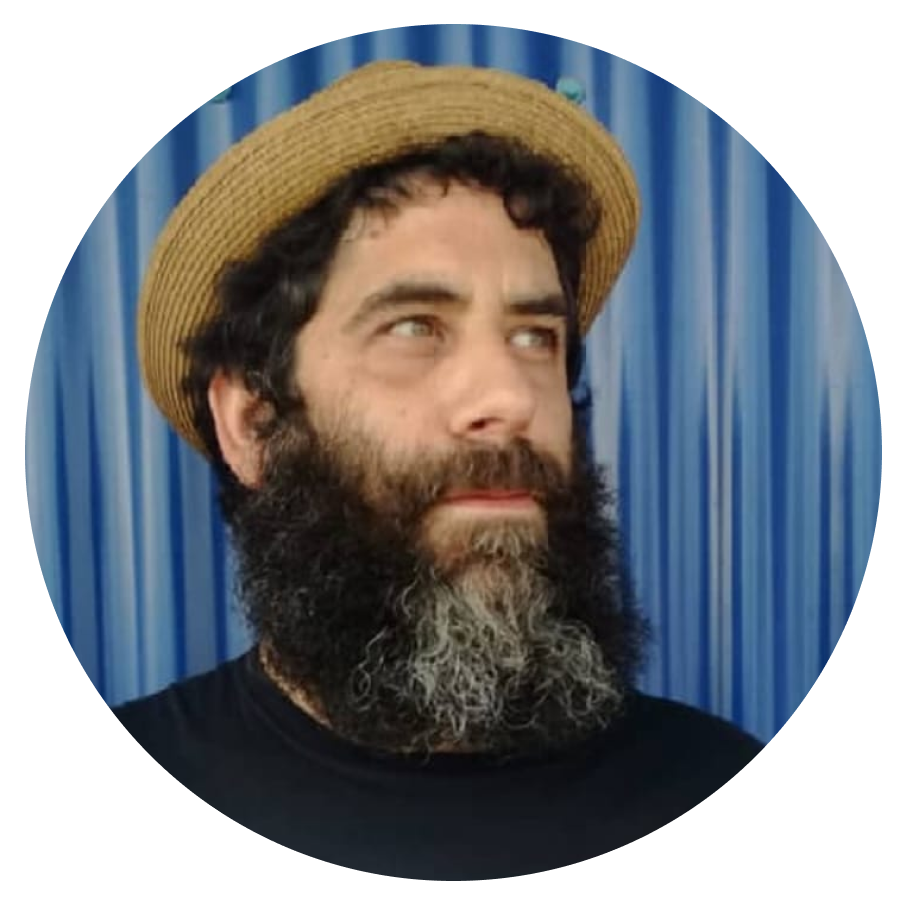
Monika Roscher

Monika Roscher

.

.

.

MONIKA ROSCHER

04

March, 2025

Text: Jazz-Fun.de

Photos: Jacek Brun

jazz-fun.de: Monica. It’s great to see you. Great to have you here in the Hanover Cultural Center and Pavilion. How do you feel?

Monika Roscher: I just feel amazed. I’m really looking forward to the concert tonight, and it’s been a year since we were here, so I’m really excited to come back.

You have already been here once or has it been several times?

One time. And it was great because it was our first time in Hanover. And so, um, yeah, it’s exciting because we are from Nuremburg and Munich, so they’re quite far away.

I see, you had a pretty long drive.

Yes. Six hours.

So tell me something about yourself. Where do you come from?

I’m from Nuremburg, but I went for music studies, guitar, to Munich, and we formed the big band in Munich. Most band members are still in Munich, but some are also in Berlin as well as Leipzig and Karlsruhe. In other words, all over Germany.

I see; so you are more or less connected with everyone around Germany. But what also interests me is what was your first contact with music? What do you remember? What was your first contact to music? Making music?

I would say probably my parents. We had a piano at home, a double bass and guitar. My dad bought all the instruments, and my brother played the double bass and my mom guitar. And so I also wanted to play. And after a while, I started making up stuff. And then, yeah, I really liked the instrument.

So you started by playing around and not methodically, but you learned to play the instrument.

And my mom taught me the stuff she knew, but mostly it was all about fun making music, because every time I heard music my heart was like, oh, it’s so great, let’s sing, let’s do something wild.

Cool. Do you remember what shaped your sensitivity for music in the past? Maybe a specific band or a specific instrument?

I think I went to a youth club or something like that. I’m from a small town near Nuremberg, where there were a lot of hip hop bands and metal bands, and all the metal bands had great guitar players. I was really fascinated by them, so I decided that I needed to learn guitar. It’s amazing. They can play so fast. I really liked the music and I liked the approach of the singers, but I also listened to jazz, and I asked myself, “what are they doing?” I don’t understand what the thing is. How can they communicate? Yeah. And I like all these mixtures in music.

You definitely have to have had some role models over the years who played guitar, some people who influenced your guitar playing. And you already told me that you listened to metal music a little bit because you were fascinated by the playing. Have you any specific guitarists you like?

Yes. I went to a Mars Volta concert and I liked how Rodriguez-Lopez played because it’s a very unique way of playing. So I really liked that. And yeah, but there are tons of guitar players such as all the jazz guitar players, because I went to study jazz, so I listened to all of them such as Wes Montgomery and all the old classics. So yeah, I’m fascinated by that as well.

The next question I want to ask is a little bit outdated, but it’s definitely something we find interesting. Are there any female guitarists you look up to?

Of course I know Jennifer Batten from Michael Jackson’s band. Yeah. And there is St. Vincent. She’s amazing. And let me think. Hmm. You know, the thing is that I’m actually not really interested in the people that much, because I simply like a piece of music at times. I like the idea of music. So I’m not just interested in which musicians I find fascinating, but rather which ones impress me. Wow. How fast they can play or something like that. But it’s the music that touches me, the something inside of it.

And I think many people look at this differently and in another way. They like the person who is making the music. But for me, there are artists that make stuff that I like and stuff that I don’t like that much. And that’s okay.

Yes. And you can even take it bit further and say what kind of person is that? Yeah, actually, I’m not really interested in the person behind the music, because I don’t know if I would like the person or not. So yeah, I really like music, so I don’t want to know too much.

Kind of differentiating between music and the personality. Exactly. Yes. I think that’s a very healthy attitude.

I do too. And after a while you think, oh, I don’t want to hear about the person.

Your music and your orchestra have some notable influences. How many of those influences maybe came from Frank Zappa?

Actually, I’m not quite sure how conscious this has been, because I didn’t listen to Frank Zappa in the beginning. I just started listening to him when people came after our concert and said you have to check out this and that from Frank Zappa. And I thought, okay. yeah, of course I know the name. And I know his big hits. But I hadn’t heard that song. And then I started getting deeper into his music, and then I felt like there might be a connection because he thought of a guitar as a guitar player and a composer, and that’s what I am. So this might be a connection where we think in the same way.

Like on the same wavelength in terms of personality?

Maybe. Yeah, I don’t know. But I don’t know him too well, just bits from interviews and the like. He was very political. So maybe.

It’s like the music is more important than Frank Zappa.

That’s what I think.

That what we said. Yeah. So let’s talk about the time when social media was evolving with respect to your creativity in music; how did the effect of social media influence you or how did it impact your creativity in music?

Well, at first–I must confess–I didn’t like it, didn’t want to be a part of it. I thought that I want to just make my music and then perform concerts. And after a while, you notice that people need to find you somehow. So you have to be on social media. Yeah. So okay, so I started posting on them and then I thought, oh, how amazing. I can connect to people in different countries, for example. Yeah. So that that’s amazing for me. I didn’t realize that before because you are in your own little world, you’re functioning in it, you’re playing and you’re having fun. Right now I think, okay, yes, we’re involved in it. That’s cool. But the most fun is, of course, the music.

So of course. Yeah. So the social media type of thing is like another world. But it’s starting to affect creativity. Do you think that you have to change part of your creativity because of the pressure that social media puts on musicians?

Yeah, but I’m not gonna give into that because I have music that is 12 minutes long, nine minutes long. If I play the Spotify game, for example, I’m gonna play it. So I have also split up my pieces into smaller bits. But when I’m playing live, I play the song and it takes 12 minutes. I’m not going to change my way of composing music just to have the chorus in the first 30 seconds or something like that. Exactly. That’s not what I want to do.

I understand that.

I might do it sometimes if I want to do it. But right now I’m not into something like that.

I see that’s not your main mission right now. And that’s very, very cool. I’m very cool with that. I know a band which has a Spotify song that lasts an hour and oh, wow! And I also think that when I want to listen to it, I listen to it, and I listen to it 15 times. So where’s the problem exactly?

Yeah, yeah.

Yeah. But not only the songs are big in the sense of long, but your band is also very big. Yeah. And you are a leader of a big band and also an electric guitarist in the band. And I think you’re the only guitarist in such a big band I know who is active today. I don’t know if it’s true, but what do you think about that? How does it feel to be a guitarist leader of a big band?

Well, normal. Nothing more.

Normal. Okay.

Because that’s what I started to do. In the beginning, I thought that I was going to form a guitar trio, and then we composed for a big band in school, and I thought, wow, I want to do that because now I have a much bigger playground to mess with. So I thought, okay, let’s try it. And after I graduated from the university, I called the other musicians and said let’s try this, try different stuff. And now we are all friends, and we know each other very well. I know all the musicians. I know their strong points and what their best moments are. So I can really compose for them. So that’s the best thing for me.

So it wasn’t planned, but it just started, right?

Oh, yeah. It was not planned. There was never a plan. Actually, I was not a big band fan at all.

Yeah, but it just depends on what you think a big band is. And you can make a big band in whatever way you want to.

Exactly.That’s true. Yeah. And then you start listening to big bands and then you think, okay, you can play it like this, or you can do totally differently. And I decided that I was gonna try something different, which is a lot of fun.

It’s very cool. I like that a lot. But there’s also very much commitment, time and work with so many people. How many people are there in your band exactly.

We are 18 on stage, and we have our mixer with us and band organizer who helps us, for example, arranging for coffee or other things.

And it’s gotta be a lot of work to organize that, isn’t it?

Yes. Yeah, terrible.

It’s terrible. And speaking of that, you have to have some someone who is taking care of bookings, planning and logistics. Are you doing that or is someone else doing it?

Yeah, I do it because I tried to contract someone a couple of times, but usually I got the feedback that the band is too big to take on the road. And I didn’t want to change it, because that’s what we want to do. So I just keep on doing this myself, and I really like it. We might not have the biggest tour, but that’s okay. Our tours are really big enough. So I do it.

It can be small but impactful. You know what I mean?

And it’s real. We are all friends. I don’t want to say we want to get rid of four people. No, everyone’s part of the band. And we play as this band.

That’s very cool. Going back to the orchestra and to the size of your orchestra and all the people playing in it. There are a lot of instrumentalists, a lot of capable instrumentalists who maybe are capable of having their own projects or something else. How do you work with them and which roles do those instrumentalists have in your band?

In the beginning, we all basically come from jazz. So it’s normal for us to have different projects. Everybody in the band has his or her own band where they play. And my project is also a band where we play, so it’s not as if we depend on the band. We do it all parallel. And I know each of my musicians, their strengths. I can hear the sound for this song and know this is a flute solo. So I know who I can ask to play this solo. And I also want the audience at a concert to experience all the musicians, all the colors. It’s not just solo guitar all the time, because I would want to hear all voices of the band if I go to a concert. So I want to hear all personalities, and I want to show that it’s beautiful.

Yeah, that’s very beautiful. And speaking of the solos, you have some soloists, I guess not every member of your band is a soloist.

Yeah, but actually they all are.

Oh, really? And do they have a determined time when they can play solos, because we are speaking of a lot of people and we want to make it fair. Is there any communication about that.

Yes. And we even change sometimes in the beginning because I’m always playing different setlists, of course. We have a lot of fun with that, I can say I’m taking your solo tonight, okay? And you’re taking hers or she’s taking yours. You know, we mix it up a bit. Yeah. We have some that are fixed, but we mess around with all of them a bit.

That’s very cool. Good to hear that you interact so much.

Yeah, I think it’s important so that everybody is part of it.

It might be time-consuming with 18 people and more, but it’s extremely important to express the essence, isn’t it?

Yes, I think so. And the thing is also that these musicians are not machines. They are humans. And I really want to have a good time with them. We want to be able to have good talks backstage and say what did you like today or what do you want to try? It’s important that everybody’s also involved.

Very cool. We have been speaking about every one of your members. But let’s get back to you. And what I really like about your performance is your own characterization on the stage. And where do you get the ideas from? From where do your inspiration to have these nice outfits?

Yeah, it’s all a bit out there, you know, it’s just like with the music. By composing it, you also think, oh, this could be like a song about what? What is moving you. And then when I find it, I think, okay, this might look like this, for example for The Witch’s Song, I look for a witchy outfit. I need a crown of woods. Or I need big sticks or something. I don’t know, I play around with these ideas, and I’m never finished because I’m still adding stuff to it, and I’m still searching for something. And then when I see something, I think, okay, I’m gonna wear that to be more a part of this song.

Very cool. And for all the individualists out there, maybe the main question, do you make your costumes yourself or do you have someone helping you with that?

I just go on the internet and check out where I can find stuff. Yeah, it would be amazing if somebody would make them for me, but…

But that’s even cooler. Like, you make your own outfits. It’s exactly what you want.

Yeah, but I don’t make them. I just buy them.

Okay, okay. I didn’t want to say too much. Of course, I didn’t want to say something to make you uncomfortable. Very cool. Do you have any favorite outfit?

Well, I still wear a witchy crown that I like. And, um, right now I still wear a mask that is like a, hmm, how do you say it? I’m guessing, I’m searching for the word: vampires, okay. And it depicts a rather strange person, and I think it’s fascinating.

I think I see what you mean. Vampires are depicted in many ways in different cultures, but I really understand that. I guess they have a charismatic dominance, also visually.

And it there’s some connection to nature, but maybe it’s also power from nature.

I think I understand what you mean.

Yeah. I’m just messing around with that stuff or with witches, with everything. That’s all stuff which inspires me. Very much. So I’m reading books about it.

I can understand that well. So we get to the more personal questions right here, because there’s some things that I wanted to ask. But don’t worry, they’re not too specific because I just want to know, what ambitions do you have in addition to music? Um.

Oh, ambitions? Besides music?

I don’t know, maybe outfits?

Uh, yeah. okay. I made a little label for my band, so that’s what I’m doing. And it’s always been about music, actually. But, you know, I like playing some sports and exercising. Yeah, but actually not with a lot of ambition. So I’m just doing those things for fun.

So no plans, no baking.

Not so much. No. Oh, okay. So I’m just doing a lot of stuff, you know, but it’s not like I’m ambitious doing them. I need to try other things out.

So you’re putting all your energy into the music. Yes. And it pays off.

I don’t know, I would say, but it’s fun. I mean, you know, that’s the thing. I wake up in the morning and I start doing something that has to do with music. Yeah. And even if it doesn’t have anything to do with it, I’m still thinking about music.

Very cool. So I have only two questions left and they are not specific either. The first one is what is your favorite place to enjoy looking at your surroundings, for example at a mountain or somewhere else. Do you have something like that?

Um. So um, mountains are amazing. Of course. Do you mean a specific place to go to.

A specific place with personal space where you go.

Since I live in Munich, there’s a river called Isar. And you can take long walks along it and or go by bike. And at some point you can see the Alps, but you have to go quite far, for example approximately two hours by bike. And there are moments when you go around the corner and then–if it’s a nice day–you see and the river and the Alps in the background. It’s really beautiful. Yeah, I like that.

And do you have a specific drink that you would take on the ride there? Your favorite drink?

Probably coffee.

I see. Yeah I’m also completely sold on that. Very cool. Monica, it was a pleasure talking to you.

Yes. And thank you.

I would have continued for longer, but we have no more time. And you also have to get to the soundcheck because you’re playing in two hours. I wish you very, very much luck. And I’m really looking forward to seeing you up there on the stage.

Cool. Thanks. I’m also looking forward to it.

Bye.

Bye.

Este artículo se publica simultáneamente en las siguientes revistas europeas, en el marco de “Groovin’ High”, una operación para destacar a las jóvenes músicas de jazz y blues : Citizen Jazz (Fr), JazzMania (Be), Jazz’halo (Be), Salt Peanuts (DK/SE/NO), Jazz-Fun (DE), In&Out Jazz (ES) y Donos Kulturalny (PL).

This article is co-published simultaneously in the following European magazines, as part of « Groovin’ High » an operation to highlight young jazz and blues female musicians : Citizen Jazz (Fr), JazzMania (Be), Jazz’halo (Be), Salt Peanuts (DK/SE/NO), Jazz-Fun (DE), In&Out Jazz (ES) and Donos Kulturalny (PL).

#Womentothefore #IWD2025

March 04, 2025

Clémetine Ristord: Petite Lucette

Clémetine Ristord: Petite Lucette

.

.

.

.

CLÉMETINE RISTORD: PETITE LUCETTE

03

March, 2025

Text and photos: Franpi Barriaux

CLÉMENTINE RISTORD: PETITE LUCETTE

A portrait is more than a frozen moment, like a photograph; it requires exploration beyond the image. Multi-anchor Clémentine Ristord is a prime example of an artist who must be presented from various angles to fully understand her journey thus far and the path ahead. She is the founder of the Petite Lucette quintet and a member of the Raffut Collectif. She is a musician who is making her mark.


There is a very interesting duality that emerges when you look at the different orchestras of this Grenoble-born musician, who graduated from the CNSMDP jazz section in 2022. It is a duality that brings more coherence than rupture. From Tisser les Ombres, the trio she leads with her alter-ego, double bassist Pierre-Antoine Despatures, an improvisational orchestra that lays claim to the notion of Folklore Imaginaire, to Petite Lucette, the explosive quintet selected in the ninth cohort of Jazz Migration, you might think there’s a world out there, or even several. But that would be a mistake. Each of these musicians has a hidden side and an attraction that draws them together. It is in these connections and limbo that Clémentine Ristord’s true musical personality lies hidden. “I belong to the vast field of jazz, or rather improvised music. I compose, and I mainly work as a leader. While it’s my more ‘easy-listening’ projects that have come to the fore recently, from a media or other point of view, there’s another part of me that still cultivates a very improvised music, with a radical approach”.


But Petite Lucette is unquestionably radical, with sudden ruptures and small explosions, like bubbles of joy. Born in the context of Uzeste: “It was in 2019 that I created Petite Lucette, following several experiences of a ball at the Uzeste festival, with jazz and improvised musicians who, when night fell, changed costume and became ball musicians. I soon discovered the importance of this complementarity and how essential these different postures of the musician are if he is not to shut himself away in an ivory tower of creation or in a role of soulless entertainment. That’s why I created Petite Lucette. Initially, we blended the two styles, aiming to get people dancing with our compositions. However, sometimes the complexity of our pieces proved too overwhelming, hindering the dance’s momentum. This experience taught us a lot, especially since we were accustomed to the ‘concert’ format. Ballroom is incredibly demanding, and it’s a continuous learning process.


[[a clear reflection of our feelings about today’s society and the undesirable future that awaits us]]


Clémentine Ristord and the quintet are not just another dance band from Uzeste and elsewhere. The travelling stage trailer designed for the occasion was a quick and independent way to get around, and the side roads were easy to take. The selection by Jazz Migration accelerated a process of broadening the repertoire that went much deeper than a simple mutation. For the upcoming album {Incendier les tristesses}, the orchestra is set to explore new, freer directions, with each piece telling a story and infused with a cinematic flair, often with a touch of humor. The repertoire is more inward-looking and darker compared to our first album and our ball. It’s a clear reflection of our feelings about today’s society and the undesirable future that awaits us. It’s a catharsis, a way to find joy in the collective before dancing. It’s a political approach, underpinning many of the aesthetic choices and the desire to {do collectively} that belonged more to the previous generation, that of the Vibrants Défricheurs, of whom Papanosh is a model for Ristord and Petite Lucette. “I was struck by the extent to which my fellow musicians, students, colleagues, or perhaps just our generation, are obsessed or caught up in our individual trajectories. The highly cohesive collective shows a definite taste for the traditional music of the different French basins, as is evident in Tisser les Ombres, or more certainly in La Cozna, the most accomplished orchestra of Clémentine Ristord and the Raffut Collectif. An orchestra with cellos, led the usual soprano saxophone player to turn to the bass clarinet – where she excels – to work on an orchestral texture close to the voice.


You can have both feet in jazz, cite Lee Konitz, the Liberation Music Orchestra and Carla Bley as references, and still have more in common with the trad music scene, if only in terms of a political stance: “It raises the question of heritage, where the music you play comes from, why you play it, what you’re part of? Trad opens up the question of territory, on a very small scale (…). I identify more with the demands made by musicians in this environment, in their positioning as artists, than with the current state of jazz, where I feel political questions are being sidelined in favour of {pure} artistic research turned in on itself. That’s not the kind of practice I want to be part of”. Following in the footsteps of orchestras and collectives such as La Novia and Sourdure, and in the footsteps of what ARFI has been producing for decades, Clémentine Ristord presents a new and radical facet of this ongoing discussion between contemporary creation and traditional music. She looks at this from a distance, but with a strong connection to the city’s life. The young musician has a lot more to show us. She is undoubtedly a major player on today’s music scene, and she will continue to surprise us.

Este artículo se publica simultáneamente en las siguientes revistas europeas, en el marco de “Groovin’ High”, una operación para destacar a las jóvenes músicas de jazz y blues : Citizen Jazz (Fr), JazzMania (Be), Jazz’halo (Be), Salt Peanuts (DK/SE/NO), Jazz-Fun (DE), In&Out Jazz (ES) y Donos Kulturalny (PL).

This article is co-published simultaneously in the following European magazines, as part of « Groovin’ High » an operation to highlight young jazz and blues female musicians : Citizen Jazz (Fr), JazzMania (Be), Jazz’halo (Be), Salt Peanuts (DK/SE/NO), Jazz-Fun (DE), In&Out Jazz (ES) and Donos Kulturalny (PL).

#Womentothefore #IWD2025

March 03, 2025

Naíma Acuña – A New Voice Through Some Hands

Naíma Acuña – A New Voice Through Some Hands

.

.

.

.

NAÍMA ACUÑA:  A NEW VOICE THROUGH SOME HANDS

02

March, 2025

Text: José Cabello

Photos: Aritst’s concession

NAÍMA ACUÑA:  A NEW VOICE THROUGH SOME HANDS

Naíma Acuña is a renowned musical percussionist with a distinctive versatility and personal style of performance. Her exceptional skill has led her to be requested to participate and record in prestigious projects in a variety of musical styles.

Recognitions and Publications

Her talent has been recognized by international magazines such as Jazzwise Magazine and Jazzmagazine, as well as by renowned musicians such as Greg Osby or Mulgrew Miller. She has been praised for her dexterity and stage presence in several publications.

Featured Performances and Festivals

Naíma has participated in important jazz festivals and musical events around the world. From the LangnauJazz Nights International Jazz Festival in Switzerland with the project of saxophonist Greg Osby, which also includes renowned names such as Matt Brewer, Marquis Hill, to concerts at the Philharmonie de Luxembourg, Elbphilharmonie Hamburg, Kolner Philharmonie with the project of accordionist Joäo Barradas, which also includes saxophonist Mark Turner.

High Level Collaborations

Throughout her career, Acuña has collaborated with an impressive list of renowned musicians including Pablo Held, Wolfgang Muthspiel, Jasper Hoiby, Matt Brewer, Marquis Hill, Greg Osby, Mark Turner, Joel Ross, Joao Barradas, Abe Rábade, Jorge Pardo and many more. Her versatility and ability to adapt to a variety of musical styles has made her a sought after choice for numerous projects and recordings including collaborating with artists such as C. Tangana.

We hope you all can enjoy the interview she has done with us!!!


In&OutJazz: When and how did music first appear in your life? What memory do you have of your first contact with music?

Naíma Acuña: It appeared when I was just a baby. My parents took me to see Miles Davis at the Royal Festival Hall in London when I was only a few months old, in a little wicker basket.
My first contact with music was with the guitarist Ike Isaacks, mentor of guitarists like Martin Taylor and my father, José A. Acuña, who is also a guitarist. From a very young age, I would watch them as Ike and my father played together at home, and I would try to imitate them with a small toy guitar or a keyboard.

When did jazz enter your life? What does jazz and improvised music mean to you?
From a very young age, jazz was always playing in my home. I specifically remember an album that was played repeatedly: Eastern Rebellion 3 by Cedar Walton, among others.
Jazz is an artistic expression, a fascinating universal language endowed with creativity, freedom, and personal expression. It is a dynamic sound space where the musician explores, connects, and communicates. Improvisation adds an element of surprise and spontaneity, which is one of the many things that make it so special.

Of all the collaborations you’ve had with renowned artists, which ones would you highlight? What have you learned from those artists? What do you think they’ve learned from you?
I would highlight all of them because they were all very special: Mark Turner, Jasper Høiby, Greg Osby, Pablo Held, Mulgrew Miller, Joel Ross, Matt Brewer, Wolfgang Muthspiel…
Very briefly, there is a common factor: discipline, high standards, professionalism, and absolute respect for music. They are deeply conscious of the “why” and “what for” behind what they are playing at any given moment—whether they are truly contributing something to the music and to the connection with the musicians they are playing with.

What do you think they’ve learned from you?
Rather than them learning from me, I think I’ve offered them a different perspective on how to perform musically and take care of the sound on the drums.

Do you compose and write music? If so, what is your composition process like?
It’s a fusion of complex yet accessible melodies with intricate and sophisticated harmonies, combined with a variety of rhythms that range from the most subtle to the most energetic, influenced by many different types of music.

What would you say are your strengths when it comes to performing and composing?
I think they are creativity, musical interaction, versatility, rhythm, and sound.

You have many admirers and followers. Many of them say you have a very distinct style with a strong identity. Who are your biggest influences? Could you recommend an album? And one that features yourself?
From Ali Jackson, Brian Blade, Karriem Riggins, Georges Spanky Mcurdy to Tyshawn Sorey, Eric Harland, Rodney Green, Richard Spaven and Jojo Mayer.
I would recommend the album Echolocation by Ben Solomon.
For one that features me, I’d say the most recent one: Reflexividad by my admired saxophonist Daniel Juárez.

Why do you make music? What purpose or search is behind your music-making and being?
Music is a fundamental part of my life, a form of personal catharsis that allows me to release emotions I sometimes find difficult to communicate with words. It is an artistic process that enables me to experiment, create, and simultaneously connect and inspire, which, for me, is one of the most beautiful aspects of being a musician.

Este artículo se publica simultáneamente en las siguientes revistas europeas, en el marco de “Groovin’ High”, una operación para destacar a las jóvenes músicas de jazz y blues : Citizen Jazz (Fr), JazzMania (Be), Jazz’halo (Be), Salt Peanuts (DK/SE/NO), Jazz-Fun (DE), In&Out Jazz (ES) y Donos Kulturalny (PL).

This article is co-published simultaneously in the following European magazines, as part of « Groovin’ High » an operation to highlight young jazz and blues female musicians : Citizen Jazz (Fr), JazzMania (Be), Jazz’halo (Be), Salt Peanuts (DK/SE/NO), Jazz-Fun (DE), In&Out Jazz (ES) and Donos Kulturalny (PL).

#Womentothefore #IWD2025

Interview by: José Cabello

March 02, 2025

XV Festival Porta-Jazz – Arte sonoro aquí y ahora (Oporto, 2025)

XV Festival Porta-Jazz – Arte sonoro aquí y ahora (Oporto, 2025)

XV FESTIVAL PORTA-JAZZ

Arte Sonoro Aquí y Ahora

Oporto, 2025

28

Febrero, 2025

Cada año, a principios del mes de febrero, Oporto se convierte en el centro de la música improvisada y el jazz de vanguardia con su esperado festival. Es una cita ineludible para melómanos y amantes de la música experimental. Durante tres días, la ciudad se detiene para dar paso a más de veinte conciertos que reflejan la intensa actividad que la Asociación de Músicos de Oporto, Porta-Jazz, ha tenido durante el año.

El festival, que se celebra en el Teatro Rivoli, no solo presenta proyectos arraigados en la vanguardia, el free jazz y la experimentación, sino que también es el resultado de un año de residencias artísticas, colaboraciones internacionales y lanzamientos discográficos. Porta-Jazz. Con João Brandão a la cabeza, es más que una asociación, es el centro de una comunidad de músicos con sede en Oporto y con alcance global. Este año, bajo el lema “Contra el reloj, a favor del tiempo”, el festival reivindica la música como un espacio de pausa y reflexión en un mundo acelerado, “construimos, al menos por un momento, un tiempo nuevo y diferente”. Oporto nos recibe con un sol radiante, preludio de la primavera, mientras el tiempo se mide en compases y emociones.

Queda Áscua es el nuevo proyecto de la vocalista y compositora Joana Raquel, una de las voces emergentes más prometedoras de Oporto. Con composiciones propias, la artista explora un universo sonoro cargado de emoción e intensidad, evocando la imagen de cascada. En esta propuesta, la ausencia de batería desafía las estructuras rítmicas tradicionales y la voz e instrumentos dialogan con libertad y sensibilidad. Joana Raquel, voz, Teresa Costa, flauta, Joaquim Santos, clarinete, Joaquim Festas, guitarra, João Fragoso, contrabajo, Miguel Meirinhos al piano y Zé Stark a la batería. Continuamos con la brillantísima improvisación a dúo con el pianista español Agustí Fernández y el saxofonista lituano Liudas Mockūnas. Los dos son improvisadores centrales de la vanguardia europea. Agustí Fernández, es una figura clave de la vanguardia española, y Liudas Mockūnas, es un explorador incansable líder de la plataforma Improdimensija. Escuchamos un impresionante diálogo completamente improvisado, impredecible, lleno de contrastes y matices. Una conversación artística de alto nivel de creación espontánea y libertad musical. Arte sonoro en el aquí y ahora.

La presentación de Wabi-Sabi. ,disco lanzado por Porta-Jazz (Carimbo Records), a cuarteto, compuesto por pesos pesados del colectivo de Oporto como Demian Cabaud al contrabajo y Gonçalo Marques a la trompeta, con la impronta creativa de Jeff Williams y el estadounidense de Avant Garde John O’Gallagher. Ha sido una experiencia sonora profunda de alto nivel ejecutivo. Estructuras complejas de interacción fluida, expresiva y orgánica, logrando un equilibrio entre la improvisación y el material escrito.

Ursa Maior es el proyecto generado para celebrar los 15 años del festival. Es un proyecto de música improvisada compuesto por un gran ensemble de más de treinta músicos, todos ello ligados con Porta-jazz. El ensemble logra una asombrosa cohesión sonora, guiado por la idea de movimiento continuo. Un proyecto participativo que comienza con palabras habladas y secciones musicales que emergen y se desplazan entre el público. Crean atmósferas emocionales extremas, desde completos silencios hasta atronadores lamentos. Destaca la voz de Almut kuhne, de Joana Raquel, de Vera Morais, así como la guitarra de un jovencísimo Mané Fernandes, Susana Santos Silva, Joao Brandao, Marcos Cavaleiro a la batería, entre otros.

PAIRA. João Pedro Días, trompeta. Gil Silva, saxofón tenor, Pedro Molina contrabajo y Gonçalo Ribeiro, batería. El repertorio está escrito por todos los miembros del cuarteto. Presentan su trabajo editado por Carimbo Porta-Jazz. El cuarteto avanza hacia un espacio de improvisación. Se presentan con una temática coherente y ensamblada de estética que funde composición con improvisación libre en tiempo real, que marca la idea del cuarteto. “Como algo que “flota” en el aire, nos gusta la ligereza, la flexibilidad y la posibilidad de transformación rápida que viene asociada con la libertad de improvisación”.

How Noisy Are The Rooms?  Es el título del álbum a trío editado por el sello Boomslang Records. Memorable actuación a trío, en colaboración con Bezau Beatz , del trío compuesto por la vocalista residente en Berlín Almut Kühne. , a la batería y electrónica Alfred Vogel, fundador de Boomslang Records, sello internacional de música experimental y avant; y el inigualable Joke Lanz a los platos. La propuesta es un collage sonoro completamente improvisado que combina la habilidad vocal como instrumento con un apabullante despliegue de creatividad y experimentación con diferentes técnicas vocales de scat, beat-box, canto, rap y el uso de efectos vocales en una variedad de ritmos y texturas. Joke Lanz nacido en Basilea y residente en Berlín, pionero en la escena electrónica independiente y conocido por su enfoque provocativo de la música electrónica y el ruido a través de la experimentación, la distorsión, la modulación y la manipulación en tiempo real. Un encuentro a trío que busca explorar las posibilidades sonoras generando capas de sonido que van entrelazándose. Su colaboración se basa en la improvisación libre y en la interacción en tiempo real complementándose para crear algo único.

Sopros es el álbum debut del contrabajista y compositor Joao Próspero, junto al cuarteto compuesto por Joaquim Festas a la guitarra, Miguel Meirinhos, pianista de la Orkestra de Jazz de Matosinhos y Gonçalo Ribeiro, a la batería. Es una propuesta de estética jazz de tradición americana, influencias del swing y del rock. Las composiciones del contrabajista Joao Próspero están inspiradas en los escenarios que describe Haruki Murakami.

Emmanuelle Bonnet Quartet Emmanuelle Bonnet voz, composición, Alvin Schwaar, piano, Tabea Kind, bajo, Lucas Zibulski, batería. Emmanuelle Bonnet es la brillante cantante y compositora sueca. El proyecto de Emmanuelle Bonnet Quartet se realiza en colaboración con la asociación de música improvisada de Ginebra AMR–Genève. Eso implica compartir la programación en ambos festivales anuales promovidos por cada una de las asociaciones de músicos, así como dos residencias artísticas. La propuesta de Emmanuelle Bonet es precisa y clara, con un equilibrio entre lirismo melódico y la experimentación musical de improvisación libre.

Soma es el trabajo resultado de una semana de residencia artística en Guimares jazz.  con un elenco de músicos especialmente talentosos con José Soares como líder. El proyecto reúne influencias de la música experimental, el noise y la música contemporánea. Un proyecto arriesgado de fragmentos musicales circulares y largas desarrollos introductorios de tensión creciente. José Soares saxofón alto, José Diogo Martins, piano, sintetizador, Omer Govreen, contrabajo João Lopes Pereira, Varvara Tazelaar, artes visuales.

Seguimos con el quinteto del contrabajista y compositor Joao Fragoso. El líder presenta Canta Derrocada, el segundo álbum con esta formación, lanzado con Carimbo Porta-Jazz. Escuchamos contundentes y atractivas líneas de bajo a cargo del líder Joao Fragoso que desatan los aplausos del público. Un trabajo de interesantes desarrollos narrativos, improvisaciones y exploración tímbrica. Con John Almeida  a la trompeta y Albert Cirera  al saxo tenor junto a John Carreiro, a la guitarra y Miguel Rodrigues a la batería.

Continuamos en el salón con el set del DJ Rui Miguel Abreu, crítico musical en activo desde 1989 y que actualmente escribe para la revista Blitz, Expresso y Rimas e Batidas , publicación digital que dirige, además de ser colaborador habitual de la revista internacional We Jazz. Autor de varios programas en Antena 3, entre ellos el programa semanal Notas Azuis centrado en el mundo del jazz contemporáneo.

GODUA  La música del cuarteto, compuesta por Duarte Ventura y Hugo Ferreira, se sumerge en una exploración sonora que busca una identidad propia. Con influencias en el rock, el grupo genera momentos de gran energía liderados por la guitarra y la batería, contrastados con melodías al vibráfono. La tensión crece de manera progresiva. El resultado de este proceso creativo se materializa en el álbum STOP que presentan, editado por Carimbo Porta-Jazz. Con João Fragoso, contrabajo y John Cardita a la batería.

Seguimos con el trío Sonic Tender, de enfoque en la improvisación libre, formado por Guilherme Aguiar al piano acústico, João Carreiro a la guitarra eléctrica y João Valinho a la batería. Registrado por Robalo Music en el álbum debut del trío, Odd Objects. Es un trabajo de exploración sonora abstracta y minimalista donde el sonido se convierte en un territorio de constante descubrimiento. Es un proyecto intrigante y denso de estructuras complejas en las que no existe diálogo entre el trío, privando al oyente de cualquier sensación narrativa o punto de anclaje.

Dentro del Árbol es el notable proyecto a quinteto presentado por Demian Cabaud, un peso pesado en la escena portuguesa. Es un trabajo bellísimo de trayectoria exploratoria marcada por la libertad creativa, y una constante búsqueda de nuevos horizontes sonoros. El proyecto tiene desarrollos narrativos abiertos, contemporáneos con libertad de improvisación con una formación de músicos excelentes, Con João Pedro Brandão, Con José Pedro Coelho, Ricardo Moreno, Demian Cabaud y Marcos Cavaleiro.

El colectivo Ensemble mutante #2kaja Draksler es el encargado de clausurar el festival. kaja Draksler, pianista y compositora eslovena, escribió este proyecto para tres voces, cantantes centrales de Portugal, Mariana Dionisio, Sofia Sá y Vera Morais, junto con la trompetista de vanguardia Susana Santos Silva. Es música improvisada, contemporánea con el foco en el diálogo improvisado de las vocalistas. Este colectivo busca un lenguaje híbrido con total libertad interpretativa. El proyecto es un espacio de experimentación y de creación a demanda, mezcla de clasicismo y vanguardia.

By Begoña Villalobos

Febrero 28, 2025

AIEnRuta Jazz 2025

AIEnRuta Jazz 2025

AIEnRutaJazz 2025

AIEnRuta-Jazz es un circuito anual que arrancó en 2008 con el objetivo de dar a conocer y promocionar a los artistas de jazz españoles en el ámbito de la universidad, difundir sus propuestas y ampliar la proyección de la música de jazz mediante su programación en nuevos espacios. Los conciertos, ofrecidos por destacados músicos del panorama del jazz nacional, se han celebrado en Alcalá de Henares, Madrid, Palencia, Valladolid, León, Lugo, Ciudad Real, Cuenca e Ibiza.

Un jurado independiente de expertos de reconocido prestigio selecciona a solistas y grupos procedentes de todo el país. Los seleccionados realizan, con el soporte económico, de producción y promoción de la Sociedad de Artistas AIE, una serie de actuaciones en diferentes ciudades españolas durante un año natural.

En 2025 estos han sido los grupos y solistas escogidos:

ALBA ARMENGOU TRIO

(Voz, trompeta, guitarra, percusión)

ALEX CONDE TRÍO

(Piano)

ARTURO PUEYO QUARTET

(Clarinete, clarinete bajo)

KITFLUS ENSEMBLE QUINTETO

(Piano, violines, viola, violonchelo)

LUIS CAPDEVILA TRÍO

(Piano, contrabajo, batería)

ROBERTO NIEVA QUARTET

(Saxofón)


ALBA ARMENGOU TRÍO

Blancos y Grafitos es el nuevo trabajo discográfico de la talentosa cantante y trompetista Alba Armengou, quien se une al guitarrista Vicente López y al percusionista y cantante Tramel Levalle para crear y ofrecernos una auténtica joya musical. Este álbum fusiona la canción de autor y el folclore latinoamericano, ofreciendo una experiencia sonora rica en matices y emociones. La combinación de estos tres talentos hace viajar al público por paisajes sonoros llenos de dinamismo y delicadeza, que resonarán en los corazones de los oyentes mucho después de que la última nota se haya desvanecido. Blancos y Grafitos es una celebración de la música en su forma más pura. Es un álbum que invita a ser escuchado una y otra vez, descubriendo nuevos detalles y emociones en cada escucha.

ALEX CONDE TRÍO

Aclamado pianista, uno de los más destacados músicos de nuestra escena, con una gran proyección internacional y un referente en una música tan relevante para nuestra cultura como es la fusión del flamenco y el jazz, Álex Conde ha emprendido varios proyectos cuya principal motivación es la defensa, conservación y divulgación del patrimonio cultural nacional, como el proyecto “Piano y Copla”, grabado a dúo con el histórico cantante de copla Alejandro Conde, en el que hace una puesta en valor de esta música y la acerca al público contemporáneo o el proyecto de “Álex Conde y los Indultados”, con el que ha publicado un álbum en el que realiza una innovadora y atrevida revisión de la música popular tradicional española. La formación liderada por Álex Conde revisa y recupera a Falla, Albéniz o Turina. Interpreta obras como la Danza del Fuego, El Albaicín, El Puerto, la Nana de Sevilla o la Andaluza, obras que pertenecen al repertorio clásico español con un acercamiento desde la improvisación, manteniendo la esencia y el respeto a la obra original.


ARTURO PUETO QUINTETO

Nacido en Ibiza en 1991, ha recibido clases magistrales de figuras como Toni Belenguer, Bob Sands, Jorge Pardo, Nitai Hershkovits, Ari Hoening, Kenny Werner, Johannes Weidenmueller, Shai Maestro y Roman Pilon entre otros. También ha dado clases con el saxofonista Maikel Vistel. Arturo Pueyo Márquez ha tocado profesionalmente con músicos como Paquito d’Rivera, Antonio Serrano, Ernesto Aurignac, Bob Sands, Deborah Carter o Miguel Blanco.

También ha tocado con grandes artistas de otros géneros como Miguel Poveda y Antonio Carmona (flamenco), ¡Mustafa Zair (música árabe) o Carlton J. Smith (soul) en lugares como el Teatro Real, el Auditorio Nacional, el Teatro Fernán Gómez, el Teatro Conde Duque o el Corral de Comedias de Alcalá de Henares y en festivales como Le Guess Who! (Holanda), Eivissa Jazz, el Festival Internacional de Jazz de Madrid, Festival Internacional de Canarias Jazz & Más, entre otros. En 2022 publicó su primer disco como líder “Derroteros”, con colaboraciones como Ariel Brínguez, Ángela Cervantes, Daniel Juárez y Miron Rafajlovic. Ha presentado la música de este disco en Madrid, Asturias, Cantabria, Málaga, Granada, Albacete, Murcia, La Rioja y Baleares


KITFLUS ENSEMBLE QUINTETO

Josep Mas, Kitflus, es uno de los grandes nombres de la escena musical de nuestro país. Director musical y arreglista de Joan Manuel Serrat, con quien ha efectuado cientos de conciertos, y fundador de grupos míticos como Iceberg y Pegasus, KITFLUS nunca había presentado un proyecto tan personal. Como arreglista ha colaborado con cantantes y grupos tan populares y diversos como Alejandro Sanz, Joaquín Sabina, Mecano, Ana Belen, Pasión Vega, Sergio Dalma, Lolita, Orquesta Mondragón, Camarón de la Isla, Los Amaya, Manzanita, Moncho, Pedro Guerra, Joana Mas… Acompañado por un cuarteto de cuerda estelar integrado por cuatro mujeres: Olvido Lanza (violín), Andrea Duca (violín), Úrsula Amargós (viola) y Alba Haro (violonchelo), Kitflus Ensemble presenta un concierto basado principalmente en música original, pero con algunas versiones muy conocidas.


LLUIS CAPDEVILA MOMPOU

Desde su más tierna infancia, la libertad de expresión y la creatividad le conectaron con la interpretación pianística, la composición y la improvisación. El jazz le llevó a Nueva York, donde estudió en la Aaron Copland School con la ayuda de una beca Fulbright y más tarde se doctoró en Artes Musicales en la Universidad de Stony Brook. Ha publicado seis álbumes explorando sus propias composiciones en una variedad de formatos: en solitario, dúo con Petros Klampanis (bajo) y trío añadiendo a Luca Santaniello (batería), y ocasionalmente con colaboradores estelares como Tom Harrell (fliscorno) y Joe Lovano (saxofón). Para su séptimo álbum ha recibido una beca Leonardo de la Fundación BBVA para reinterpretar y producir: ‘MOMPOU Revisited: Intimate Impressions’ en un contexto de trío de piano jazz.


ROBERTO NIEVA

Saxofonista y compositor nacido en Ávila y vinculado a la música desde muy temprana edad. Siempre preocupado por formarse, estudió en el Conservatorio Profesional de Música de su ciudad natal. Años más tarde se trasladó́ a San Sebastián para completar sus estudios en el Centro Superior de Música del País Vasco, Musikene, además de cursar un Máster en Investigación musical en la Universidad Internacional de Valencia, VIU. Fuera del marco académico ha podido estudiar y recibir clases magistrales de músicos como Branford Marsalis, Loren Stillman, Roman Filiu, Bob Mintzer o Immanuel Wilkins.
Su carrera individual se centra en liderar su propia banda con la cual ha grabado su segundo trabajo discográfico como líder que vió la luz en 2024 y con la cual ha podido actuar en el Festival de Jazz de Madrid, Festival de Jazz de Lugo, Festival de Jazz de San Sebastián, DebaJazz, Universidad Complutense de Madrid, Bilbaina Jazz Club o Dazz entre otros.

Febrero 18, 2025

Pin It on Pinterest